
  1. Home
  2. Computing
  3. News

This AI doesn’t just translate languages, it invents brand-new ones

Forget translating, this AI builds languages from scratch, sounds, grammar, and all.

Add as a preferred source on Google
ConlangCrafter open on laptop
ConlangCrafter

Ever wondered what a language built entirely by AI would sound like? A team of researchers just made a tool that answers exactly that question. A new paper published in the Proceedings of the Association for Computational Linguistics introduces ConlangCrafter, a tool that uses large language models to build brand new languages complete with their own sounds, grammar, and vocabulary.

Morris Alper, the paper’s lead author and soon-to-be assistant professor at the University of Miami, explained that the goal was to create languages with features you don’t normally find in the ones we already speak. 

Recommended Videos

Alongside co-authors Moran Yanuka, Raja Giryes, and Gašper Beguš, Alper has already used ConlangCrafter to whip up more than 60 languages, and the code is public if you want to try making one yourself.

How does the AI actually build a language?

You can hand ConlangCrafter specific instructions, and it runs with them. The team tried a language with zero consonant sounds, and even one designed for an alien squid-like species that communicates through color and gesture instead of speech.
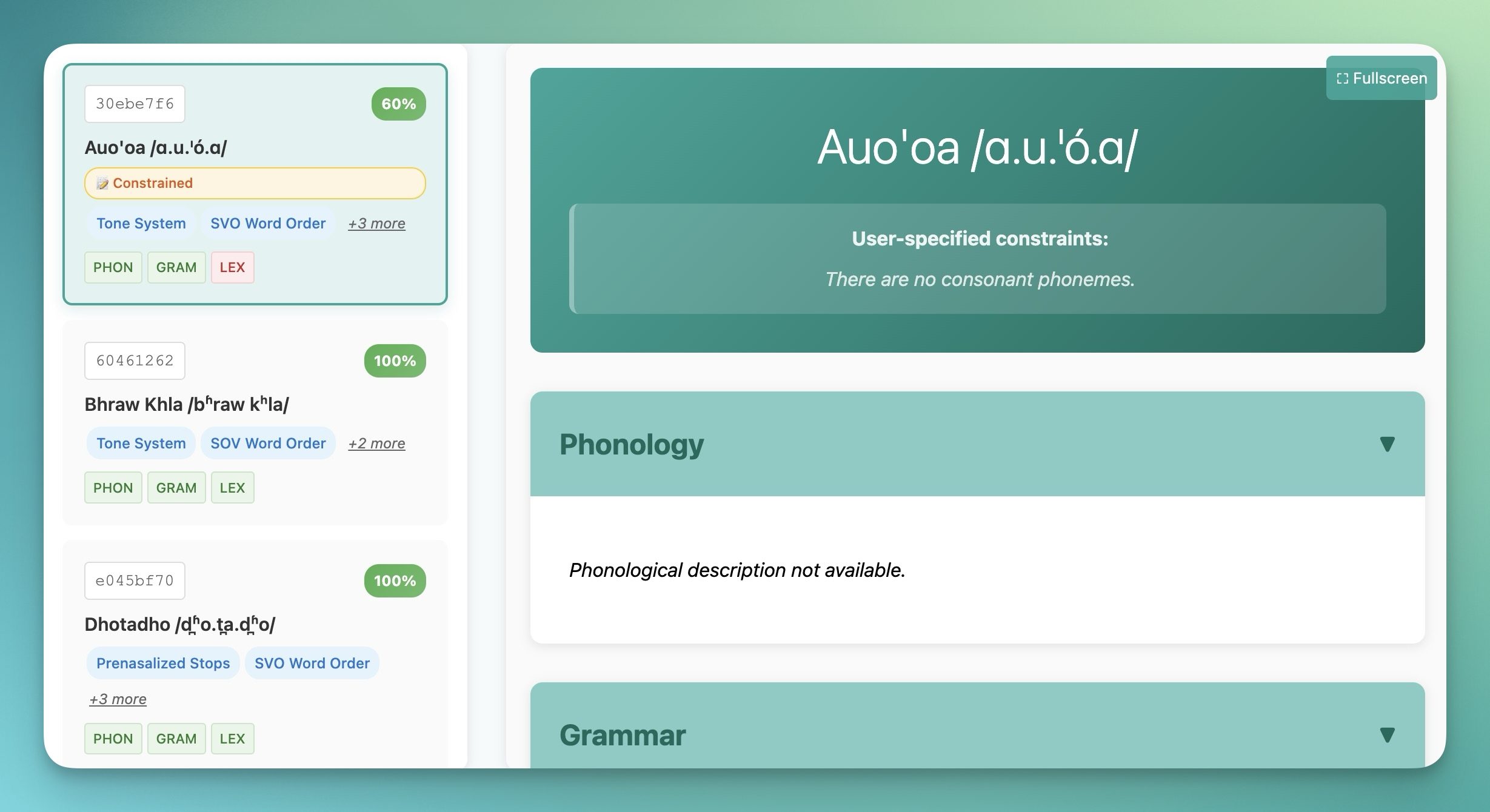
Once a language takes shape, ConlangCrafter translates sentences into it, checks its own work, and fixes inconsistencies along the way, all while updating a running rulebook of the language’s grammar.
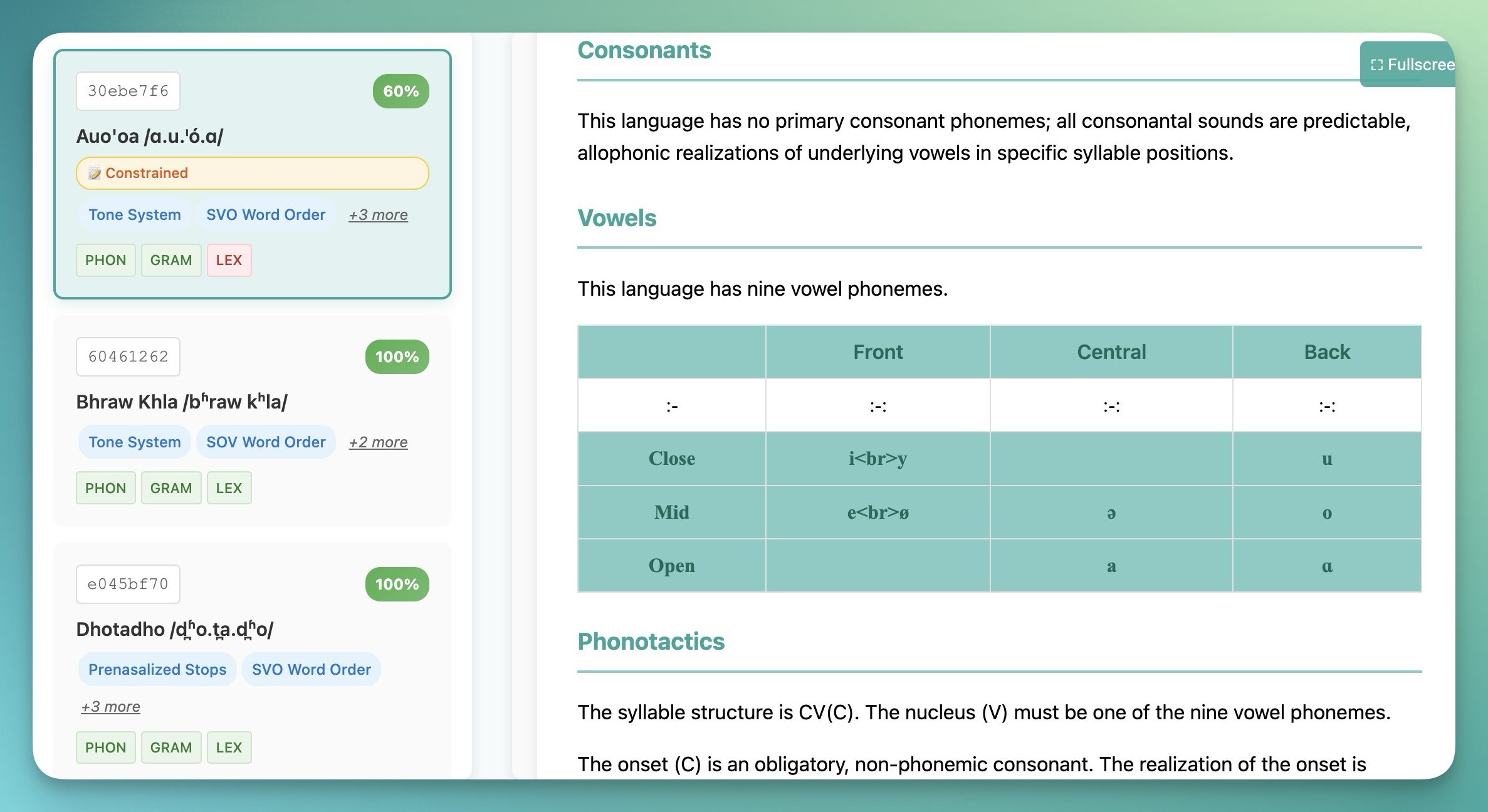
Alper says the trick was to break the massive task into smaller pieces rather than just asking an AI to generate a language and hoping for the best. “We split the problem apart and have the LLMs solve each sub-problem and combine them together,” he said.

Why would anyone need a made-up language?

Beyond being a fun party trick, this could be a real win for writers and filmmakers who need convincing fictional languages, think Game of Thrones or Lord of the Rings. Researchers also see it helping study poorly documented languages and how languages evolve over time.


Rachit Agarwal
Rachit is a seasoned tech journalist with over ten years of experience covering the consumer technology landscape.
South Korea wants to give every citizen free, unlimited access to its own AI chatbot
The government-backed service could turn generative AI into public infrastructure instead of another monthly subscription
Electronics, Mobile Phone, Phone

South Korea wants to give every citizen free access to an AI chatbot with no usage limits. That puts the technology closer to a public utility than another premium service demanding a monthly subscription.

The Ministry of Science and ICT announced the AI for Everyone project on July 13. Private companies will build the platform around locally developed models, while a separate AI agent will help people navigate government services. It’s a more practical job than generating emails or settling arguments nobody wanted to research themselves.

Read more
Falling in love with a chatbot is now off limits for kids in China
The crackdown targets emotional AI relationships as regulators worry about the country's record low birthrate.
Replika AI companion app on an iPhone in hand

Ever since AI chatbots arrived on the scene, there has been one aspect that has worried lawmakers and experts a lot: humans forming emotional connections with chatbots. There have been plenty of cases where over-reliance on these AI companions or partners has resulted in medical emergencies, lost lives, and triggered multiple lawsuits against the likes of OpenAI and Meta.

China cracks down on AI companion apps

Read more
Russian hackers keep finding their way into critical networks through neglected routers
A multinational warning says outdated firmware, weak passwords, and insecure settings are giving state-backed attackers an easy opening
A Wi-Fi router next to a laptop.

Russian state-backed hackers have spent more than a decade exploiting a stubborn weakness in critical infrastructure networks. Organizations are still leaving poorly configured and outdated routers exposed to the internet.

In a joint cybersecurity advisory, the NSA, CISA, FBI, and international partners warn that hackers linked to Center 16 of Russia’s Federal Security Service are continuing to target vulnerable networking equipment. Energy, healthcare, and government networks are among the sectors facing the highest risk.

Read more