1. Home
  2. Wearables
  3. News

HTC’s smart glasses are apparently coming to the US, but HTC hasn’t said so

Amazon briefly listed the VIVE Eagle for a September 1 launch, while HTC still says the $499 glasses are only available in Taiwan

Add as a preferred source on Google
A woman wearing the HTC Vive Eagle smart glasses
HTC

HTC’s VIVE Eagle smart glasses could finally be heading to the US. Apparently, Amazon got the memo before HTC was ready to share it.

Notebookcheck spotted six versions available for preorder at $499, each carrying a September 1 release date. Amazon has since pulled the pages, so new orders are closed and anyone who already placed one is left wondering whether it still counts.

Recommended Videos

HTC hasn’t confirmed any US launch. Its website continues to describe the VIVE Eagle as exclusive to Taiwan, making this a retailer leak with surprisingly detailed receipts.

What did Amazon reveal

The apparent US range covered round and square frames with clear or tinted lenses. Four finishes appeared, including Glossy Black and Apricot, though the available combinations varied.

That selection differs from the Taiwan lineup, where Berry and Grey are among the current choices. It looks more like a range prepared for another market than old information copied into Amazon. The individual product pages make the leak more convincing, but there’s no guarantee every model will survive until launch day.

What does $499 buy

Qualcomm’s Snapdragon AR1 Gen 1 chip powers the VIVE Eagle, paired with 4GB of RAM and 32GB of storage. A 12MP ultrawide camera captures first-person photos and video. Open-ear speakers take care of music and calls.

The built-in voice assistant can access Google Gemini and OpenAI GPT. Camera-based translation is its most interesting trick, with hands-free note-taking also included. HTC claims up to 4.5 hours of continuous music playback, while a 10-minute charge can restore half the battery.

That package would cost $499 in the US, placing the VIVE Eagle $200 above the cheapest Ray-Ban Meta glasses.

When will HTC confirm it

Amazon’s early appearance makes a US release look likely, but it isn’t confirmation. The September 1 date, $499 price, and listed configurations could still change before sales begin.

For now, potential buyers should treat September 1 as a leaked date. HTC also needs to clarify whether Amazon will honor orders placed before the pages disappeared. With the apparent release less than seven weeks away, an official announcement is the next checkpoint worth trusting.

Paulo Vargas
Paulo Vargas is an English major turned reporter turned technical writer, with a career that has always circled back to…
Don’t expect smartwatches and fitness bands with replaceable batteries anytime soon
Turns out even the EU thinks your smartwatch is too small for a battery swap.
Wristwatch, Arm, Body Part

The EU has a habit of pushing tech companies to adopt meaningful changes in their product. It's the reason your iPhone finally has a USB-C port, and it's also why companies now have to offer spare parts and repair support for electronics for several years after launch. So naturally, many of us assumed wearables were next in line for mandatory swappable batteries. Turns out, the EU just went the other way.

So what did the EU announce?

Read more
Samsung wants its upcoming Galaxy Watch to be your AI health companion
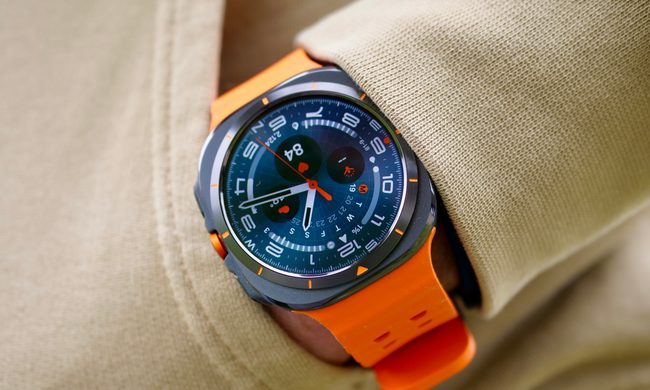
Ahead of its July 22 Unpacked event, Samsung has teased AI-driven health tracking and upgraded internals for its upcoming smartwatches.
A person wearing the Samsung Galaxy Watch Ultra showing the Ultra Analogue watch face.

Samsung's July 22 Galaxy Unpacked event won't be all about new foldables. The company has also started teasing its next-gen smartwatches, and its pitch leans heavily on AI. In a newsroom post published ahead of the event, Samsung promises "a whole new level of effortless wellness," describing the upcoming watches as an "AI-powered health companion."

From tracking to interpreting

Read more
You can paint this wearable on your skin like a tattoo to monitor your heart and brain activity
This tattoo makes you look cooler - and it could save your life too
Painted electrodes on skin

Wearable health trackers have become smaller, smarter and more capable over the years, but they've also remained surprisingly… boring. Whether it's a smartwatch, a chest strap or a sticky ECG patch, most health sensors still rely on bulky hardware that can peel off, irritate the skin or become less accurate once you start sweating. Additionally, there is a shift of technology from plastic wearables/trackers to clothes, which seemingly do the same thing as well. But that is not the story today.

Researchers at Penn State think they've found a far more elegant solution. Instead of sticking another sensor onto your skin, why not simply paint one?

Read more