  1. Home
  2. Cars
  3. Photo Galleries
  4. Legacy Archives

After having been stolen in 1989, Ferrari 375-Plus sells for $18.2 million at Goodwood

Add as a preferred source on Google

A 1954 Ferrari 375-Plus sold for the jaw-dropping sum of £10.7 million (approximately $18.2 million) at an auction that took place at last weekend’s Goodwood Festival of Speed.

Wearing chassis number 0384, the Pininfarina-bodied 375-Plus joined Ferrari’s official racing team in 1954. The roadster participated in numerous high-profile events like the Mille Miglia and the 24 Hours of Le Mans before being sold off to wealthy American racer Jim Kimberly in 1955.

Records indicate the car was raced in various SCCA events until the end of the 1957 season and sold to an Ohio-based collector named Karl Kleve the following year. Kleve partially dismantled the 375-Plus and parked the body outside until it was mysteriously removed from his property in January of 1989 and purchased by a French collector for $50,000.

The car was reported stolen in the United States but the new owner was nonetheless able to register it in Europe and sell it to a well-known Belgian collector named Jacques Swaters. Shipped to a Ferrari specialist in Modena, Italy, the car was fully restored with the help of former factory mechanics and later re-united with its original 4.9-liter V12 engine.

After a lengthy legal battle, Swaters and Kleve finally came to an agreement over who owned the car. It remained in Swaters’ collection until his daughter inherited it when he died in 2010.

The 375-Plus was sold by Bonhams in like-new condition. It sparked a long bidding war before the hammer finally dropped.

Other highlights from the sale include a 1902 De Dietrich that sold for $1.7 million and a 1975 Lamborghini Countach LP400 “Periscopio” Coupe that fetched $1.6 million, a new record for the iconic mid-engined supercar.

Ronan Glon
Ronan Glon is an American automotive and tech journalist based in southern France. As a long-time contributor to Digital…
Volvo is rolling out Apple Music to over 2 million cars with a simple OTA update
Your Volvo may soon get Apple Music without needing CarPlay
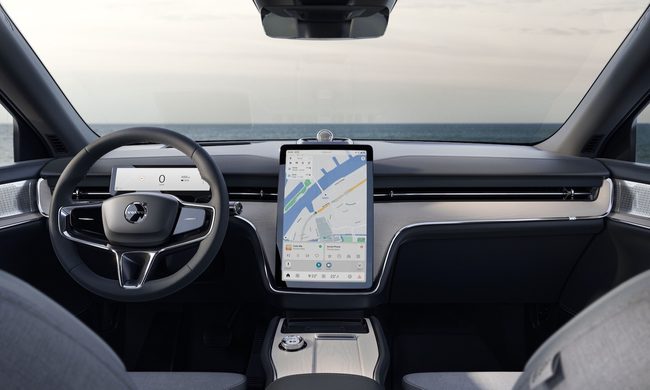
Interior view of the 2024 Volvo EX90.

The line between your smartphone and your car continues to blur. Volvo has announced that it is rolling out an over-the-air software update that brings Apple Music directly to the infotainment systems of more than 2 million vehicles worldwide. Instead of relying on Apple CarPlay or plugging in an iPhone, eligible drivers will be able to stream music natively from their car's built-in system, making Apple Music another integrated feature of Volvo's software experience.

The update is arriving for a wide range of Volvo models, including the EX90, ES90, XC90, S90, V90, XC60, S60, V60, XC40, EX40 and EC40, covering model year 2020 onwards. Availability, however, may vary depending on the vehicle.

Read more
Chery’s latest EV packs flagship tech for the price of a base Tesla, but you can’t buy it
Here's everything packed into Exeed's 2027 Exlantix ES, from its 27-sensor autonomous driving suite to its 860 km range, all starting under $31,000.
Car, Transportation, Vehicle

Chery's premium arm just dropped a sedan that makes you wonder why American EVs cost twice as much for half the tech.

Exeed's 2027 Exlantix ES ships with a driver-assist system called Falcon 700. It is built around an Nvidia Orin-Y chip and a genuinely stacked sensor suite.

Read more
A new AI model wants self-driving cars to think before they swerve
Forget guessing games, this self-driving AI actually shows its work.
Self driving car

Self-driving cars have gotten pretty good at driving. The harder problem is teaching them to drive safely in situations nobody planned for. We have heard horror stories of self-driving cars, behaving erratically in emergency situations, often times delaying first responders from reaching the scene.

A team at Seoul National University, led by professor Jun Won Choi from the Department of Electrical and Computer Engineering, thinks they have cracked part of that puzzle with a new AI model called SafeDrive. The research was recently selected as a highlight paper at CVPR 2026, a distinction that goes only to roughly 3% of all submissions.

Read more