1. Home
  2. Emerging Tech
  3. Photography
  4. Virtual Reality
  5. News

Prynt’s instant photo and augmented reality wonder now on Kickstarter

Add as a preferred source on Google

Update on January 30, 2015: For those interested in buying one, Prynt has launched its Kickstarter campaign. The good news: It has already shattered its $50,000 goal, so it’ll be funded (there’s no plans for a stretched goal). To get one, you’ll need make a preorder pledge of $99. The first shipment, scheduled for August 2015, have all sold out; the second shipment is scheduled for October 2015.

Smartphone cases are usually about protection, extra battery life and style. A startup called Prynt wants to inject a little more shareable fun into things with a smartphone case that prints photos in about 30 seconds. It also has the ability to instantly turn physical photos into videos.

Recommended Videos

Prynt’s eponymous case slides onto your smartphone and plugs into the bottom of the device. Hold the phone horizontally and you’ll have a handgrip and trigger button on the right side of the Prynt case. Once you snap a photo, you can send it to the Prynt and wait for it to print.

The case’s direct connectivity with your smartphone means no Bluetooth or Wi-Fi connection is necessary. While the current prototype of the Prynt takes about 50 seconds to take a photo and print it out, the consumer-ready version will need fewer than 30 seconds to complete the process. It will also be able to hold 10-30 sheets of photo paper.

prynt-kickstarter
Image used with permission by copyright holder

While this Polaroid camera-like functionality is certainly alluring, the more intriguing part of the Prynt case is an augmented reality feature baked into its camera app. As you take a photo with the Prynt’s camera app, it records a video of what your phone’s camera lens is pointed at leading up to the actual moment you snap a photo (e.g., your attempts to fix your hair before taking a selfie).

Once you print out the hard copy of the photo, anyone who points their Prynt case-equipped phone at it will see a play button overlaid in real time on the photo, which when tapped will play the video captured along with the photo within the borders of the photo itself, making it seem as if the picture was replaced by a video. It essentially turns a tangible photo into a portable video you can physically share with friends.

This augmented reality feature “will bring those pictures to the 21st-century,” said Prynt CEO Clement Perrot in an interview with TechCrunch.

The French startup has been working on the Prynt case since January and will launch a Kickstarter campaign in early 2015. The Prynt will cost $99 and fit standard smartphone sizes. The company is working on cases that will fit phablets like the iPhone 6 Plus.

(This article was originally published on November 16, 2014.)

Jason Hahn
Former Contributor
Jason Hahn is a part-time freelance writer based in New Jersey. He earned his master's degree in journalism at Northwestern…
AI security cameras may soon recognize your walk before they recognize your face
A new AI gait system tracks body motion through skeletal keypoints, aiming at long-range identity checks where face scans and fingerprints fall short.
Security cam

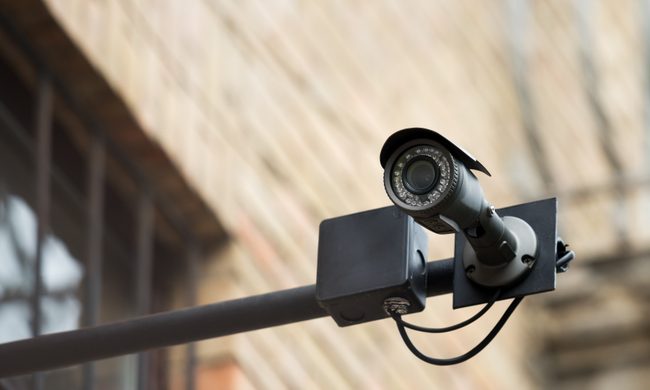
Security cameras are built to look for faces. New research suggests they may soon have another target, the small habits buried in the way someone walks.

A paper published in the International Journal of Reasoning-based Intelligent Systems describes SKDMap-Net as a gait recognition system designed to identify people from walking video, even when the camera doesn’t get a clean look at their face. Instead of relying on a close-up scan, it studies how a body moves from frame to frame.

Read more
A 20-second 3D printer breakthrough comes with exactly the kind of catch science loves
The process can create complex microstructures far faster than some laser-based methods, but full 3D control is still a work in progress.
Aluminium, Smoke Pipe

A 3D printer that can make a structure in about 20 seconds sounds like a lab claim wearing a cape. The clever bit is real. The catch arrives before anyone starts dreaming about instant replacement parts.

University of Utah researchers have demonstrated a holographic 3D printing technique that hardens tiny structures in one exposure instead of building them layer by layer. That one-shot approach could avoid the weak, leaky seams that stacked printing can leave behind. For now, though, this is a tool for microstructures, not a shortcut to printing whatever object pops into your head.

Read more
Amazon is full of copycats and shady brands. This Chrome extension lets you avoid them.
Advertisement, Poster, Text

Shopping on Amazon used to be simple. You searched for a product, compared a few familiar brands, and checked out. These days, it often feels like you're scrolling through an endless parade of names that look like someone leaned on a keyboard before hitting publish. That's exactly the problem Knockoff is trying to solve.

Created by developer Josh Pigford, the Chrome extension doesn't promise to expose counterfeit products or magically tell you what's good. Instead, it tackles something arguably more annoying: the flood of unfamiliar, mass-produced brands that dominate Amazon search results.

Read more