  1. Home
  2. Cars
  3. Emerging Tech
  4. News

EDAG’s ‘Light Cocoon’ sports car is so green, it’s inspired by leaves

Add as a preferred source on Google

German engineering firm EDAG isn’t the first company to design a vehicle inspired by nature, but few other brands have taken the premise so literally.

The Fulda automaker has just announced its ‘Light Cocoon’ sports car, which uses a leaf-life membrane stretched over a featherweight skeletal structure. The two-door’s backlit appearance gives it a look that’s part scaly reptile and part cracked sandstone, but according to the group, the goal is truly lightweight construction.

Recommended Videos

Outdoor apparel supplier Jack Wolfskin designed the car’s weatherproof skin, called Texapore Softshell, and claims the textile is four times lighter than standard copy paper.

“Even if it sounds futuristic to begin with, this approach has a its own special appeal,”said EDAG Chief Technology Officer Jörg Ohlsen. “Weighing no more than 19 g/m², the Jack Wolfskin material supports maximum lightweight design requirements with minimum weight.”

The car’s bionic structure could revolutionize the way cars are made, as it uses a 3D printing process that eliminates any material not needed for load-bearing purposes. There are obvious safety concerns with this style of production, but EDAG’s concept is more about experimentation and discovery than on-road practicality.

“We are pursuing the vision of sustainability – as demonstrated by nature,” explains the firm’s head designer Johannes Barckmann. “The result: the EDAG Light Cocoon presents a stable, branch-like load bearing structure from the 3D printer, which only uses material where it is absolutely necessary.”

EDAG has released no powertrain information at this time, but the car is scheduled to premiere at the 2015 Geneva Motor Show in March. 

The company, who also works in aviation and spaceflight, released the GENESIS Cockpit Concept earlier this year.

GENISIS is a 3D-printed driver module with a focus on safety, one that takes inspiration from the skeleton of a turtle.

“There is still a long way to go before this becomes an industrial application,” the brand admits, but EDAG says the concept could act as symbol for the engineering freedoms of additive manufacturing.

Andrew Hard
Andrew first started writing in middle school and hasn't put the pen down since. Whether it's technology, music, sports, or…
Volvo is rolling out Apple Music to over 2 million cars with a simple OTA update
Your Volvo may soon get Apple Music without needing CarPlay
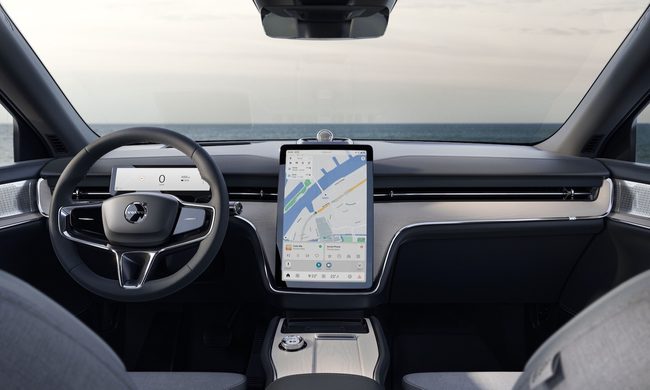
Interior view of the 2024 Volvo EX90.

The line between your smartphone and your car continues to blur. Volvo has announced that it is rolling out an over-the-air software update that brings Apple Music directly to the infotainment systems of more than 2 million vehicles worldwide. Instead of relying on Apple CarPlay or plugging in an iPhone, eligible drivers will be able to stream music natively from their car's built-in system, making Apple Music another integrated feature of Volvo's software experience.

The update is arriving for a wide range of Volvo models, including the EX90, ES90, XC90, S90, V90, XC60, S60, V60, XC40, EX40 and EC40, covering model year 2020 onwards. Availability, however, may vary depending on the vehicle.

Read more
Chery’s latest EV packs flagship tech for the price of a base Tesla, but you can’t buy it
Here's everything packed into Exeed's 2027 Exlantix ES, from its 27-sensor autonomous driving suite to its 860 km range, all starting under $31,000.
Car, Transportation, Vehicle

Chery's premium arm just dropped a sedan that makes you wonder why American EVs cost twice as much for half the tech.

Exeed's 2027 Exlantix ES ships with a driver-assist system called Falcon 700. It is built around an Nvidia Orin-Y chip and a genuinely stacked sensor suite.

Read more
A new AI model wants self-driving cars to think before they swerve
Forget guessing games, this self-driving AI actually shows its work.
Self driving car

Self-driving cars have gotten pretty good at driving. The harder problem is teaching them to drive safely in situations nobody planned for. We have heard horror stories of self-driving cars, behaving erratically in emergency situations, often times delaying first responders from reaching the scene.

A team at Seoul National University, led by professor Jun Won Choi from the Department of Electrical and Computer Engineering, thinks they have cracked part of that puzzle with a new AI model called SafeDrive. The research was recently selected as a highlight paper at CVPR 2026, a distinction that goes only to roughly 3% of all submissions.

Read more