  1. Home
  2. Cars
  3. News

Alfa Romeo’s new Giulia taunts BMW’s M3 with a 503 hp, Ferrari-built V6

Add as a preferred source on Google

Alfa Romeo is on the warpath. FCA boss Sergio Marchionne has stated that he wants the Italian brand to be producing vehicles on the level of German automakers like Audi and BMW. That means 400,000 annual vehicle sales by 2018 with a third of those models being purchased in the U.S.

To achieve that figure, Alfa Romeo is planning a full lineup, including the 4C sports car, a full-size sedan, a pair of SUVs, a second midsized sedan, another 4C-style model, two compact cars, and the 2016 Giulia sedan. Aimed at the BMW 3 Series and Audi A4, the Giulia will likely be a global model, and that makes me very happy.

Here’s why:

Recommended Videos

Out of the gate, the new Giulia will be offered in a higher performance designation with 50/50 weight distribution; rear-wheel drive; a six-speed manual transmission or dual-clutch automatic; torque-vectoring; a carbon fiber hood, roof, and propeller shaft; active aerodynamics; and a Ferrari-built turbocharged V6 with 503 horsepower at its disposal.

The 2016 Giulia’s power-to-weight ratio will be less than 3kg per hp, which equates to less than 3,300 pounds. That, and its monstrous power contribute to a brief zero-to-60 mph time of 3.9 seconds. That figure matches the new M3’s sprint, and its hardware suggests the Italian sport sedan will be more than able to hang with Germany’s best on a track.

Inside, the cabin appears to be all about the driver. The steering wheel has Ferrari-esque integrated controls and an ergonomic design. As for its exterior design, the large air inlets, narrow headlights, carbon fiber-trimmed body kit, rear diffuser, and quad exhausts communicate the Giulia’s high-performance intentions quite clearly.

The 2016 Alfa Romeo Giulia is expected to arrive at U.S. dealerships late next year, and it will debut at the Frankfurt Motor Show this September.

Miles Branman
Miles Branman doesn't need sustenance; he needs cars. While the gearhead gene wasn't strong in his own family, Miles…
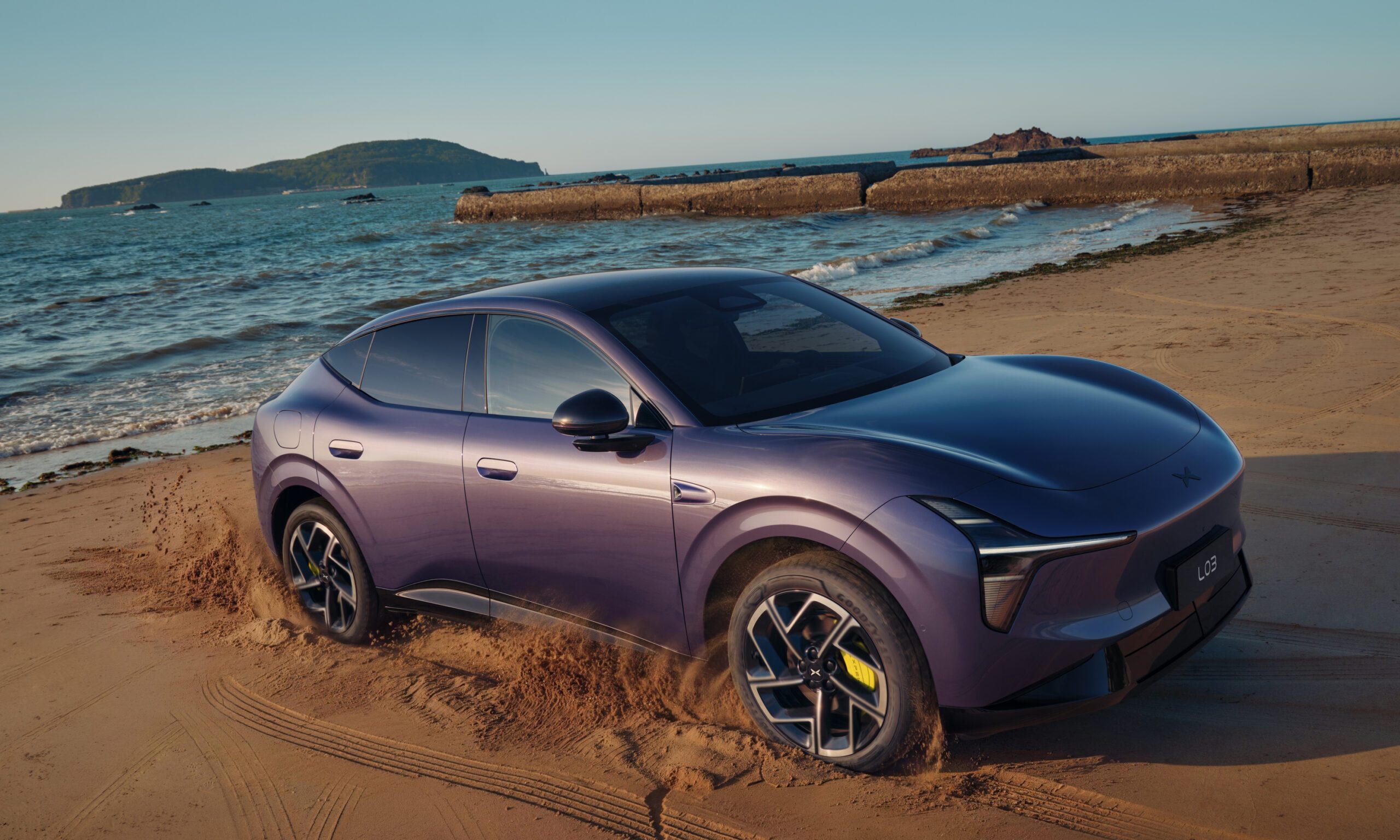
This sleek Chinese EV pairs supercar styling with three AI brains
The Xpeng L03 is an AI supercomputer disguised as a stylish family SUV
Xpeng L03

Xpeng’s latest electric vehicle carries enough processing power to make the term "smart car" actually sound more realistic than it actually is. The new Xpeng L03 debuted simultaneously in Europe and China on July 16, with the company presenting it across 65 markets. Available as a fully electric vehicle and an L03 Power X range-extender, the coupe-SUV is Xpeng’s most internationally focused model so far. Market-specific prices and sales dates remain unannounced.

Three AI chips and Google Maps built right in

Read more
A new sodium battery posts wild four-minute charging numbers, but don’t expect it in an EV yet
The breakthrough could improve fast charging and battery life, but the study hasn’t demonstrated those results in a production-sized pack
EV Charger

A new sodium-metal battery has posted a charging number that makes today’s EVs look painfully slow. In laboratory testing, the cell operated at a 15C rate, equivalent to completing a charge or discharge in roughly four minutes.

That doesn’t mean researchers plugged in an electric car and watched it fill up before the driver finished buying coffee. The result came from a small experimental cell using a new quasi-solid electrolyte, while the larger pouch-cell prototype delivered far less dramatic performance.

Read more
The Apple Car may be dead, but it became the foundation of Apple Intelligence
A decade of work on a canceled car project reportedly laid the groundwork for Apple Intelligence.
Apple Intelligence in Apple Car

The Apple Car may have never left the garage, but it apparently gave birth to Apple's AI ambitions. According to Bloomberg's Mark Gurman, Apple's canceled autonomous vehicle project, one that consumed more than a decade of work and over $10 billion before being scrapped in 2024, ended up laying the technological foundation for Apple Intelligence. In a rather ironic twist, one of Apple's most expensive failures may also become one of its most important long-term investments.

The Apple Car forced Apple to think like an AI company

Read more