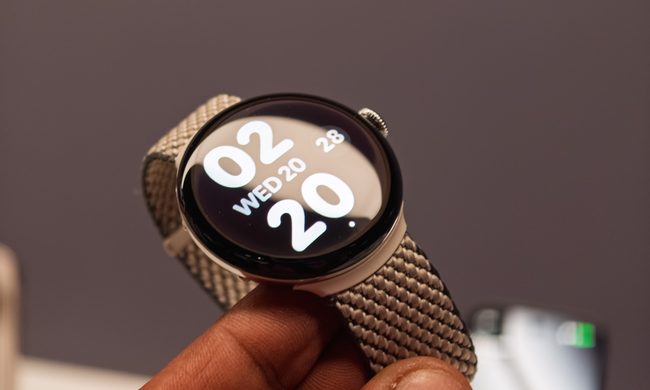
The wearables market already seems implicitly targeted toward those leading an active lifestyle, what with their sleep, exercise, and calorie counters as standard features on most devices. But now, one company is making it even more obvious that when it comes to athletics, wearables are the future. Meet Whoop, a next-level device that describes itself as “a system robust enough to prepare a Navy SEAL for battle, but with the form factor and design that the average athlete would be comfortable wearing 24 hours a day.” Sure, skeptics abound — after all, how different could Whoop really be from a Fitbit or an Apple Watch? But while it may not be altogether different, it does offer some unique insights that are key to heightened athletic performance — by applying predictive analytics, Whoop wants to help teams and individuals better understand their bodies and how they recover after a hard game or workout.
In a video on the Whoop website, company founder and CEO Will Ahmed explains that the problem he perceived when he first set out to create Whoop was that athletes “didn’t very well understand the body.” Many active individuals, forever over- or undertraining, Ahmed continued, live in a “circular world” in which improving performance is more predicated on a “feeling” than on data and science, making the risk for injury much greater.
“Ultimately, the goal at Whoop is to live a step ahead of the athlete,” Ahmed says. Over the course of a day, the wearable tracks the amount of strain or stress an individual puts on his or her body, by examining heart rate, heart rate variability, skin conductivity, ambient temperature, and accelerometery and motion. These factors are affected by everything from work to exercise to simple day-to-day activities.
As Whoop continues to monitor energy expenditures, it can tell the wearer how much sleep he or she needs in order to fully recover, ensuring full preparedness for the following day. When this technology is applied to more than just one person — say, a team instead of an individual — Ahmed believes that coaches and trainers will be able to better optimize performance across the board.
The Boston-based company certainly has caught the attention of funders, who recently invested $12 million in a Series B funding round. And better still, pro athletes and their trainers seem to be on board as well. “At the elite level, it’s no longer just about outworking your opponents to get an edge,” said Mike Mancias, LeBron James’ longtime trainer and a Whoop adviser, in a press release. “In fact, research shows that 30 percent of athletes are overtrained, which can lead to injury and poor performance. It’s only by balancing intensity with recovery that athletes can optimize performance. Whoop’s system and the data it provides helps me gain a better understanding of each of my individual athlete’s bodies, their capabilities, and their limitations, leading to better and safer athletic performance.”