
  1. Home
  2. Emerging Tech
  3. News

AI can turn a cloud of scuba bubbles into an early warning for divers

An underwater robot can estimate breathing rates from video, although the research stops short of proving that it can diagnose stress or distress

Add as a preferred source on Google
Nature, Outdoors, Water, Scuba
NEOM / Unsplash

University of Minnesota researchers have taught an AI underwater robot to estimate a diver’s breathing rate by watching the bubbles released with each exhalation.

The contactless system, detailed in a peer-reviewed study published in The International Journal of Robotics Research, works with ordinary camera footage. Divers don’t need to squeeze another sensor into an equipment loadout that is hardly lacking for accessories.

Recommended Videos

Changes in breathing could eventually alert robotic dive partners when something looks wrong. At this stage, the system measures respiration and leaves humans to decide what the reading means.

How the robot read bubbles

The robot’s cameras watch for the bursts of bubbles produced whenever a diver exhales. Its software identifies each burst and converts the pattern into an estimated number of breaths per minute.
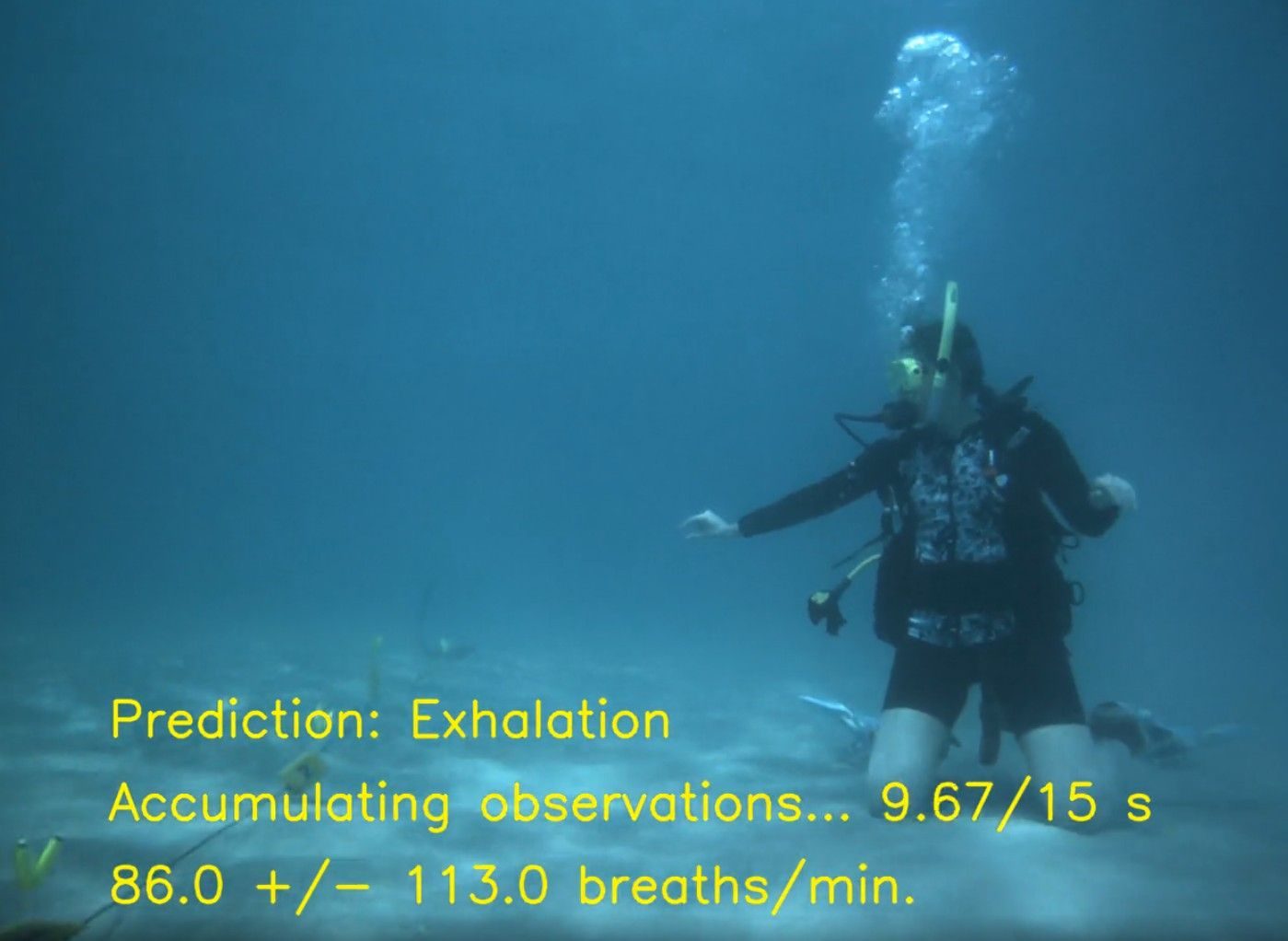
Training it required more than pointing a camera into the water and trusting the bubbles to cooperate. Researchers manually labeled thousands of underwater images and matched the footage with audio of regulator exhalations, teaching the system what counted as a breath.

The team collected video and audio in Minnesota lakes and the Caribbean, testing the method across different temperatures and visibility conditions.

What the robot show divers

During field trials, the HREyes system sorted readings into three bands. Fewer than 14 breaths per minute counted as below normal, while more than 20 counted as above normal.
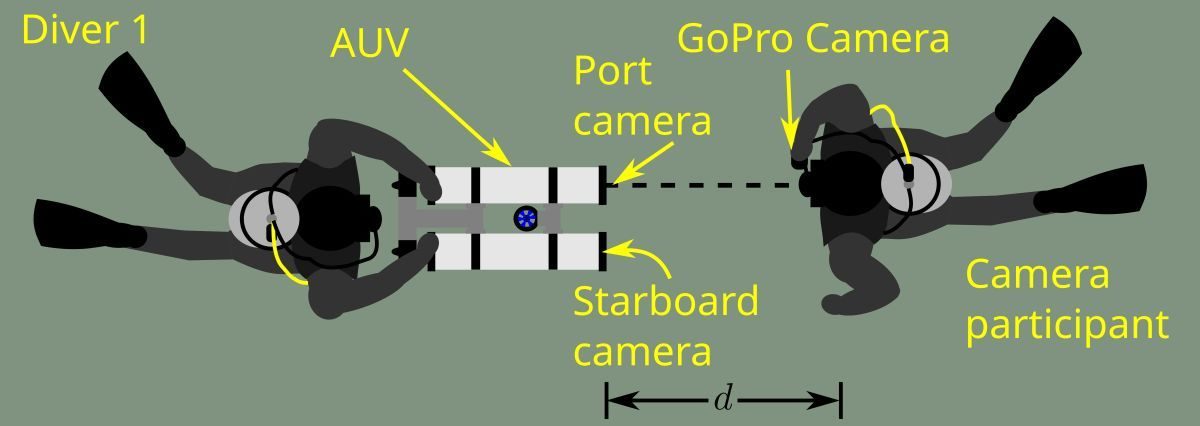
The robot could then display that status to the diver. Think of it as an unusual-reading indicator rather than a proven emergency alarm. It can spot when breathing moves outside the expected range, but the bubbles won’t explain why.

What still needs proving

The study compared the robot’s estimates with human analysis. It didn’t establish whether those readings can reliably identify stress or warn that an emergency is approaching.

Researchers next plan to combine respiration measurements with analysis of the diver’s movement. That second physical signal could give the robot more context. Until then, it can provide a breathing rate, not a diagnosis.

Paulo Vargas
Paulo Vargas is an English major turned reporter turned technical writer, with a career that has always circled back to…
Chinese startup claims its brain implant takes just 10 minutes to place, no skull surgery required
StairMed Technology's vein-based BCI could beat Neuralink's roughly two-hour surgery on speed, but the device still hasn't undergone human trials.
Art, Plate, Crystal

Brain implants, like the ones made by Elon Musk's Neuralink, typically involve open-skull surgery. But a Chinese startup says it can skip that step entirely, threading its device into the brain through a vein in a procedure that reportedly takes as little as ten minutes. According to the South China Morning Post, Shanghai-based StairMed Technology is one of several companies pursuing this approach, as the country pushes to expand its homegrown brain-computer interface (BCI) industry.

Faster than Neuralink, on paper

Read more
This bizarre email flaw is leaking corporate secrets to anyone who buys the right domain
Security researchers discovered companies are accidentally sending sensitive emails to domains that outsiders can register.
Maill app icon notifications

You don't always need to hack into a company's systems to get its secrets. Sometimes, the company will simply email them to you. A new report by WIRED's Matt Burgess has uncovered a bizarre email security problem in which companies are inadvertently sending sensitive information to domains that can be registered and controlled by outsiders. Security researchers Cory Solovevich and Mike Sheward discovered that seemingly harmless addresses such as noreply and deleteduser can become unexpected gateways to corporate information when the domains behind them aren't properly controlled.

The "hack" is buying the right domain

Read more
I found 3 ChatGPT features that turned out to be way more useful than I expected
ChatGPT on iPhone

I use ChatGPT pretty much every day, but somewhere along the way, I’ve also developed a habit of poking around and looking for features I haven’t tried yet. Some discoveries are genuinely useful, while others are the kind I’ll probably remember once every six months.

Every once in a while, though, I stumble across something that actually changes how I use ChatGPT. That happened recently with three features I’d somehow been overlooking. I’ve started using all three regularly now, and if you spend a lot of time in ChatGPT too, I think you’re missing out by not giving them a shot.

Read more