1. Home
  2. Emerging Tech
  3. News

Washington D.C.’s ‘no fly zone’ for drones just got extended by 30 miles

Add as a preferred source on Google

It’s hard out here for a drone. While just about anyone can fly them these days, where they can be flown is quite a different story. On Christmas , the Federal Aviation Administration decided to further extend the drone ban further into Virginia and Maryland, increasing the radius of the “no-drone zone” by 30 miles outside Washington, D.C. While the nation’s capital has long maintained strict standards over the presence of these unmanned flying objects, it seems as though the iron fist is closing in tighter and tighter around these devices, and soon there may be nowhere to fly them. Not legally, at least.

“Unmanned aircraft, including model aircraft, are ‘aircraft’ and are subject to FAA rules,” an administration spokesperson told eWeek via email. “No aircraft is allowed to fly inside the Special Flight Rules Area (SFRA) unless it complies with the published airspace security requirements. All aircraft flying in the Washington, D.C., SFRA are required to squawk a discrete beacon code and maintain continuous radio communications with air traffic controllers. Aircraft that cannot meet these requirements are prohibited from operating within the SFRA without specific authorization.” And while that seems like a lot of jargon, the simplest way to put it is this: You can’t fly a drone anywhere near D.C.

Recommended Videos

And it’s not just in our capital where these regulations are being enforced. Indeed, around two dozen states have passed legislation regarding drones, and major cities including Chicago, Los Angeles, and Miami, have rules on where drones can and can’t be flown. Failure to comply with these regulations result in both criminal and financial repercussions, and lawmakers say that they’re hoping to keep residents safe from both prying eyes and potential dangers carried by drones.

“It is important for you to tell your viewers that they cannot fly in the 30-mile radius,” an FAA official told WUSA9, a local station in D.C. “The FAA will continue to do outreach to educate the public.”


Lulu Chang
Fascinated by the effects of technology on human interaction, Lulu believes that if her parents can use your new app…
Google just canceled its AI Studio mobile app, and it’s not all bad news
Logo, Symbol, Disk

Google AI Studio was on track to make its way to Android and iPhone, giving developers and AI enthusiasts a dedicated place to build prompts and experiment with Google's latest models from their phones.

That's no longer happening. In a post shared by the official Google AI Studio account on X, Google confirmed that it's canceling the standalone AI Studio mobile app before launch. The announcement comes despite the company saying nearly 800,000 people had already pre-ordered the app across iOS and Android.

Read more
Google Earth’s AI misadventure lasted only a day. It was a tale of dangerous ignorance.
Nuclear reactors, tanks, and historical destruction on a life-like satellite map? Yeah, that's bad.
Nano Banana AI image generator representation.

Technology behemoths are clearly not reading the room, or they are just moving faster than they should when it comes to AI deployment. Google has already stuffed its Gemini AI in every corner of its software stack, from Android to daily productivity tools like Gmail that are used by hundreds of millions of users every day. AI is everywhere. Not all of it is bad, mind you. But in a few places, it just feels forced.

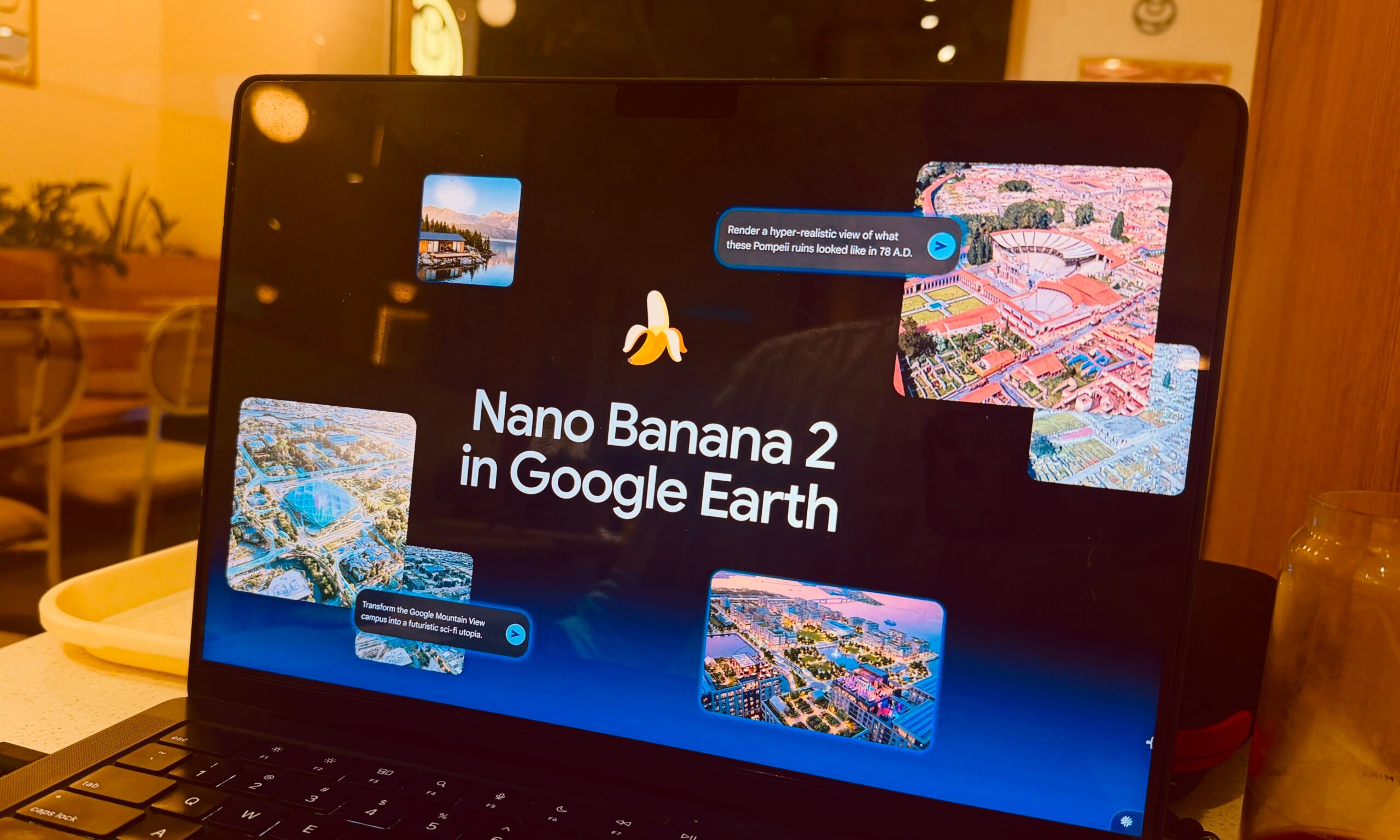
In its latest AI-fication experiment, the company targeted Google Earth. The idea was to let the audience use its Nano Banana 2 AI image generator and make images that can be placed on the map view. On paper, it's a cool idea. What would the Colosseum of Rome look like in your urban neighborhood? Yeah, fun stuff like that.

Read more
Google’s new AI gives robots better balance, smarter hands, and teamwork capabilities
Google just made robots a lot less clumsy and a lot more helpful.
Gemini robotics 2.0

Google DeepMind just brought sci-fi robots closer to reality, and it is very exciting. Building on its original Gemini Robotics model, the company has introduced Gemini Robotics 2, an AI system designed to help robots think, move, and even work together. Unlike most robots today, which rely on pre-programmed routines or someone controlling them remotely, this new system lets robots figure things out on their own when situations get unpredictable.

Can robots finally handle whole-body tasks?

Read more