1. Home
  2. Cars
  3. News

French investigators raid Renault’s HQ but find no evidence of a diesel defeat device

Add as a preferred source on Google

Paris-based Renault has confirmed that investigators sent by the French government unexpectedly raided several of its facilities earlier today.

The investigators were allegedly looking for evidence that Renault’s ubiquitous dCi turbodiesel four-cylinder engine is equipped with an illegal electronic defeat device similar to the the one that the Volkswagen Group admitted to using on its TDI mill last September. Investigators searched Renault’s headquarters in Paris and at least two technical centers located on the outskirts of the French capital, and they conducted tests on several diesel-burning engines found on location, but they uncovered no evidence to prove that the car maker is using a defeat device. French newspaper Le Figaro reports computers owned by the company’s top executives were seized for further examination.

Recommended Videos

The French government — which owns nearly 20 percent of Renault — quietly began investigating the dCi engine last fall when a German NGO named Deutsche Umwelthilfe published a report that claimed the 1.6-liter oil-burner found under the hood of the new Espace people-mover emits between 13 and 25 times the amount of NOx emissions allowed by the Euro 6 regulations and therefore uses a defeat device to pass emissions tests with flying colors. The car maker immediately denied the allegations, and it re-affirmed today that it has never built a car with a defeat device of any kind in its nearly 120-year history.

Renault shares nonetheless plummeted by 20 percent following the announcement. Interestingly, rival PSA Peugeot Citroën saw its shares dip by 8 percent even though it’s not involved with the investigation in any way.

Renault is cooperating with the investigation, which is led by a small task force that was created by the French government shortly after news of the Dieselgate scandal broke. Renault is currently the focus of the investigation because it’s France’s largest car maker in terms of volume and sales, but the task force’s mission statement suggests that Peugeot and Citroën could be probed as well.

The French government hasn’t revealed precisely why it chose to raid Renault’s facilities, and it hasn’t disclosed what its investigators were looking for. Stay tuned; we’ll update this developing story as more information becomes available. 

Ronan Glon
Ronan Glon is an American automotive and tech journalist based in southern France. As a long-time contributor to Digital…
Volvo is rolling out Apple Music to over 2 million cars with a simple OTA update
Your Volvo may soon get Apple Music without needing CarPlay
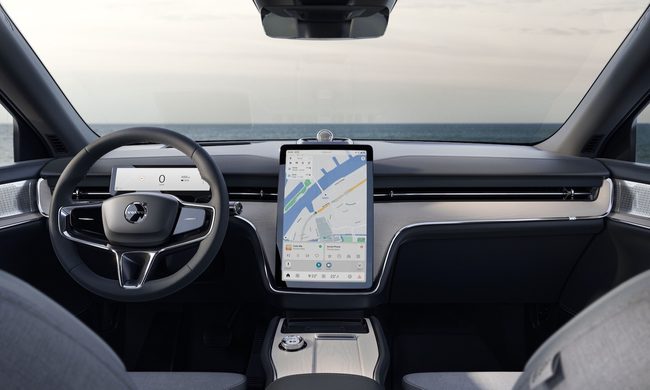
Interior view of the 2024 Volvo EX90.

The line between your smartphone and your car continues to blur. Volvo has announced that it is rolling out an over-the-air software update that brings Apple Music directly to the infotainment systems of more than 2 million vehicles worldwide. Instead of relying on Apple CarPlay or plugging in an iPhone, eligible drivers will be able to stream music natively from their car's built-in system, making Apple Music another integrated feature of Volvo's software experience.

The update is arriving for a wide range of Volvo models, including the EX90, ES90, XC90, S90, V90, XC60, S60, V60, XC40, EX40 and EC40, covering model year 2020 onwards. Availability, however, may vary depending on the vehicle.

Read more
Chery’s latest EV packs flagship tech for the price of a base Tesla, but you can’t buy it
Here's everything packed into Exeed's 2027 Exlantix ES, from its 27-sensor autonomous driving suite to its 860 km range, all starting under $31,000.
Car, Transportation, Vehicle

Chery's premium arm just dropped a sedan that makes you wonder why American EVs cost twice as much for half the tech.

Exeed's 2027 Exlantix ES ships with a driver-assist system called Falcon 700. It is built around an Nvidia Orin-Y chip and a genuinely stacked sensor suite.

Read more
A new AI model wants self-driving cars to think before they swerve
Forget guessing games, this self-driving AI actually shows its work.
Self driving car

Self-driving cars have gotten pretty good at driving. The harder problem is teaching them to drive safely in situations nobody planned for. We have heard horror stories of self-driving cars, behaving erratically in emergency situations, often times delaying first responders from reaching the scene.

A team at Seoul National University, led by professor Jun Won Choi from the Department of Electrical and Computer Engineering, thinks they have cracked part of that puzzle with a new AI model called SafeDrive. The research was recently selected as a highlight paper at CVPR 2026, a distinction that goes only to roughly 3% of all submissions.

Read more