1. Home
  2. Emerging Tech
  3. News

Could 3D printing be hazardous to your health? New study claims it might be

Add as a preferred source on Google

Researchers have new concerns over the potentially harmful effects of 3D printing, saying the materials used in the process may be potentially carcinogenic. Tiny bits of the printing material become airborne during the printing process and are small enough to be inhaled, claims a new study by researchers from three universities including the Illinois Institute of Technology.

The researchers note that not all materials are harmful, finding that PLA — polylactic acid, a type of plastic — emits lactide bits, which are currently not thought to be harmful. The same could not be said of many other types of materials, which the scientists found emitted various levels of potentially harmful substances. All ABS filaments and one HIPS filament emitted “large amounts” of styrene, considered possibly carcinogenic by the International Agency for Research on Cancer. Nylon, PCTPE, and imitation brick and wood filaments emitted caprolactam, which may not be carcinogenic but has chronic exposure recommendations in some locales.

Recommended Videos

“A screening analysis of potential exposure to these products in a typical small office environment suggest caution should be used when operating many of the printer and filament combinations in poorly ventilated spaces,” the paper reads.

filament
Image used with permission by copyright holder

The study did not look at exposure levels from a variety of environments where a printer might be placed, nor did it take into account the concept of proximity to the printer and exposure levels. It only looked at one potential case, which the researchers called a “typical small well-mixed office environment” (about 45 cubic meters). Further studies should be conducted to look at differences in exposure due to larger or smaller spaces, they point out.

The group also recommends that more research be done to understand how proximity to the printer affects exposure to the potentially hazardous substances, saying research in the area so far has been limited. In the meantime? Use your head, they say.

“We continue to suggest that caution should be used when operating many printer and filament combinations in enclosed or poorly ventilated spaces or without the aid of gas and particle filtration systems,” the report reads.

If you’re interested in reading the full report, it is available in full on the ACS Publications website.

Ed Oswald
For fifteen years, Ed has written about the latest and greatest in gadgets and technology trends. At Digital Trends, he's…
Google just canceled its AI Studio mobile app, and it’s not all bad news
Logo, Symbol, Disk

Google AI Studio was on track to make its way to Android and iPhone, giving developers and AI enthusiasts a dedicated place to build prompts and experiment with Google's latest models from their phones.

That's no longer happening. In a post shared by the official Google AI Studio account on X, Google confirmed that it's canceling the standalone AI Studio mobile app before launch. The announcement comes despite the company saying nearly 800,000 people had already pre-ordered the app across iOS and Android.

Read more
Google Earth’s AI misadventure lasted only a day. It was a tale of dangerous ignorance.
Nuclear reactors, tanks, and historical destruction on a life-like satellite map? Yeah, that's bad.
Nano Banana AI image generator representation.

Technology behemoths are clearly not reading the room, or they are just moving faster than they should when it comes to AI deployment. Google has already stuffed its Gemini AI in every corner of its software stack, from Android to daily productivity tools like Gmail that are used by hundreds of millions of users every day. AI is everywhere. Not all of it is bad, mind you. But in a few places, it just feels forced.

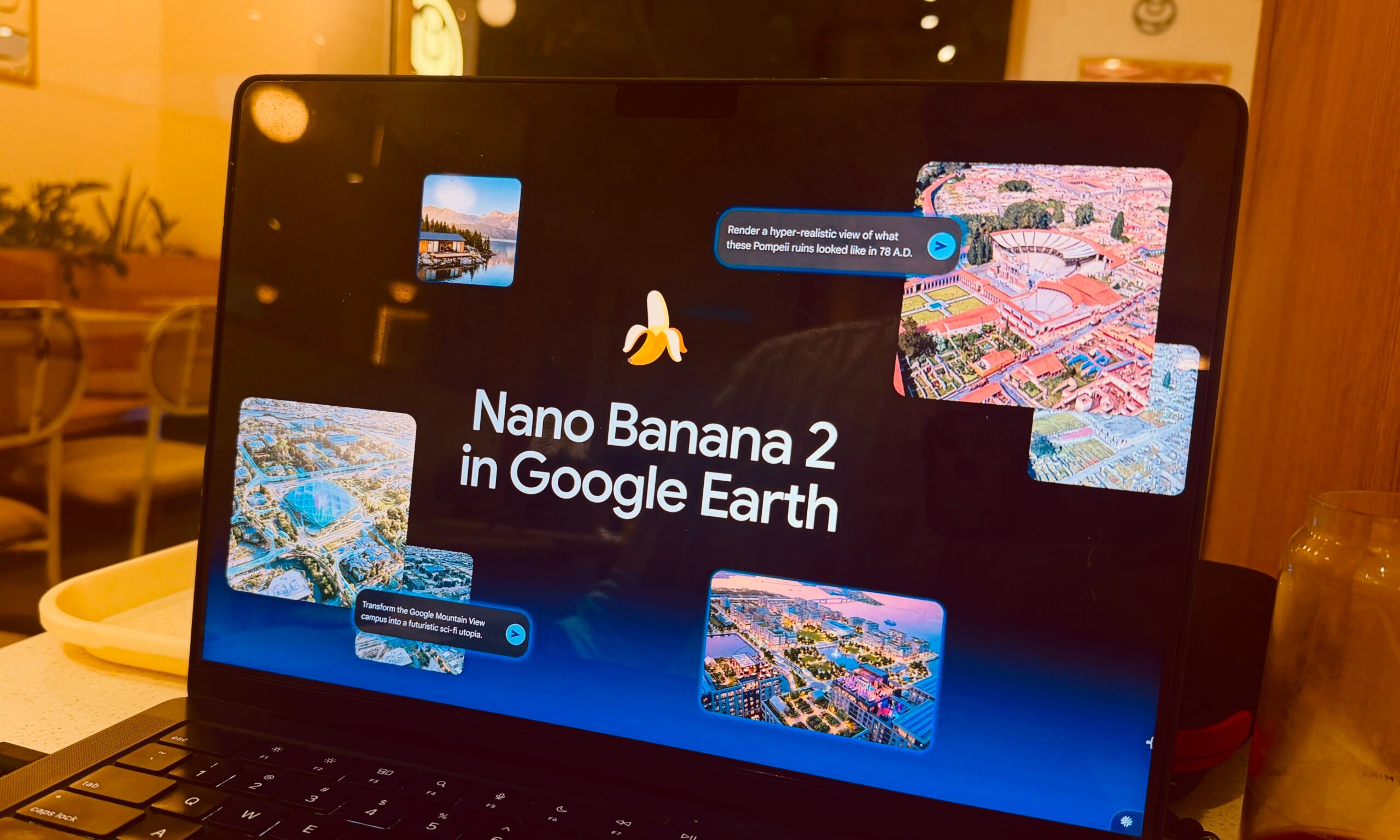
In its latest AI-fication experiment, the company targeted Google Earth. The idea was to let the audience use its Nano Banana 2 AI image generator and make images that can be placed on the map view. On paper, it's a cool idea. What would the Colosseum of Rome look like in your urban neighborhood? Yeah, fun stuff like that.

Read more
Google’s new AI gives robots better balance, smarter hands, and teamwork capabilities
Google just made robots a lot less clumsy and a lot more helpful.
Gemini robotics 2.0

Google DeepMind just brought sci-fi robots closer to reality, and it is very exciting. Building on its original Gemini Robotics model, the company has introduced Gemini Robotics 2, an AI system designed to help robots think, move, and even work together. Unlike most robots today, which rely on pre-programmed routines or someone controlling them remotely, this new system lets robots figure things out on their own when situations get unpredictable.

Can robots finally handle whole-body tasks?

Read more