1. Home
  2. Phones
  3. Health & Fitness
  4. Mobile
  5. Smart Home
  6. News

Digital Trends may earn a commission when you buy through links on our site. Why trust us?

Apple’s commitment to improving our health isn’t just lip service

Add as a preferred source on Google

Apple’s “Loop You In” event wasn’t just about new devices. The company is obviously committed to making new hardware, but the event made clear that Apple also wants to improve our lives in many ways.

The company used the early part of today’s event to talk about a very important issue to all of us: our health.

Recommended Videos

ResearchKit

Apple chief operating officer Jeff Williams, took the stage to discuss the progress of ResearchKit. Apple launched ResearchKit last year with the aim of solving one of the biggest problems facing medical research: data collection. Thanks to over a billion Apple devices, however, researchers can now collect the data necessary to further advance medical progress.

For example, researchers have been trying to figure out how to detect autism earlier than the current 5-year-old average. An example app was shown that uses special algorithms to help researchers examine reactions from children, which could lead to an earlier diagnosis for many patients.

ResearchKit can also help researchers better detect when epilepsy patients might suffer seizures. They are using the Apple Watch to save accelerometer and heart rate sensor data during seizures. With the ability to study a larger data set, researchers hope to acquire the ability to alert patients as to when they might be more susceptible to having a seizure, giving them time to get to a safe place.

Related Offer: The Apple Watch – You. At a glance.

CareKit

Willams also introduced a new open-source platform called CareKit, which gives patients the power to manage their own medical conditions and care. The Texas Medical Center already has an app built on CareKit, which assists in post-surgery recovery. Other apps from Sage Bionetworks and the University of Rochester monitor Parkinson’s Disease in patients

There are four modules. Care Cards provides a sort of to-do list that helps patients remember to take medications and perform physical therapy exercises.

The Symptoms and Measurement Tracker allows patients to record their progress. They can take pictures of a wound to show how it’s healing and use the iPhone’s accelerometer and gyroscope to measure a limb’s range of motion.

The Insight Dashboard compares the patient’s symptoms against the Care Cards, and the Connect module allows patients to share data with their doctor(s).

A very cool example application shown at the event involved a Parkinson’s patient who uses an app to record symptoms before and after exercise to find out if working out impacts the progression of the disease. Another feature is that doctors can now detect much faster how a patient is responding to medications so that the dose or type of medication can be changed as needed.

Williams also wanted to make it clear that you choose where CareKit data is shared. Apple will never share any of the data to anyone without authorization.

CareKit will be available this April.

Robert Nazarian
Robert Nazarian became a technology enthusiast when his parents bought him a Radio Shack TRS-80 Color. Now his biggest…
Samsung finally switched to silicon-carbon battery on Galaxy Z Fold 8. What’s so special about it?
One of Galaxy Z Fold 8’s biggest upgrade is hiding inside
Galaxy Z Fold 8 Ultra with Fold 8

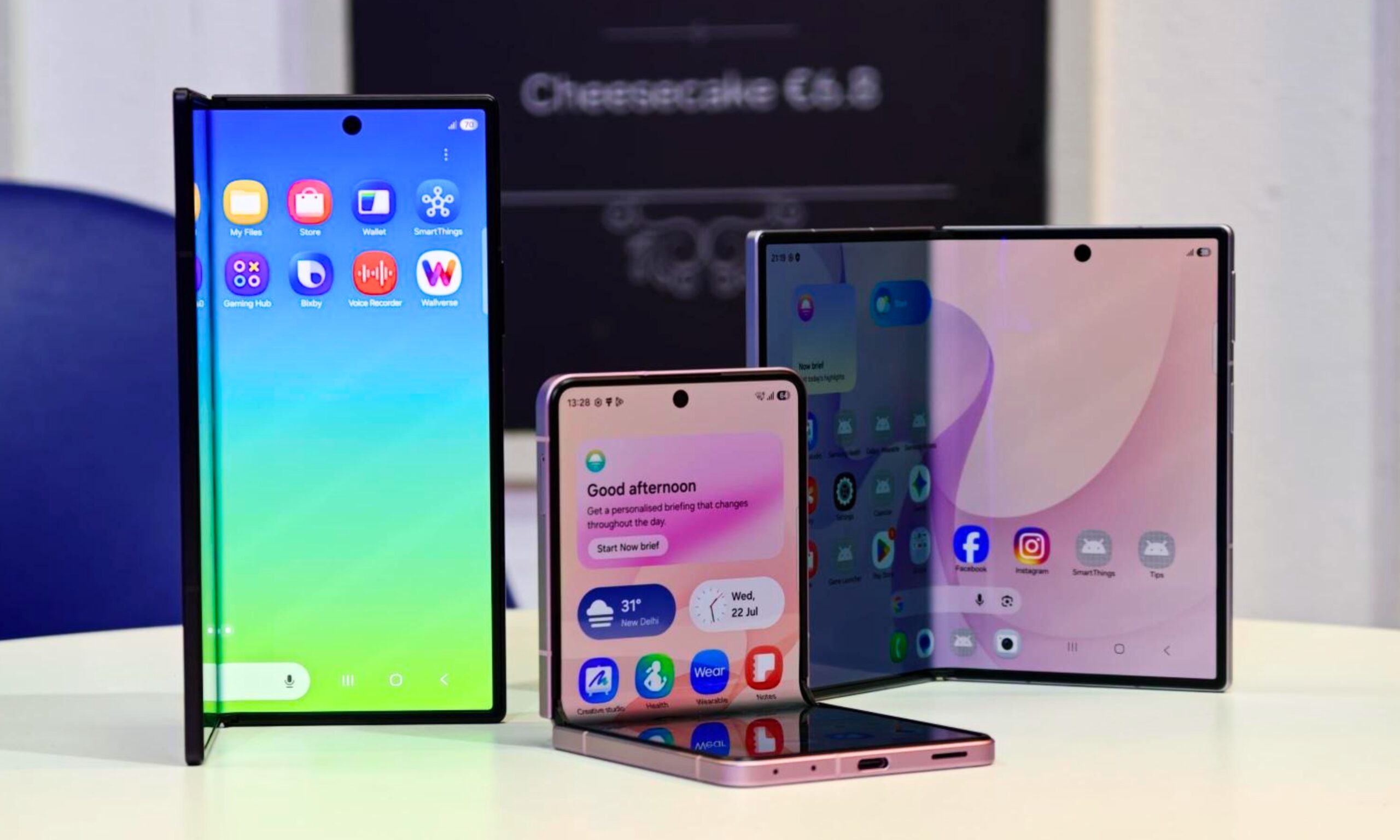
Samsung has finally joined the silicon-carbon battery race with its latest batch of premium foldables packing the new battery tech. But details for this change were rather hard to spot on the spec sheets. The company has confirmed during media briefings that the Galaxy Z Fold 8 Ultra, Galaxy Z Fold 8, and Galaxy Z Flip 8 all use silicon-carbon batteries.

Even then, the resulting capacities are hardly record-breaking. The Fold 8 Ultra carries a 5,000mAh battery, the regular Fold 8 gets 4,800mAh, and the Flip 8 has 4,300mAh. Rivals from Honor and Motorola have already crossed the 6,000mAh mark. But the figures only tell part of the story.

Read more
I’ve used foldable phones for years. Here’s how to pick the right one between the Galaxy Z Fold 8 and Flip 8
Samsung’s three new foldables solve very different problems
Galaxy foldables with its screen visible

After years of reviewing foldable smartphones, I have learned that choosing one involves much more than what looks pretty or how large you want. Book-style foldables are usually sold as productivity machines, while flip phones cater to people who value portability. Samsung’s latest lineup complicates that choice by introducing two very different book-style models alongside its familiar clamshell.

Most of their shared specifications fade into the background once you start using them. Their shapes and screens have a much greater impact on daily life. So here's how I'd make a decision when choosing between the new Galaxy Z Fold 8 Ultra, Galaxy Z Fold 8, and Galaxy Z Flip 8.

Read more
How to set up selfie video sign-in for your Google account
Your face can now serve as a way to get back into your Google account. Here's how to set it up.
Google account selfie sign in tutorial featured

Losing access to a Google account is rarely a quick fix, but Google has been actively working to make things easier. Last year, the company introduced a feature called Recovery Contacts that lets you designate a trusted friend or family member to verify your identity if you ever get locked out. Now, Google has introduced a new option, one that uses your face to get you back in instead of a phone call to a friend.

Like Recovery Contacts, the new selfie video authentication feature requires some setup before you can use your face to sign into your Google account. This involves recording the reference video that Google will use to verify your identity whenever you attempt to log in this way. Here's how to set up selfie video sign-in for your Google account.

Read more