1. Home
  2. Emerging Tech
  3. News

Lockheed Martin joins the space race to Mars

Add as a preferred source on Google

From China to NASA to Elon Musk, it seems everyone has their sights set on Mars exploration. But before we land on the Red Planet, we’ll probably orbit it. At this week’s Humans to Mars summit, Lockheed Martin unveiled its Mars Base Camp concept — an ambitious plan to send a manned space laboratory to orbit Mars by 2028.

If you’re in the “Mars or bust” camp, you’ll notice Lockheed Martin’s proposed date precedes NASA’s goal by at least a couple of years. The space agency did not contract Lockheed to develop the concept, but the aerospace company hopes to convince NASA to adopt its design before the agency sends astronauts in the 2030s. “NASA has [orbiting Mars] in their plan,” Lockheed Martin’s chief technologist for civil space exploration Tony Antonelli told Popular Science. “And we’re coloring in the details.”

Recommended Videos

Though the Base Camp is shooting for Mars, Lockheed Martin intends to only use proven current technologies to make their mission feasible, safe, and cost-effective. “All of these pieces exist today, they’re not brand new,” Antonelli said. “We’re taking advantage of what we’ve already got.”

Lockheed’s already got a few systems designed to facilitate Mars exploration. For example, Orion is “the world’s only deep-space crew capsule,” the company boasts on its website. The capsule will serve as the mission’s command-and-control center, equipped with communication and navigation technologies to help astronauts remotely explore Mars, as well as enough life support for 1,000 days.

Lockheed is also developing “exploration augmentation modules”, aka space habitats, based on NASA’s data and research into supporting human life in deep space. The habitat provides both a living space and working space, while offering astronauts a place of longterm security. “Basically, the habitat would be located just far enough away that astronauts couldn’t easily turn around and come home when problems arise,” Bill Pratt, Lockeed’s program manager for habitat study said on the company’s website. “That really forces us to operate in a different mindset that’s more akin to a long trip to Mars.”

The initial mission will launch in 2018 without a crew. Five years later, Lockheed plans to send astronauts further into deep space than anyone has travelled — that is, if SpaceX or China haven’t made it there first.


Dyllan Furness
Former Contributor
Dyllan Furness is a freelance writer from Florida. He covers strange science and emerging tech for Digital Trends, focusing…
Google just canceled its AI Studio mobile app, and it’s not all bad news
Logo, Symbol, Disk

Google AI Studio was on track to make its way to Android and iPhone, giving developers and AI enthusiasts a dedicated place to build prompts and experiment with Google's latest models from their phones.

That's no longer happening. In a post shared by the official Google AI Studio account on X, Google confirmed that it's canceling the standalone AI Studio mobile app before launch. The announcement comes despite the company saying nearly 800,000 people had already pre-ordered the app across iOS and Android.

Read more
Google Earth’s AI misadventure lasted only a day. It was a tale of dangerous ignorance.
Nuclear reactors, tanks, and historical destruction on a life-like satellite map? Yeah, that's bad.
Nano Banana AI image generator representation.

Technology behemoths are clearly not reading the room, or they are just moving faster than they should when it comes to AI deployment. Google has already stuffed its Gemini AI in every corner of its software stack, from Android to daily productivity tools like Gmail that are used by hundreds of millions of users every day. AI is everywhere. Not all of it is bad, mind you. But in a few places, it just feels forced.

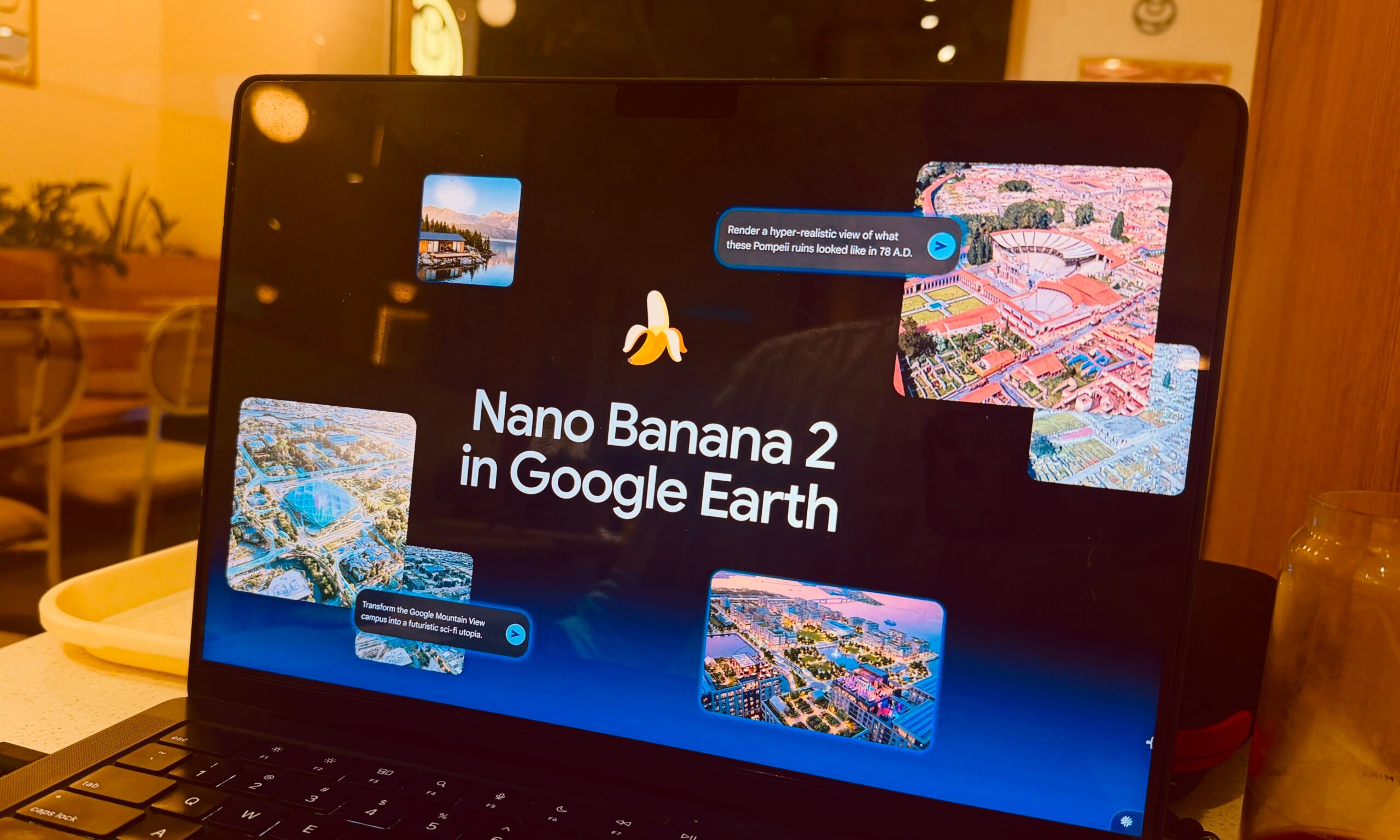
In its latest AI-fication experiment, the company targeted Google Earth. The idea was to let the audience use its Nano Banana 2 AI image generator and make images that can be placed on the map view. On paper, it's a cool idea. What would the Colosseum of Rome look like in your urban neighborhood? Yeah, fun stuff like that.

Read more
Google’s new AI gives robots better balance, smarter hands, and teamwork capabilities
Google just made robots a lot less clumsy and a lot more helpful.
Gemini robotics 2.0

Google DeepMind just brought sci-fi robots closer to reality, and it is very exciting. Building on its original Gemini Robotics model, the company has introduced Gemini Robotics 2, an AI system designed to help robots think, move, and even work together. Unlike most robots today, which rely on pre-programmed routines or someone controlling them remotely, this new system lets robots figure things out on their own when situations get unpredictable.

Can robots finally handle whole-body tasks?

Read more