  1. Home
  2. Cars
  3. Emerging Tech
  4. Virtual Reality
  5. News

Digital dealers: Cadillac considering VR showrooms with headsets instead of cars

Add as a preferred source on Google

To some, virtual reality technology is an immersive way to experience games, films, and not much else. But as the headsets become more advanced and the programming grows more capable, virtual reality could have endless applications, ranging from sports to medicine and even forensics. Now, Cadillac is exploring how it could change the way it sells cars.

According to a report by The Wall Street Journal, the American luxury brand is devising a new strategy for its U.S. dealership network, one that involves replacing a portion of its conventional stores with virtual reality showrooms. The new dealers won’t actually have any inventory on hand; instead they’ll feature VR headsets where customers can learn about Cadillac products while their vehicle is being serviced. Anyone up for a digital test drive in a CTS-V?

Recommended Videos

The new strategy is part of “Project Pinnacle,” a new retail approach put forth by Cadillac President Johan de Nysschen, and it makes sense given the carmaker’s recent struggles. Cadillac currently has 925 stores in the U.S., and despite the fact that brands like Lexus and BMW have far fewer (BMW has 339), Caddy’s competition sells far more units per month. A virtual showroom would have far less overhead and lower operating costs than a traditional car lot, so clearly, saving money is a big priority.

Believe it or not, integrating VR into the car buying process is not a new concept. Both Audi and Ferrari have explored the technology’s potential for vehicle configuration and educational purposes in the past, and even Tesla has used it to give the public a closer look at its products.

Read more: The 2017 XT5 is a crossover back to luxury for Cadillac

This month, de Nysschen will travel to about a half-dozen U.S. cities to meet with dealers and discuss the possibilities of virtual automotive retail.

Andrew Hard
Andrew first started writing in middle school and hasn't put the pen down since. Whether it's technology, music, sports, or…
Volvo is rolling out Apple Music to over 2 million cars with a simple OTA update
Your Volvo may soon get Apple Music without needing CarPlay
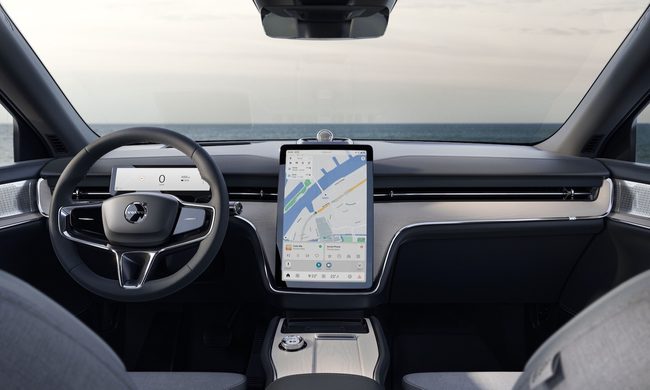
Interior view of the 2024 Volvo EX90.

The line between your smartphone and your car continues to blur. Volvo has announced that it is rolling out an over-the-air software update that brings Apple Music directly to the infotainment systems of more than 2 million vehicles worldwide. Instead of relying on Apple CarPlay or plugging in an iPhone, eligible drivers will be able to stream music natively from their car's built-in system, making Apple Music another integrated feature of Volvo's software experience.

The update is arriving for a wide range of Volvo models, including the EX90, ES90, XC90, S90, V90, XC60, S60, V60, XC40, EX40 and EC40, covering model year 2020 onwards. Availability, however, may vary depending on the vehicle.

Read more
Chery’s latest EV packs flagship tech for the price of a base Tesla, but you can’t buy it
Here's everything packed into Exeed's 2027 Exlantix ES, from its 27-sensor autonomous driving suite to its 860 km range, all starting under $31,000.
Car, Transportation, Vehicle

Chery's premium arm just dropped a sedan that makes you wonder why American EVs cost twice as much for half the tech.

Exeed's 2027 Exlantix ES ships with a driver-assist system called Falcon 700. It is built around an Nvidia Orin-Y chip and a genuinely stacked sensor suite.

Read more
A new AI model wants self-driving cars to think before they swerve
Forget guessing games, this self-driving AI actually shows its work.
Self driving car

Self-driving cars have gotten pretty good at driving. The harder problem is teaching them to drive safely in situations nobody planned for. We have heard horror stories of self-driving cars, behaving erratically in emergency situations, often times delaying first responders from reaching the scene.

A team at Seoul National University, led by professor Jun Won Choi from the Department of Electrical and Computer Engineering, thinks they have cracked part of that puzzle with a new AI model called SafeDrive. The research was recently selected as a highlight paper at CVPR 2026, a distinction that goes only to roughly 3% of all submissions.

Read more