  1. Home
  2. Cars
  3. Business
  4. Emerging Tech
  5. News

Anheuser-Busch placed an order for 40 Tesla Semis

Add as a preferred source on Google

Last month, Tesla unveiled what it likely hopes will be the future of the trucking industry, the Tesla Semi. The announcement generated a lot of excitement, but retailers appeared to be a bit hesitant to embrace Elon Musk’s latest offering. This is likely simply a result of the untested nature of electric trucks. That being said, Walmart and other retailers did make some purchases, and now the world’s largest beer brewer is getting in on the action.

Anheuser-Busch has announced that it has placed an order for 40 Tesla Semis, which is likely the largest order the product has seen to date. The brewery says that it believes the use of the Tesla Semi will help it reduce its carbon footprint and keep the roads safer, thanks to the autonomous driving features.

Recommended Videos

In terms of the environmental impact, Anheuser-Busch has a stated goal of reducing its carbon footprint by 30 percent by 2025 which it says would be “the equivalent of removing nearly 500,000 cars from the road globally each year.”

The company also said that it believes that self-driving and electric cars are the future of the trucking industry, and it wants to embrace these technologies early.

“We can’t wait to get these trucks on the road, and keep leading our industry forward to a greener, smarter future in partnership with some of the world’s most innovative companies,” Anheuser-Busch’s James Sembrot said. “This investment in Tesla semi-trucks helps us achieve these goals while improving road safety and lowering our environmental impact.”

Despite Anheuser-Busch’s investment, the future of the Tesla Semi is far from certain. Forbes points out that, in order to see long-term success, the Tesla Semi will need to prove it is economically feasible, and there are a few hurdles in the way of that achievement. One of the largest will be the truck’s carrying capacity. Tesla has said that it is capable of hauling a gross weight of 40 tons, but Forbes estimated that the truck’s battery could weigh as much as 7 tons on its own.

Regardless, the recent purchase from Anheuser-Busch shows that some companies are willing to give Tesla a fair shot. It remains to be seen if the Tesla Semi finds long-term success, but maybe you shouldn’t count Musk out just yet.

Eric Brackett
Former Digital Trends Contributor
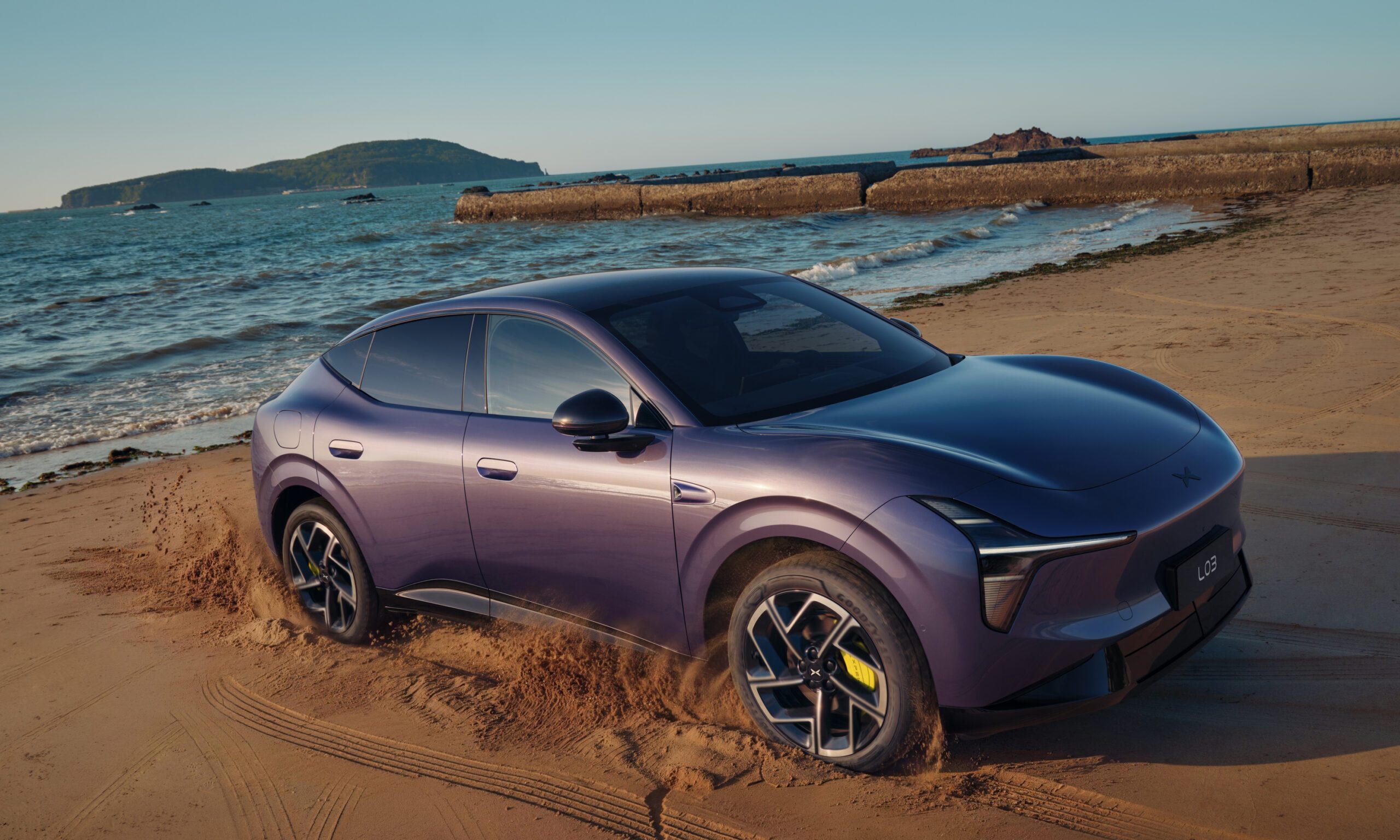
This sleek Chinese EV pairs supercar styling with three AI brains
The Xpeng L03 is an AI supercomputer disguised as a stylish family SUV
Xpeng L03

Xpeng’s latest electric vehicle carries enough processing power to make the term "smart car" actually sound more realistic than it actually is. The new Xpeng L03 debuted simultaneously in Europe and China on July 16, with the company presenting it across 65 markets. Available as a fully electric vehicle and an L03 Power X range-extender, the coupe-SUV is Xpeng’s most internationally focused model so far. Market-specific prices and sales dates remain unannounced.

Three AI chips and Google Maps built right in

Read more
A new sodium battery posts wild four-minute charging numbers, but don’t expect it in an EV yet
The breakthrough could improve fast charging and battery life, but the study hasn’t demonstrated those results in a production-sized pack
EV Charger

A new sodium-metal battery has posted a charging number that makes today’s EVs look painfully slow. In laboratory testing, the cell operated at a 15C rate, equivalent to completing a charge or discharge in roughly four minutes.

That doesn’t mean researchers plugged in an electric car and watched it fill up before the driver finished buying coffee. The result came from a small experimental cell using a new quasi-solid electrolyte, while the larger pouch-cell prototype delivered far less dramatic performance.

Read more
The Apple Car may be dead, but it became the foundation of Apple Intelligence
A decade of work on a canceled car project reportedly laid the groundwork for Apple Intelligence.
Apple Intelligence in Apple Car

The Apple Car may have never left the garage, but it apparently gave birth to Apple's AI ambitions. According to Bloomberg's Mark Gurman, Apple's canceled autonomous vehicle project, one that consumed more than a decade of work and over $10 billion before being scrapped in 2024, ended up laying the technological foundation for Apple Intelligence. In a rather ironic twist, one of Apple's most expensive failures may also become one of its most important long-term investments.

The Apple Car forced Apple to think like an AI company

Read more