  1. Home
  2. Cars
  3. Photo Galleries
  4. News

Audi’s 605 hp RS 7 Sportback performance cracks 60 in 3.7s, somehow gets 25 mpg

Add as a preferred source on Google

The horsepower war between Germany’s big three automakers is raging. The latest move comes from the city of Ingolstadt, where Audi has just introduced more powerful versions of the RS 7 Sportback and the RS 6 Avant.

Called RS 7 Sportback performance and RS 6 Avant performance, respectively, both models are powered by the same twin-turbocharged 4.0-liter TFSI V8 engine that has been tweaked to deliver 605 horsepower and 516 pound-feet of torque, though an overboost function allows the eight-cylinder to make up to 553 lb-ft. for short bursts. In comparison, the regular RS 7 is rated at 560 hp and 516 lb-ft. of torque.

The extra grunt sends the RS 7 and the RS 6 from zero to 62 mph in a supercar-like 3.7 seconds, from zero to 124 mph in 12.1 seconds, and on to a top speed that’s electronically limited to 155 mph. Buyers who need to go even faster can order the optional dynamic package that increases the 7’s top speed to nearly 190 mph.

The eight-cylinder is bolted to an eight-speed automatic transmission that can be shifted manually with steering-wheel-mounted paddles. Power is distributed to all four wheels via Audi’s quattro all-wheel drive system. Surprisingly, the 605-hp engine returns about 25 mpg in a mixed European cycle thanks in part to a start/stop system and Audi’s cylinder-on-demand technology, which transforms the eight into a turbo four under partial load.

Both models ride on specific 21-inch alloy wheels. The list of visual modifications includes a new front bumper with bigger air dams, a bigger air diffuser built into the rear bumper, and matte titaninum trim. Inside, both cars boast sport seats and a performance-specific instrument cluster.


CertifiedDealers300x250

Audi’s performance-badged RS models will go on sale across Germany next month. The RS 6 Avant costs €117,000 (approximately $131,000), while the RS 7 carries a base price of €121,700 (roughly $136,000). It goes without saying that the 6 won’t make the trip across the Atlantic, but only time will tell if the 7 will be added to Audi’s North American lineup.

Ronan Glon
Ronan Glon is an American automotive and tech journalist based in southern France. As a long-time contributor to Digital…
Volvo is rolling out Apple Music to over 2 million cars with a simple OTA update
Your Volvo may soon get Apple Music without needing CarPlay
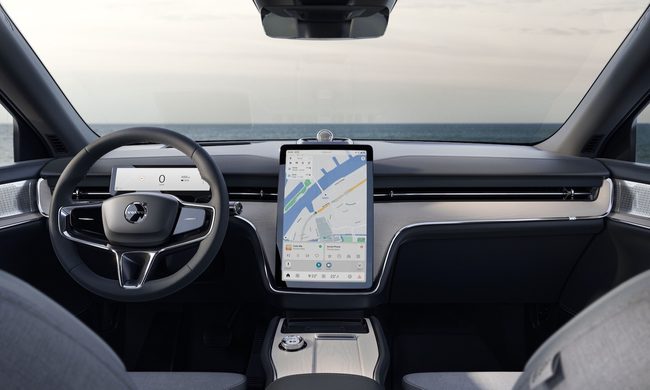
Interior view of the 2024 Volvo EX90.

The line between your smartphone and your car continues to blur. Volvo has announced that it is rolling out an over-the-air software update that brings Apple Music directly to the infotainment systems of more than 2 million vehicles worldwide. Instead of relying on Apple CarPlay or plugging in an iPhone, eligible drivers will be able to stream music natively from their car's built-in system, making Apple Music another integrated feature of Volvo's software experience.

The update is arriving for a wide range of Volvo models, including the EX90, ES90, XC90, S90, V90, XC60, S60, V60, XC40, EX40 and EC40, covering model year 2020 onwards. Availability, however, may vary depending on the vehicle.

Read more
Chery’s latest EV packs flagship tech for the price of a base Tesla, but you can’t buy it
Here's everything packed into Exeed's 2027 Exlantix ES, from its 27-sensor autonomous driving suite to its 860 km range, all starting under $31,000.
Car, Transportation, Vehicle

Chery's premium arm just dropped a sedan that makes you wonder why American EVs cost twice as much for half the tech.

Exeed's 2027 Exlantix ES ships with a driver-assist system called Falcon 700. It is built around an Nvidia Orin-Y chip and a genuinely stacked sensor suite.

Read more
A new AI model wants self-driving cars to think before they swerve
Forget guessing games, this self-driving AI actually shows its work.
Self driving car

Self-driving cars have gotten pretty good at driving. The harder problem is teaching them to drive safely in situations nobody planned for. We have heard horror stories of self-driving cars, behaving erratically in emergency situations, often times delaying first responders from reaching the scene.

A team at Seoul National University, led by professor Jun Won Choi from the Department of Electrical and Computer Engineering, thinks they have cracked part of that puzzle with a new AI model called SafeDrive. The research was recently selected as a highlight paper at CVPR 2026, a distinction that goes only to roughly 3% of all submissions.

Read more