  1. Home
  2. Cars
  3. Photo Galleries
  4. News

CAMAL envisions an 800-horsepower Bugatti-powered hybrid supercar for off-road duty

Add as a preferred source on Google

Imagine the strangest vehicular juxtaposition possible. Might that take the form of a V8-powered trike? Though that would certainly be an interesting mash-up, the latest idea from CAMAL may have it beat.

The Turin-based designer has released images of its “Ramusa” project, a hybrid supercar with its sights set on unpaved roads. Motor1 reports that the Ramusa, or “lizard” in Piedmontese, will be created with increased ground clearance, an all-wheel drive setup, and a Bugatti EB110-sourced 3.5-liter V12 quad-turbo engine. The monstrous powertrain is linked to the rear wheels via a six-speed transmission while an electric motor forces the front ones into motion.

Though the design sketches help, it’s still exceedingly difficult to picture this Frankenstein automobile.

With combined output of over 800 horsepower, the Ramusa is far beefier than perhaps its closest rival, the Ariel Nomad, which slinks along with a comparatively measly 300 hp. In addition to its supercar-rivaling power figures, the Ramusa offers 250 mm (9.8 inches) of ground clearance though it only sits 51 inches tall.

Its body is styled with exposed carbon fiber and plastic cladding, furthering the two-faced oddity of its design. It’s also worth mentioning that the engine and chassis comes from a vehicle that ceased production more than two decades ago and was only ever intended for being an absurdly fast road-car. Should CAMAL’s plans for a limited production run materialize, expect the Ramusa’s underpinnings to be sourced from something significantly more contemporary.

I find it my duty to advise all three interested buyers to consider how your new million-dollar-plus off-road supercar would look after its encounter with that boulder you didn’t see because you were barreling along a dirt road propelled by 800 hp. Just food for thought.

Miles Branman
Miles Branman doesn't need sustenance; he needs cars. While the gearhead gene wasn't strong in his own family, Miles…
This sleek Chinese EV pairs supercar styling with three AI brains
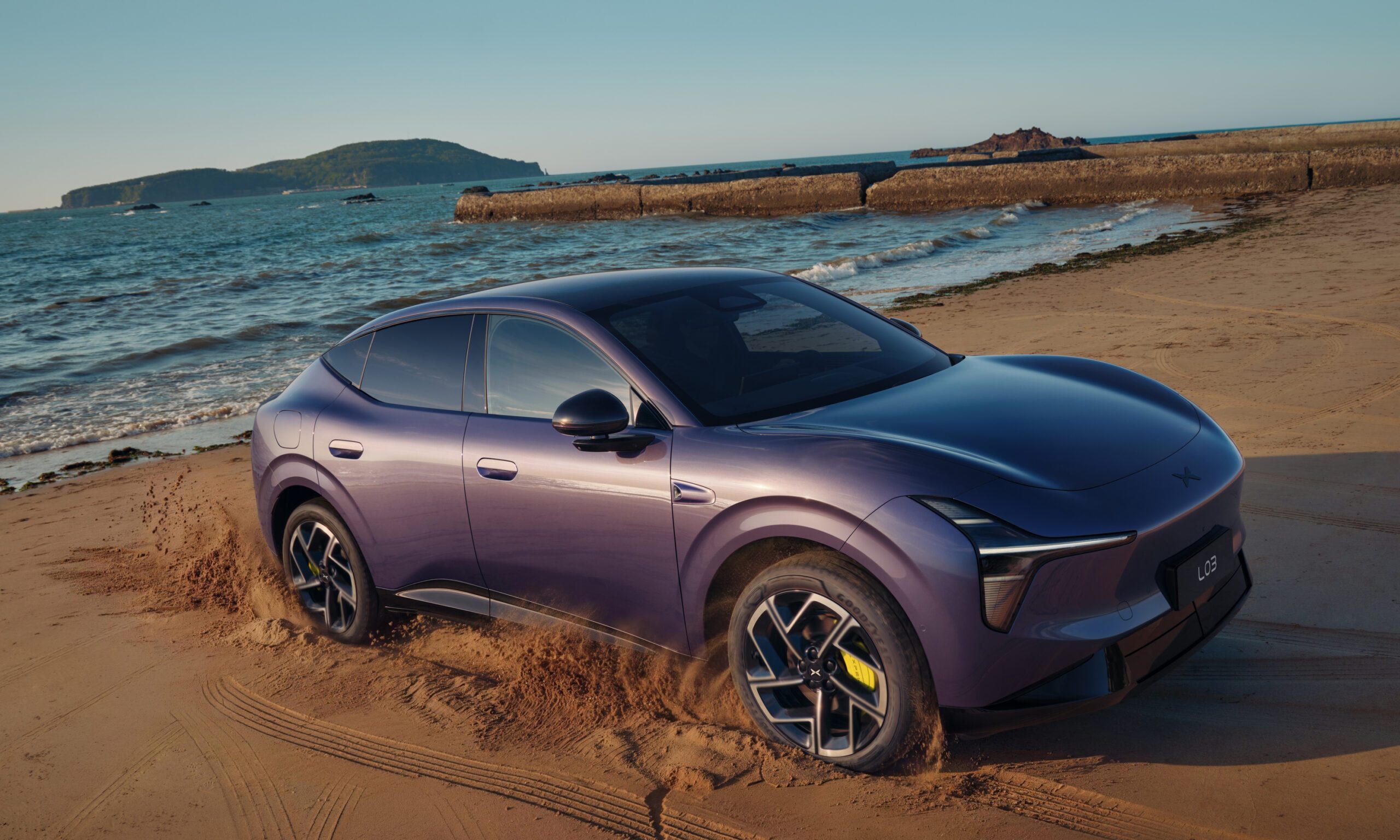
The Xpeng L03 is an AI supercomputer disguised as a stylish family SUV
Xpeng L03

Xpeng’s latest electric vehicle carries enough processing power to make the term "smart car" actually sound more realistic than it actually is. The new Xpeng L03 debuted simultaneously in Europe and China on July 16, with the company presenting it across 65 markets. Available as a fully electric vehicle and an L03 Power X range-extender, the coupe-SUV is Xpeng’s most internationally focused model so far. Market-specific prices and sales dates remain unannounced.

Three AI chips and Google Maps built right in

Read more
A new sodium battery posts wild four-minute charging numbers, but don’t expect it in an EV yet
The breakthrough could improve fast charging and battery life, but the study hasn’t demonstrated those results in a production-sized pack
EV Charger

A new sodium-metal battery has posted a charging number that makes today’s EVs look painfully slow. In laboratory testing, the cell operated at a 15C rate, equivalent to completing a charge or discharge in roughly four minutes.

That doesn’t mean researchers plugged in an electric car and watched it fill up before the driver finished buying coffee. The result came from a small experimental cell using a new quasi-solid electrolyte, while the larger pouch-cell prototype delivered far less dramatic performance.

Read more
The Apple Car may be dead, but it became the foundation of Apple Intelligence
A decade of work on a canceled car project reportedly laid the groundwork for Apple Intelligence.
Apple Intelligence in Apple Car

The Apple Car may have never left the garage, but it apparently gave birth to Apple's AI ambitions. According to Bloomberg's Mark Gurman, Apple's canceled autonomous vehicle project, one that consumed more than a decade of work and over $10 billion before being scrapped in 2024, ended up laying the technological foundation for Apple Intelligence. In a rather ironic twist, one of Apple's most expensive failures may also become one of its most important long-term investments.

The Apple Car forced Apple to think like an AI company

Read more