  1. Home
  2. Cars
  3. News

Faraday Future appoints BMW i8 exec as new CEO

Add as a preferred source on Google
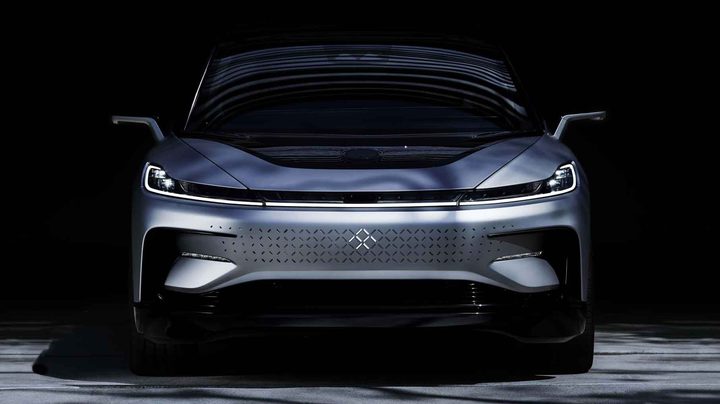
faraday-FF-91
Image used with permission by copyright holder

The story of embattled electric-car startup Faraday Future has taken another turn. Carsten Breitfeld, who previously ran BMW i, will take over as CEO from Jia Yueting, the company said in a statement. The Chinese entrepreneur will become Faraday’s “chief product and user officer,” according to the company. Faraday said it is also seeking a new “global chairman.”

Breitfeld is no stranger to electric cars. As head of BMW i, he oversaw launch of the BMW i3 and the i8 plug-in hybrid sports car — two radical designs from one of the auto industry’s biggest players. Breitfeld also helped start Chinese electric-car startup Byton, and most recently served as CEO of another Chinese firm, Iconiq Motors. But he has his work cut out for him at Faraday Future.

Recommended Videos

Founded in 2014, Faraday initially attracted buzz with its plans to take on Tesla. It promised an electric SUV called the FF 91 that would feature cutting edge tech and supercar-rivaling performance. Backed by Jia Yueting — before he became CEO — and his LeEco tech company, Faraday signed a $1 billion deal with the state of Nevada to build a factory in the desert outside Las Vegas.

Le Eco’s flagging fortunes eliminated Faraday’s main source of funding, forcing the automaker to abandon plans for the Nevada factory and delay the launch of the FF 91. Executives eventually decided to repurpose a former tire factory in California as a scaled-down assembly plant, while Jia named himself CEO in late 2017. Around the same time, Faraday secured an emergency $2 billion investment from China’s Evergrande that kept the automaker out of bankruptcy. But the deal quickly unraveled.

Under Jia’s leadership, Faraday burned through the first $800 million installment from Evergrande ahead of schedule. Evergrande refused to advance Faraday more money, and asked Jia to distance himself from the automaker, according to The Verge. While Evergrande and Faraday fought in court, the latter laid off hundreds of employees, and co-founder Nick Sampson resigned. Evergrande eventually agreed to reduce its stake in Faraday, which was also freed up to find alternative sources of funding.

As Faraday has struggled, the field has become crowded with other electric-car startups. One-time savior Evergrande has invested in other automotive firms, while established automakers are rolling out their own electric cars. Faraday is a lesson that, Tesla’s success aside, starting a new car company is a difficult and expensive process with a high failure rate.

Stephen Edelstein
Stephen is a freelance automotive journalist covering all things cars. He likes anything with four wheels, from classic cars…
Smart brings back its original two-seater as an all-electric car with up to 290 km of range
The iconic Smart two-seater is back, and its bigger battery could make this tiny electric car more practical beyond city streets.
smart #2 Premium

Smart unveiled the all-electric smart #2 at the Paris Motor Show - the same stage where it revealed its first two-seater concept 30 years ago. This new model keeps the tiny footprint that made the original Fortwo a city darling, but it fixes the one thing that held that car back. You're now looking at nearly double the range and a proper fast-charging setup to match.

What makes the Smart #2 better than its predecessor?

Read more
Modern cars love to collect data. Their companion apps appear to be even worse
Think your connected car tracks too much? Take a look at its phone app
Transportation, Vehicle, Car

We've known for years that modern cars aren't particularly shy about collecting data. It turns out the little app you install alongside one is apparently another cause for concern. Researchers at Northeastern University (via Vucense), working with Consumer Reports, tested 21 late-model vehicles from 19 brands and 30 manufacturer companion apps to see where their network traffic went. Nineteen of the 21 cars contacted at least one third party over Wi-Fi, while 11 reached domains classified as advertising, tracking, or analytics services.

For most of the vehicles tested, adding the manufacturer's companion app at least doubled the number of advertising, tracking, and analytics companies contacted. Seventy percent of the apps reached more than five such domains, compared with 29% of the cars.

Read more
Citroën promised us a cheap electric 2CV. The charming concept is finally here, with egg holders and turtle pedals
Citroën’s electric 2CV concept is smaller, lighter, and costs just 15,000 Euros
Citroen 2CV Concept Featured

A few months ago, Citroën told us one of France's most recognizable cars was coming back as a cheap EV. Now we finally know what that actually means. The Citroën 2CV Concept has made its debut at the 2026 Paris Motor Show, previewing the production model Citroën intends to put on European roads by 2028.

Just as promised, it is a fully electric car that is built to be simple and small enough to slot between the tiny Ami and C3 in Citroën's lineup. And sticking true to its legacy, it keeps some of that unique strangeness of the original 2CV.

Read more