  1. Home
  2. Cars
  3. News

LimeBike wants to help you get around on its new escooters

Add as a preferred source on Google

If you thought your days of zooming about your neighborhood ended when you graduated middle school, think again. Here to prove that there is indeed a renaissance of two-wheeled vehicles (and not of the bicycle or motorcycle variety) is the escooter. It’s all thanks to LimeBike, a company that was initially dedicated to bringing bike-sharing to all corners of the U.S. But now, it’s expanding into other transportation options as well, and you better believe that includes electric scooters.

These scooters, called Lime-S, can go up 14.8 miles per hour and have a maximum range of 37 miles on a single charge. As far as pricing is concerned, you’ll need to pay $1 to unlock the scooter, and an additional $1 for every 10 minutes of riding. So if you’re looking to spend, say, an hour on a Lime-S, be prepared to shell out a grand total of $7 (not bad, if we do say so ourselves). Interestingly, LimeBike says that these scooters were all built in-house, rather than relying on a third-party manufacturer to provide the gear. That means that if something should go wrong with any Lime-S, LimeBike should be able to get things fixed quite efficiently.

Recommended Videos

But why would a bike-sharing company look to diversify its portfolio in such a manner? As LimeBike CEO Toby Sun told TechCrunch, “This is an exciting and competitive landscape. What you are beginning to see is that some players in the bike-share industry will not make it because of a lack of funding and operational excellence.”

It’s unclear as of yet where the new Lime-S scooters will launch, but the company does say that it’s having conversations with “a number of cities.” The company has been testing its new fleet as part of a sanctioned pilot program for the last couple months in hopes of becoming “the leading smart mobility solution provider” both in the U.S. and abroad.

Late last year, LimeBike began operating in Europe, launching 500 bikes in two major markets — Frankfurt, Germany, and Zurich, Switzerland. The company has also just debuted its electric-assist bike fleet in Seattle. In total, the company says that it has deployed 30,000 bikes, and seen one million passengers take rides across its 33 markets.

As Sun noted, “the multi-modal mobility solution also helps to meet the various needs of that first and last mile transportation challenge.” And scooters may just be the secret sauce we’ve all been looking for.

Lulu Chang
Fascinated by the effects of technology on human interaction, Lulu believes that if her parents can use your new app…
Volvo is rolling out Apple Music to over 2 million cars with a simple OTA update
Your Volvo may soon get Apple Music without needing CarPlay
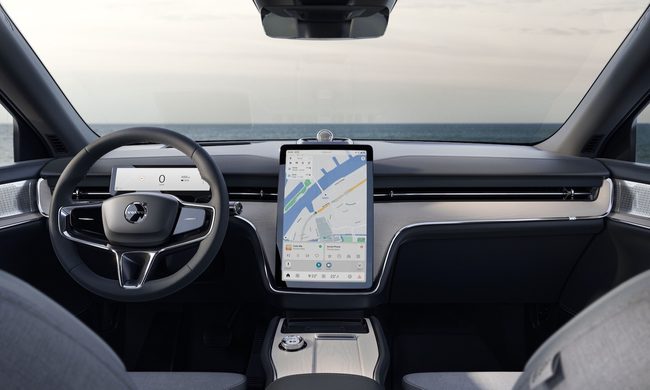
Interior view of the 2024 Volvo EX90.

The line between your smartphone and your car continues to blur. Volvo has announced that it is rolling out an over-the-air software update that brings Apple Music directly to the infotainment systems of more than 2 million vehicles worldwide. Instead of relying on Apple CarPlay or plugging in an iPhone, eligible drivers will be able to stream music natively from their car's built-in system, making Apple Music another integrated feature of Volvo's software experience.

The update is arriving for a wide range of Volvo models, including the EX90, ES90, XC90, S90, V90, XC60, S60, V60, XC40, EX40 and EC40, covering model year 2020 onwards. Availability, however, may vary depending on the vehicle.

Read more
Chery’s latest EV packs flagship tech for the price of a base Tesla, but you can’t buy it
Here's everything packed into Exeed's 2027 Exlantix ES, from its 27-sensor autonomous driving suite to its 860 km range, all starting under $31,000.
Car, Transportation, Vehicle

Chery's premium arm just dropped a sedan that makes you wonder why American EVs cost twice as much for half the tech.

Exeed's 2027 Exlantix ES ships with a driver-assist system called Falcon 700. It is built around an Nvidia Orin-Y chip and a genuinely stacked sensor suite.

Read more
A new AI model wants self-driving cars to think before they swerve
Forget guessing games, this self-driving AI actually shows its work.
Self driving car

Self-driving cars have gotten pretty good at driving. The harder problem is teaching them to drive safely in situations nobody planned for. We have heard horror stories of self-driving cars, behaving erratically in emergency situations, often times delaying first responders from reaching the scene.

A team at Seoul National University, led by professor Jun Won Choi from the Department of Electrical and Computer Engineering, thinks they have cracked part of that puzzle with a new AI model called SafeDrive. The research was recently selected as a highlight paper at CVPR 2026, a distinction that goes only to roughly 3% of all submissions.

Read more