  1. Home
  2. Cars
  3. News

Honda’s next-generation Civic may equip 1.5-liter turbocharged engine

Add as a preferred source on Google

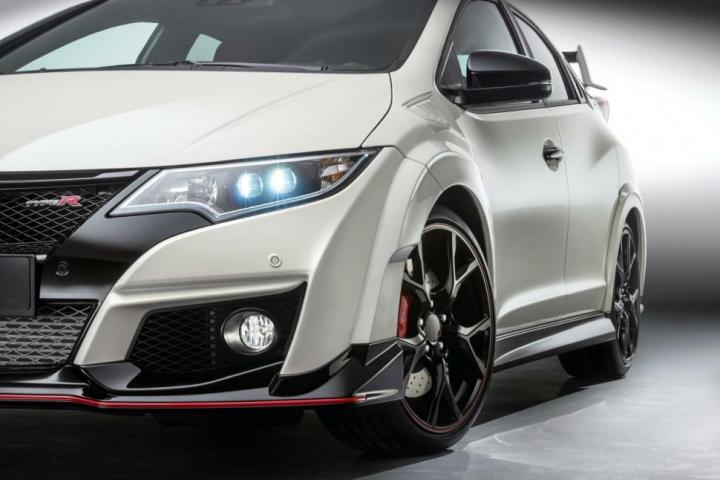
The 2015 Civic Type R is Honda Motor Co.’s first turbocharged vehicle in awhile, but it turns out the hot hatchback is only the tip of the spear.

The brand is planning to build a wave of VTEC Turbo four-cylinders in 2015, some of which will come to the U.S. and all of which will be produced at the automaker’s plant in Anna, Ohio.

Recommended Videos

Automotive News reports that the next-generation, non-Type R Civic will equip one of those powerplants in the form of a 1.5-liter turbo. This mission here is fuel economy, not performance, but there will be advantages in power as well.

“Downsized turbocharging will be the base, even for the Civic,” said Yoshiharu Yamamoto, the brands R&D chief. The 1.5-liter will deliver the horsepower of a naturally aspirated 2.4-liter engine, he said, but with better torque and fuel economy.

Honda has experimented with forced induction before, but only scarcely. We have fond memories of the first-generation Acura RDX, the turbo V6 Honda Legend from the 1980s, and the adorable City Turbo from the same decade. Not all models will feature forced induction, however.

“Quite a bit will switch over to turbo,” Yamamoto explained, “But there will still be some naturally aspirated ones remaining.”

Another turbo VTEC engine will arrive under the hood of the 2018 Honda CR-Z. The 2.0-liter block is unlikely to produce the same numbers as the 305-horsepower Type R, but its projected 280 hp is still nothing to shake a stick at.

The hybrid variant will be scrapped altogether as Honda gives the CR-Z a sporty makeover from top to bottom. The car will be built on the same platform as the next-gen Civic (no longer that of the Fit) and will reportedly feature styling inspired by the Acura NSX.

Andrew Hard
Andrew first started writing in middle school and hasn't put the pen down since. Whether it's technology, music, sports, or…
BYD just dropped a $16,000 car into an EV price war America can’t compete with
China keeps dropping $16,000 EVs while America struggles to crack $30,000
BYD Seal 06 Budget EV at a Charging station

China's affordable EV market is getting ridiculously good in terms of value. Barely a day after Volkswagen opened preorders for its $17,175 ID. Era 5S plug-in hybrid, BYD has launched the 2027 Seal 06 with prices starting even lower.

The DM-i plug-in hybrid begins at 99,900 yuan, or around $14,700, while the fully electric Seal 06 starts at 109,900 yuan, roughly $16,100. In comparison, America’s cheapest EV, the 2027 Chevrolet Bolt, starts at $28,995. That makes the Bolt almost $13,000 more expensive than the entry-level Seal 06 EV.

Read more
Volkswagen’s $17,000 plug-in hybrid makes America’s cheapest EV look overpriced
Volkswagen’s $17,000 ID. Era 5S is insanely good value
Volkswagen ID. Era 5S Featured

Volkswagen's latest hybrid car is impressive on paper, but the real shocker is its price tag. SAIC Volkswagen has opened preorders for the ID. Era 5S in China with a limited-time starting price of 115,900 yuan, or roughly $17,175. Its regular Pure trim costs around $17,770, while even the range-topping Max comes in at just $22,215.

To put that into perspective, Chevrolet lists the 2027 Bolt at an MSRP of $28,995, making it America’s cheapest EV. Nissan’s 2026 Leaf starts at $29,990 before destination charges. So the cheapest Bolt is around $11,820 above Volkswagen’s introductory ID. Era 5S price.

Read more
Kia’s 2027 EV3 could be the affordable EV we’ve been waiting for
Five trims, two drivetrains, and a starting price that undercuts almost everything else in Kia's lineup.
Kia EV3

Kia has finally put a price on the EV3, and the number might actually surprise you. The entry-level trim starts at $31,385 in the US, including a $1,495 destination charge, making it the cheapest EV Kia sells here and one of the more wallet-friendly electric vehicle options you can buy right now.

Why did it take so long to get here?

Read more