  1. Home
  2. Cars
  3. News

Pininfarina and F1 racer Fittipaldi will debut an ultra-light supercar in Geneva

Add as a preferred source on Google

Every international auto show is a chance for manufacturers to preview their latest production vehicles and concepts, but only one show is tailored to supercars. The Geneva Motor Show in March rolls out the red carpet for the most exclusive brands to show off their dream works.

Pininfariana, an iconic Italian design firm, wouldn’t choose any other stage to show off its new concept vehicle, the Fittipaldi EF7 Vision Gran Turismo. The name is in large part owed to the car’s developer, Formula 1 champion and Indy 500 winner Emerson Fittipaldi. Working with Pininfarina, Fittipaldi created a limited-edition track car that will use a naturally aspirated V8 good for more than 592 horsepower.

Recommended Videos

Details about the car are limited, but we do know it will weigh around 2,200 pounds and will use a carbon fiber monocoque chassis.

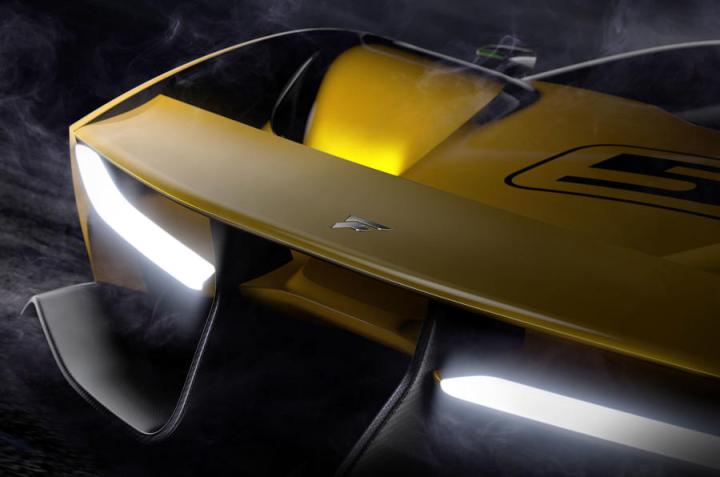
Fittipaldi EF7 Vision Gran Turismo supercar teaser 1
Image used with permission by copyright holder

“Owner-drivers can expect reliability, lower maintenance cost, and minimal mechanic and tech teams — which means more time and elation on the track,” said Fittipaldi. Autocar brings us these two teaser images, which shows the chassis and rear of the car.

Like other Gran Turismo-named vehicles, this one will be added to PlayStation’s Gran Turismo game. Unlike some GT concepts, however, Pininfarina’s car will be produced, albeit in very small quantities (we aren’t sure how small yet).

“[Fittipaldi’s] sole mission was to apply all his track knowledge on creating a new experience that will elevate the driving ability of all supercar enthusiasts from around the world,” said a Pininfarina spokesman.

Doesn’t that sound nice? I’m going to imagine that Pininfarina means every supercar enthusiast will get a chance to drive the EF7 Vision GT and have their driving abilities “elevated.”

We’ll learn more about the car closer to its debut on March 7. Pininfarina is also planning to show a sedan concept during the Geneva show dates.

Miles Branman
Miles Branman doesn't need sustenance; he needs cars. While the gearhead gene wasn't strong in his own family, Miles…
Your next car’s software update could become its biggest security risk
Your next car could receive updates like your smartphone. That's also becoming a cybersecurity nightmare.
OTA technology allows manufacturers to remotely deliver software updates.

Modern cars are no longer machines that stay the same after they leave the showroom. Increasingly, they're becoming software-defined vehicles that receive new features, bug fixes, and security patches wirelessly, much like smartphones. But while over-the-air (OTA) updates have made vehicle maintenance easier and cheaper, cybersecurity experts are warning that the same technology could also become one of the automotive industry's biggest security challenges.

Researchers and policymakers are now calling for stronger oversight as connected vehicles become increasingly dependent on remote software updates. Their concern isn't just about hackers stealing personal data. It's about someone potentially interfering with the operation of a moving vehicle.

Read more
This sleek Chinese EV pairs supercar styling with three AI brains
The Xpeng L03 is an AI supercomputer disguised as a stylish family SUV
Xpeng L03

Xpeng’s latest electric vehicle carries enough processing power to make the term "smart car" actually sound more realistic than it actually is. The new Xpeng L03 debuted simultaneously in Europe and China on July 16, with the company presenting it across 65 markets. Available as a fully electric vehicle and an L03 Power X range-extender, the coupe-SUV is Xpeng’s most internationally focused model so far. Market-specific prices and sales dates remain unannounced.

Three AI chips and Google Maps built right in

Read more
A new sodium battery posts wild four-minute charging numbers, but don’t expect it in an EV yet
The breakthrough could improve fast charging and battery life, but the study hasn’t demonstrated those results in a production-sized pack
EV Charger

A new sodium-metal battery has posted a charging number that makes today’s EVs look painfully slow. In laboratory testing, the cell operated at a 15C rate, equivalent to completing a charge or discharge in roughly four minutes.

That doesn’t mean researchers plugged in an electric car and watched it fill up before the driver finished buying coffee. The result came from a small experimental cell using a new quasi-solid electrolyte, while the larger pouch-cell prototype delivered far less dramatic performance.

Read more