  1. Home
  2. Cars
  3. Legacy Archives

Remember the Porsche Panamera wagon? Porsche’s R&D boss says it might happen

Add as a preferred source on Google

With hybrid supercars, racing classics, and laser precise sports cars under its stable, the Porsche Panamera probably isn’t your favorite vehicle to come out of Stuttgart.

It’s not the prettiest car in the world, and its emphasis on luxury and practicality were a bit off-putting to the purist crowd, who routinely scoff at anything without ‘911’ written across the back.

Recommended Videos

That said, the sedan is a joy to drive, more usable than a Carrera, is comfortable and lush inside. A second generation, due in 2016, looks to make it even better.

Speaking to Auto Express at the 2014 LA Auto Show, Porsche’s head of Research and Development Wolfgang Hatz said that several new versions of the Panamera could debut with the car’s second wave.

“First of all, we are developing at the moment a new Panamera, that is true, you’ve probably already seen [pictures] of the first prototypes,” he said. “We have prepared it for a lot of derivatives, personally I like very much the Sport Turismo.”

The Sport Turismo wagon (above) was originally unveiled at the 2012 Paris Auto Show, and featured an estate/wagon-like layout. The Sport Turismo also equipped the brand’s ‘e-Hybrid’ system, which used a 333-horsepower supercharged V6 and a 95-hp electric motor together to propel the car to 60 mph in less than 6.0 seconds.

Second-gen Panamera’s will ride on Porsche’s new Modular Standard (MSB) platform, so many of these specifications will undoubtedly change if the car does eventually show up in showrooms.

The MSB layout will allow the Panamera to drop close to 200 pounds for its second generation, and also give the manufacturer opportunities for more derivatives.

“The reason we have done this [new platform] is so all things are already included, could be coupe, could be convertible, could be Sport Turismo and now we have to decide which is the one that hits our needs,” Hatz continued. “Convertible? For me we already have so many good convertibles with the Boxter and 911, is it something we really need? It’s something more for the luxury segment.”

Andrew Hard
Andrew first started writing in middle school and hasn't put the pen down since. Whether it's technology, music, sports, or…
Volvo is rolling out Apple Music to over 2 million cars with a simple OTA update
Your Volvo may soon get Apple Music without needing CarPlay
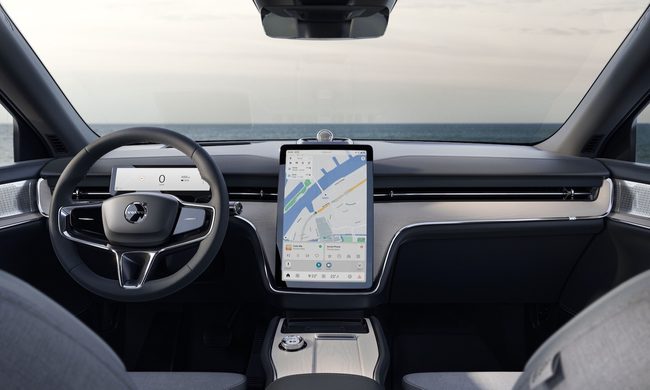
Interior view of the 2024 Volvo EX90.

The line between your smartphone and your car continues to blur. Volvo has announced that it is rolling out an over-the-air software update that brings Apple Music directly to the infotainment systems of more than 2 million vehicles worldwide. Instead of relying on Apple CarPlay or plugging in an iPhone, eligible drivers will be able to stream music natively from their car's built-in system, making Apple Music another integrated feature of Volvo's software experience.

The update is arriving for a wide range of Volvo models, including the EX90, ES90, XC90, S90, V90, XC60, S60, V60, XC40, EX40 and EC40, covering model year 2020 onwards. Availability, however, may vary depending on the vehicle.

Read more
Chery’s latest EV packs flagship tech for the price of a base Tesla, but you can’t buy it
Here's everything packed into Exeed's 2027 Exlantix ES, from its 27-sensor autonomous driving suite to its 860 km range, all starting under $31,000.
Car, Transportation, Vehicle

Chery's premium arm just dropped a sedan that makes you wonder why American EVs cost twice as much for half the tech.

Exeed's 2027 Exlantix ES ships with a driver-assist system called Falcon 700. It is built around an Nvidia Orin-Y chip and a genuinely stacked sensor suite.

Read more
A new AI model wants self-driving cars to think before they swerve
Forget guessing games, this self-driving AI actually shows its work.
Self driving car

Self-driving cars have gotten pretty good at driving. The harder problem is teaching them to drive safely in situations nobody planned for. We have heard horror stories of self-driving cars, behaving erratically in emergency situations, often times delaying first responders from reaching the scene.

A team at Seoul National University, led by professor Jun Won Choi from the Department of Electrical and Computer Engineering, thinks they have cracked part of that puzzle with a new AI model called SafeDrive. The research was recently selected as a highlight paper at CVPR 2026, a distinction that goes only to roughly 3% of all submissions.

Read more