  1. Home
  2. Cars
  3. Emerging Tech
  4. Photo Galleries
  5. Legacy Archives

On its way to showrooms, Toyota’s hydrogen-powered FCV makes a stop at CES 2014

Add as a preferred source on Google

As promised, The Toyota FCV concept made an appearance at the 2014 Consumer Electronics Show in Las Vegas, and Toyota let slip a few details about this hydrogen fuel-cell vehicle’s development.

Originally unveiled at the 2013 Tokyo Motor Show, the FCV is the latest in a line of concepts that preview a production Toyota fuel-cell car expected to arrive in 2015.

Preliminary performance figures include a 0 to 60 mph time of around 10 seconds, a 300-mile range, and a 3 to 5-minute refueling time.

Alongside the shiny blue concept, Toyota displayed a battered, camouflaged prototype that was used to test the car’s zero-emission powertrain.

Among other things, the prototype spent some time in Yellowknife, Canada – the locale of Ice Road Truckers – for cold-weather testing, traversed the Rockies and Death Valley, and did a little city driving in San Francisco.

That’s a training regimen similar to most new cars, but the buying public will probably be more interested than usual in the results. Most people have never even seen a hydrogen car, after all, let alone driven one.

However, the Toyota fuel-cell vehicle’s biggest challenges may not be durability, but cost and practicality.

Toyota boasted that it had reduced the cost of manufacturing a fuel-cell stack by 95 percent compared to its 2002 Highlander FCV prototypes. The bosses say the production car will be “reasonably priced,” but expect it to cost more than the average Camry.

Toyota is also banking on recent California legislation that will fund the construction of 100 hydrogen-fuel stations by 2024. That’s why Toyota will launch the car in California, concentrating on the San Francisco Bay Area, Silicon Valley, Los Angeles, Orange County, and San Diego County.

That should ensure supplies of both hydrogen and early-adopter customers willing to inconvenience themselves a bit for cutting-edge technology.

The Toyota fuel-cell car will also have at least one competitor when it launches in 2015: a production version of the Honda FCEV concept from the 2013 Los Angeles Auto Show. Next year is definitely shaping up to be the do-or-die moment for fuel cells.

Stephen Edelstein
Stephen is a freelance automotive journalist covering all things cars. He likes anything with four wheels, from classic cars…
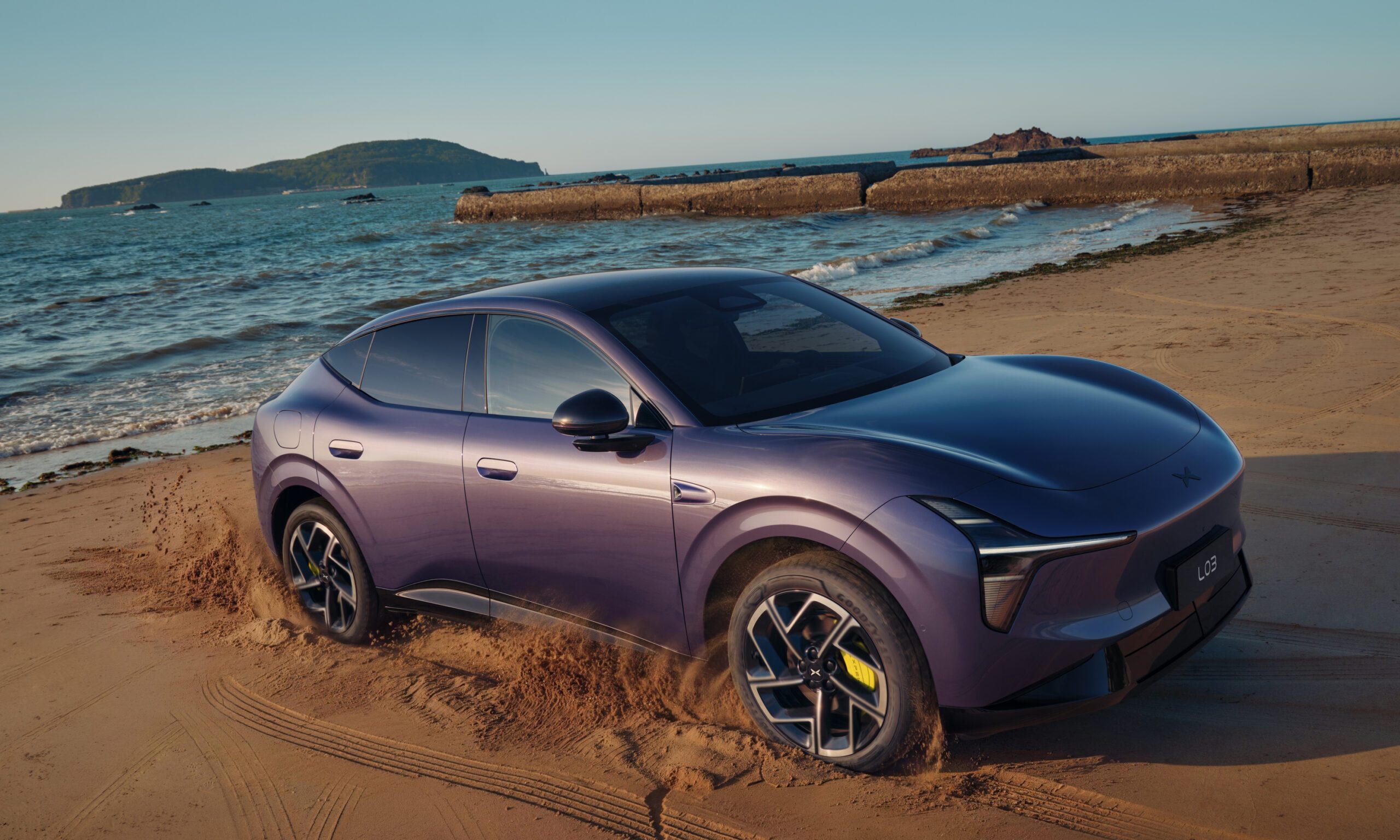
This sleek Chinese EV pairs supercar styling with three AI brains
The Xpeng L03 is an AI supercomputer disguised as a stylish family SUV
Xpeng L03

Xpeng’s latest electric vehicle carries enough processing power to make the term "smart car" actually sound more realistic than it actually is. The new Xpeng L03 debuted simultaneously in Europe and China on July 16, with the company presenting it across 65 markets. Available as a fully electric vehicle and an L03 Power X range-extender, the coupe-SUV is Xpeng’s most internationally focused model so far. Market-specific prices and sales dates remain unannounced.

Three AI chips and Google Maps built right in

Read more
A new sodium battery posts wild four-minute charging numbers, but don’t expect it in an EV yet
The breakthrough could improve fast charging and battery life, but the study hasn’t demonstrated those results in a production-sized pack
EV Charger

A new sodium-metal battery has posted a charging number that makes today’s EVs look painfully slow. In laboratory testing, the cell operated at a 15C rate, equivalent to completing a charge or discharge in roughly four minutes.

That doesn’t mean researchers plugged in an electric car and watched it fill up before the driver finished buying coffee. The result came from a small experimental cell using a new quasi-solid electrolyte, while the larger pouch-cell prototype delivered far less dramatic performance.

Read more
The Apple Car may be dead, but it became the foundation of Apple Intelligence
A decade of work on a canceled car project reportedly laid the groundwork for Apple Intelligence.
Apple Intelligence in Apple Car

The Apple Car may have never left the garage, but it apparently gave birth to Apple's AI ambitions. According to Bloomberg's Mark Gurman, Apple's canceled autonomous vehicle project, one that consumed more than a decade of work and over $10 billion before being scrapped in 2024, ended up laying the technological foundation for Apple Intelligence. In a rather ironic twist, one of Apple's most expensive failures may also become one of its most important long-term investments.

The Apple Car forced Apple to think like an AI company

Read more