  1. Home
  2. Computing
  3. News

Google Earth spills the beans, reveals Taiwan’s secret military bases

Add as a preferred source on Google
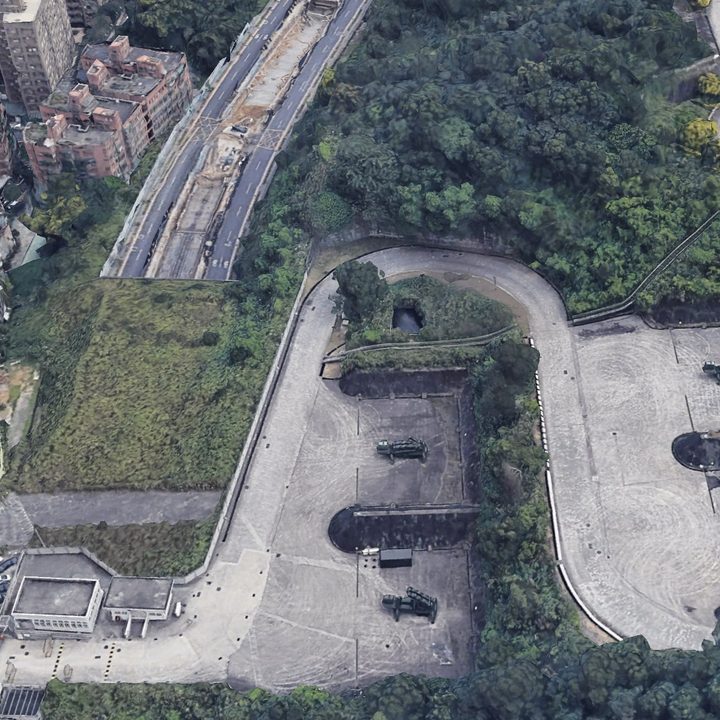
One of the exposed military bases/Image via ZDNet

The latest Google Earth 3D Maps update has accidentally exposed Taiwan’s most secret military bases to the public — and its adversaries. Some of the locations available in full three-dimensional detail include a facility which houses Patriot missiles, and the country’s National Security Bureau, according to a report from The South China Morning Post.

The update was originally meant to show public locations in Taipei, New Taipei, Taoyuan, and Taichung, and officials in Taiwan formed a task force to work with Google to blur out the new maps. Currently, the layout of the exposed bases and types of mobile missile launchers are all still visible. It is being reported that the Taiwanese military will also “take examinations” to help prevent this from happening again. That includes working to camouflage other military bases and structures across the country.

Recommended Videos

While the exposure looks like a major error, officials hint there is little cause for concern among Taiwanese, and that there is no need to panic. “Actually, the confidential parts are all inside the structures which would be highly difficult to expose through the 3D maps,” said Taiwan’s Defence Minister Yen Te-fa to The South China Morning Post.

Taiwan and Google have had a somewhat checkered history when it comes to this type of mapping data. Previously in 2016, Taiwan asked Google to censor a military base on Taiping Island in the South China Sea. The Taiwanese government also had issues with Apple Maps when it exposed another military installation in Hsinchu.

Government officials here in the United States have had similar concerns over mapping data. Citing an ability to show locations and routes on The Global Heat Map, the Pentagon restricted fitness trackers and other geolocators in high-risk areas. Before that, the Pentagon also tightened up its restrictions and put in place new rules barring cell phone use in areas where sensitive topics are being discussed.

Despite the fact that it may expose military installations, Google Earth remains one of the most popular apps available for download on the internet. It has been downloaded more than one billion times and you can use it as a virtual tour guide to check out surreal scenes from across the globe from the comfort of your own living room.

Arif Bacchus
Arif Bacchus is a native New Yorker and a fan of all things technology. Arif works as a freelance writer at Digital Trends…
The Adobe clones are real, but so is the work left to finish them
Seven free alternatives are out now, but their own documentation shows how much work remains
Nature, Outdoors, Sea

Free versions of Photoshop, Premiere Pro, and Lightroom are an easy sell to anyone tired of paying Adobe. Add a developer who says he vibe-coded replacements for seven of the company’s apps, and the triumphant headline practically writes itself. Adobe can presumably start clearing its desk.

Brandon Thomas’s Crafting Apps give that excitement something to work with. People can download the tools, inspect the source code, and find their way around familiar interfaces.

Read more
Getting health advice from AI chatbots comes with a problem doctors may never see
Researchers say AI companies should face the same liability as doctors for bad health advice
ChatGPT and pills on the same canvas.

AI chatbots have quietly become a go-to source for medical advice the extent that some are dangerously skipping real doctors. But when AI's health advice goes wrong, doctors may never see the exchange behind it.

Researchers from Binghamton University, Stanford, Texas A&M, and Indiana University published a paper in Nature Health examining what happens after a chatbot gives you bad health information. Their biggest concern is not just that chatbots can be wrong. It is that those mistakes often leave no trace for doctors, researchers, or regulators to catch.

Read more
AI companies expect a catastrophic AI incident and are reportedly preparing for the aftermath
A major AI cyberattack could disrupt essential services, damage public trust, and spark a political fight over regulations.
openai-anthropic-logo-on-screen

Leaders at OpenAI, Anthropic, and other AI companies are reportedly preparing for a potential AI disaster that could turn the public against artificial intelligence. According to an Axios report, industry leaders are privately running through possible scenarios for what happens after a catastrophic AI incident.

What kind of AI disaster are companies preparing for?

Read more