 Check out our full review of the Leap Motion gesture controller.
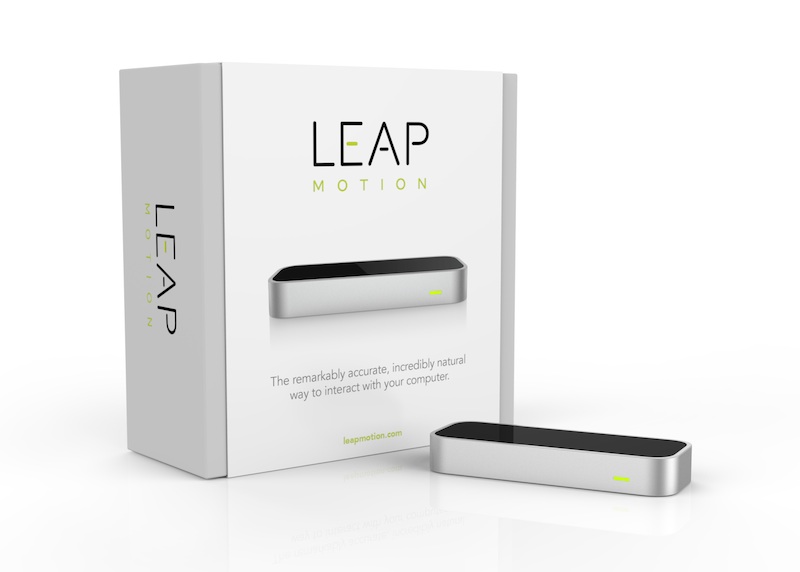
We’ve been following Leap Motion, the 3D motion-control hardware and software company, since it first came about almost a year ago. We got some hands-on time with it at CES 2013 as well as at SXSW this year, and we’re ready for its May 13 ship date already. However, Leap has some more exciting news up its sleeve to whet our appetites until May. We talked to Leap CEO and co-founder Michael Buckwald yesterday who told us Leap will be teaming up with HP as its first OEM (Original Equipment Manufacturer) to actually build the Leap technology into HP products.
Now, this isn’t the first manufacturer Leap has collaborated with. Back in January, the company partnered with Asus to ship PCs bundled with the product. The big news here with HP is that the Leap will be offered as an embedded feature in new, unreleased HP devices as well as offered as a bundled option.
When asked why Leap Motion chose HP out of all the OEMs, Buckwald told us that the company’s been working with HP for a long time, and it has incredible reach. “[HP’s] still the number one PC OEM; they’re the world’s largest technology company, and they have a truly global reach, and those things are all really interesting,” Buckwald told us. “Ultimately, we want Leap to be in as many places as possible … anywhere that there’s a computer we think we can add value.”
With so many Windows 8 PCs equipped with touchscreens, why do we need gesture control as well? According to Buckwald, the thing that Leap adds to a computer that has touch is an element of 3D control. “Touch is 2D, and that’s great for a lot of things, but Leap is really about doing a lot of things [touchscreens] can’t do well today, particularly things where being able to move in 3D is important,” Buckwald told us.
According to the CEO, the Leap can be used for everything from interacting with the operating system to playing casual and more hardcore game to professional 3D modellers using it to act with blocks of clay and mold them with their hands in mid-air. There’s also a lot of apps being built for content creation, such as applications that will teach people how to play musical instruments, or to create things in 3D by drawing and sculpting. The Leap Motion Controller will come with Leap Motion’s app store, Airspace, preloaded, with about 100 apps available at launch in May.
Unfortunately, Buckwald wasn’t able to tell us any specifics about what kind of products the Leap will be embedded in, but we’re guessing laptops and all-in-ones will be likely. He also couldn’t give any details on when we’ll be seeing these new HP products embedded with the Leap, but he did tell us that we can expect to see bundled HP devices as early as this summer. Pricing is still to be announced as well. We’ll keep you posted when we know more.