For working on a desk or on the go, it’s hard to beat a 15-inch laptop. Although their 13-inch counterparts are often better for those moving around a lot, the extra size and screen real estate can make a difference if you do a lot of your work from a desk. And in 2021, there’s one 15-inch machine that puts even the best laptops to shame: Dell’s XPS 15.
The latest model is the result of years of refinement from Dell. Still, Lenovo’s latest Gen 3 ThinkPad X1 Extreme provides some stiff competition, featuring similar internal specs and a beautiful OLED display option. Should you pick up the Lenovo ThinkPad X1 Extreme or Dell XPS 15? Let’s find out.
Design
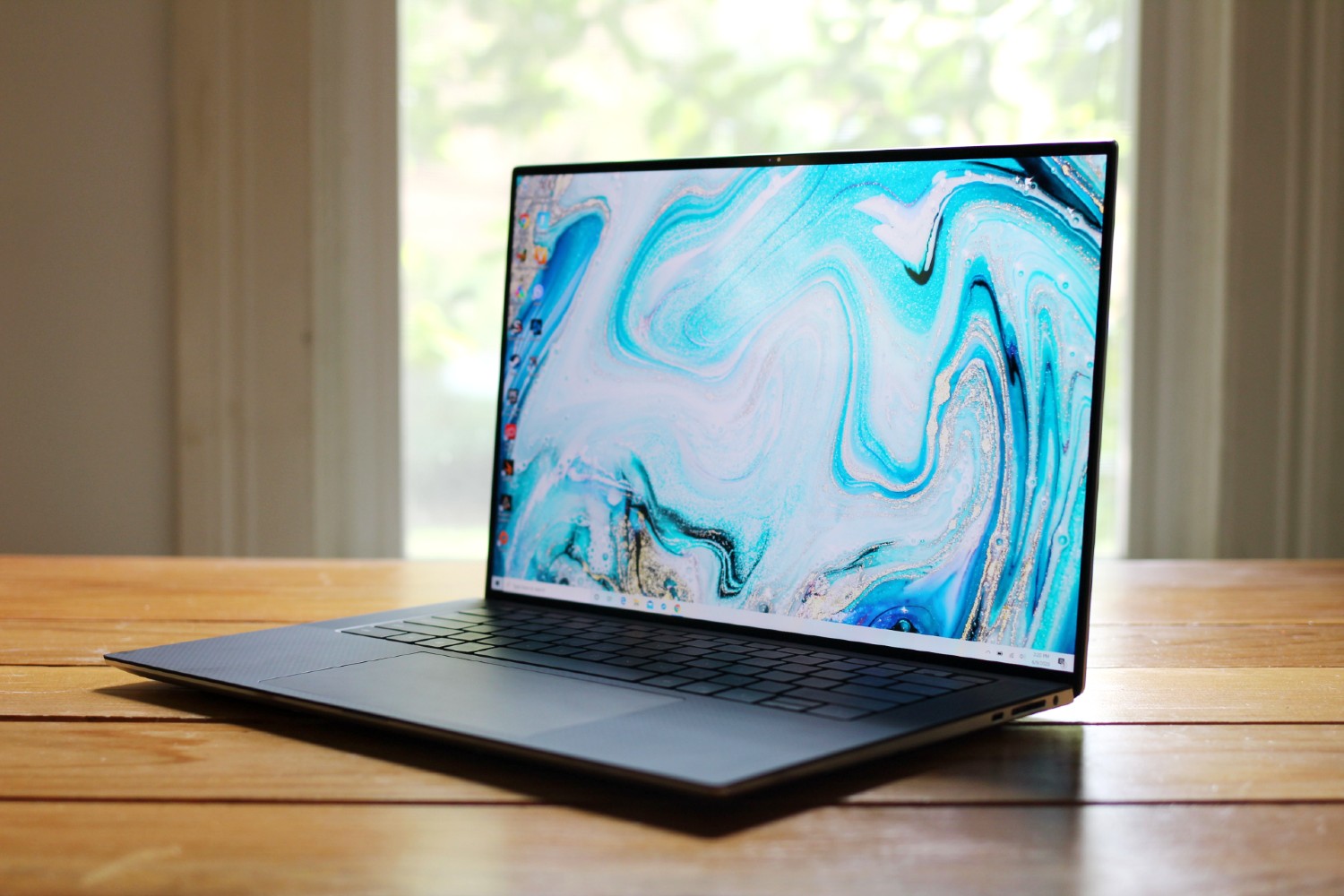
Neither the Dell XPS 15 nor the Lenovo ThinkPad X1 Extreme Gen 3 is a style icon compared to more form-focused laptops like the XPS 13 or MacBook Pro, but they’re hardly bad-looking either. And the XPS 15 has gotten a bit of a refresh in the latest generation, inching closer to the XPS 13 in style and sporting the same incredibly small bezels surrounding a 16:10 aspect ratio display.
The ThinkPad X1 Extreme Gen 3 sports thinner bezels than its next-to-last-generation counterparts, but it retains the iconic, boxy look of the ThinkPad range. Overall, the Dell alternative has thinner bezels and an altogether more modern-looking design than its Lenovo counterpart. It’s the tiniest bit thinner than the ThinkPad but does weigh in heavier with the larger battery option. It has a silver exterior paint job compared to the ThinkPad X1’s overall black coloring, which impacts personal preference more than anything tangible.
Both laptops feature great keyboards with crisp, responsive keys and comfortable layouts. The Lenovo keyboard is slightly more enjoyable to use long-term, although either would be good for day-to-day use. The most visible difference here is the ThinkPad’s TrackPoint, which some people still swear by. However, Dell increased the size of the XPS 15’s touchpad, and it’s now one of the largest you can get on a Windows 10 machine — and larger by far than the ThinkPad’s.
The latest XPS 15 comes with three USB-C ports, two of which support Thunderbolt. The other port still supports power delivery and DisplayPort output, however. Additionally, the machine comes with a full-sized SD card reader and a headphone/microphone combo jack. There aren’t any USB-A ports, but an adapter ships standard with all new XPS 15 machines.
The ThinkPad sports a slightly more expansive port selection, with two Thunderbolt 3 compatible USB-C ports, a pair of USB-A 3.2 ports, an HDMI 2.0 output, a 4-in-1 SD card reader, a 3.5mm headphone jack, a DisplayPort output, and a network extension port that, when combined with an adapter dongle, can be used for Ethernet connections. Both laptops enjoy Wi-Fi 6 and Bluetooth 5.0.
Performance

The ThinkPad X1 Extreme has a starting price of $1,613 after coupons and offers a 10th-gen Intel Core i5-10400H CPU, 8GB of DDR4 memory, an Nvidia GTX 1650 Ti Max-Q graphics chip, and 256GB of M.2 SSD storage. All of that powers a 15.6-inch 1080p IPS display that can hit a brightness of 300 nits. Update options include a more powerful CPU — up to a Core i9-10885H — up to 1TB of PCIe SSD storage, up to 64GB of RAM, and an OLED 4K display with Dolby Vision support.
The most expensive model costs $2,951 with coupons applied. The XPS 15 has a much more modest starting price of $1,200 for its entry-level model, with a 10th-gen Intel Core i5-10300H CPU, 8GB of DDR4 memory, onboard Intel UHD 630 graphics, and 256GB of PCIe SSD storage. The best configuration is $3,400 and comes with an Intel Core i9-10885H CPU, 64GB of DDR4 memory, a 2TB PCIe SSD, and a 4K display.
The XPS 15 certainly offers more value at the lower end, with comparable hardware to the entry-level ThinkPad for a few hundred dollars less. However, once you get up to around the $2,000 mark, the specifications and costs even out and they are far more comparable in terms of bang for buck.
Our XPS 15 review unit was configured with the eight-core Core i7-10875H CPU while the ThinkPad X1 Extreme Gen 3 was limited to a six-core Core i7-10850H, and the results only slightly favored the XPS 15 in spite of its extra two cores and four threads. However, both laptops provide excellent performance for creative types who need the extra CPU power for photo and video editing.
With a GTX 1650 Ti in all but one configuration across the two machines, the XPS 15 and ThinkPad X1 Extreme are both capable gaming laptops, too. Both are able to hit solid frame rates in games like Battlefield V, Civilization VI, and Fortnite at 1080p with Medium to High settings. A more demanding game like Assassin’s Creed Odyssey favors the ThinkPad, however. This is likely a thermal issue for the XPS 15, allowing the ThinkPad to take better advantage of the hardware when it’s pushed to its limits.
The ThinkPad enjoys the Samsung OLED display with awesome colors, contrast, and brightness, along with some of the deepest blacks you’ll find on a laptop. The XPS 15’s 4K IPS display was no slouch either, actually covering a few percentage points more of the Adobe RGB gamut (100% versus 98%) but not approaching the ThinkPad’s contrast. Both also provide excellent support for Dolby Vision high dynamic range (HDR) video, although the ThinkPad’s OLED display makes Netflix HDR a sublime experience.
You can get also equip the ThinkPad with Full HD and IPS 4K displays and with and without touch. Dell, by contrast, offers Full HD non-touch display or a 4K touch display.
Portability

No 15-inch laptop is as portable as some of the smaller form-factor alternatives out there, but the two laptops in this head-to-head aren’t blocky workstations by any means. Indeed, Lenovo has gone out of its way to make the ThinkPad X1 Extreme much sleeker and streamlined than the other laptops in its professionally targeted range. It measures 14.2 x 9.7 x 0.7 inches and weighs just 3.76 pounds as its starting weight.
The XPS 15 is definitely the trimmer device, at 13.57 x 9.06 x 0.71 inches, but not by a huge margin. It is a little heavier, though, weighing 4.5 pounds with the larger battery option. That battery is available in 84 watt-hours (a substantial decrease from the 97 watt-hours in the earlier version), with the option of a significantly smaller 56 watt-hours in some configurations.
Our team tested a larger rendition with a 4K IPS display. We tracked a lifespan of a little over seven hours during our video loop experiment. There are a few upgraded laptops out there that feature low-power Full HD screens, which outperform this one, but the OLED-equipped ThinkPad is nearly an hour behind with an 80 watt-hour charge. We recognize that it’s a decent result, but the XPS 15 is still the champion when it comes to efficiency.
Efficiency and style trump grunt

In our rigorous testing process of similar hardware devices, the Dell XPS 15 came out on top, marginally. This device may not have the same number of ports as competitors, but it’s less expensive (especially at the lower end). The XPS 15 also has a longer-lasting battery life and kept running even when using a Full HD display.
For the people who like the shape and design of ThinkPad, you’ll notice similarities in the Dell XPS 15. The computer features an unmatchable HDR display, but the XPS 15 truly remains our favorite for its 15-inch design. This product is the total package for a computer. You’ll see powerful performance levels and practical functionality at every turn, whether in your daily computer use or while gaming. It looks sleek and will last you throughout the day on a single charge.
Ultimately, whether you’re a gamer or you’re looking for an excellent laptop for general use, you cannot go wrong with the unmatched style and performance of the Dell XPS 15.