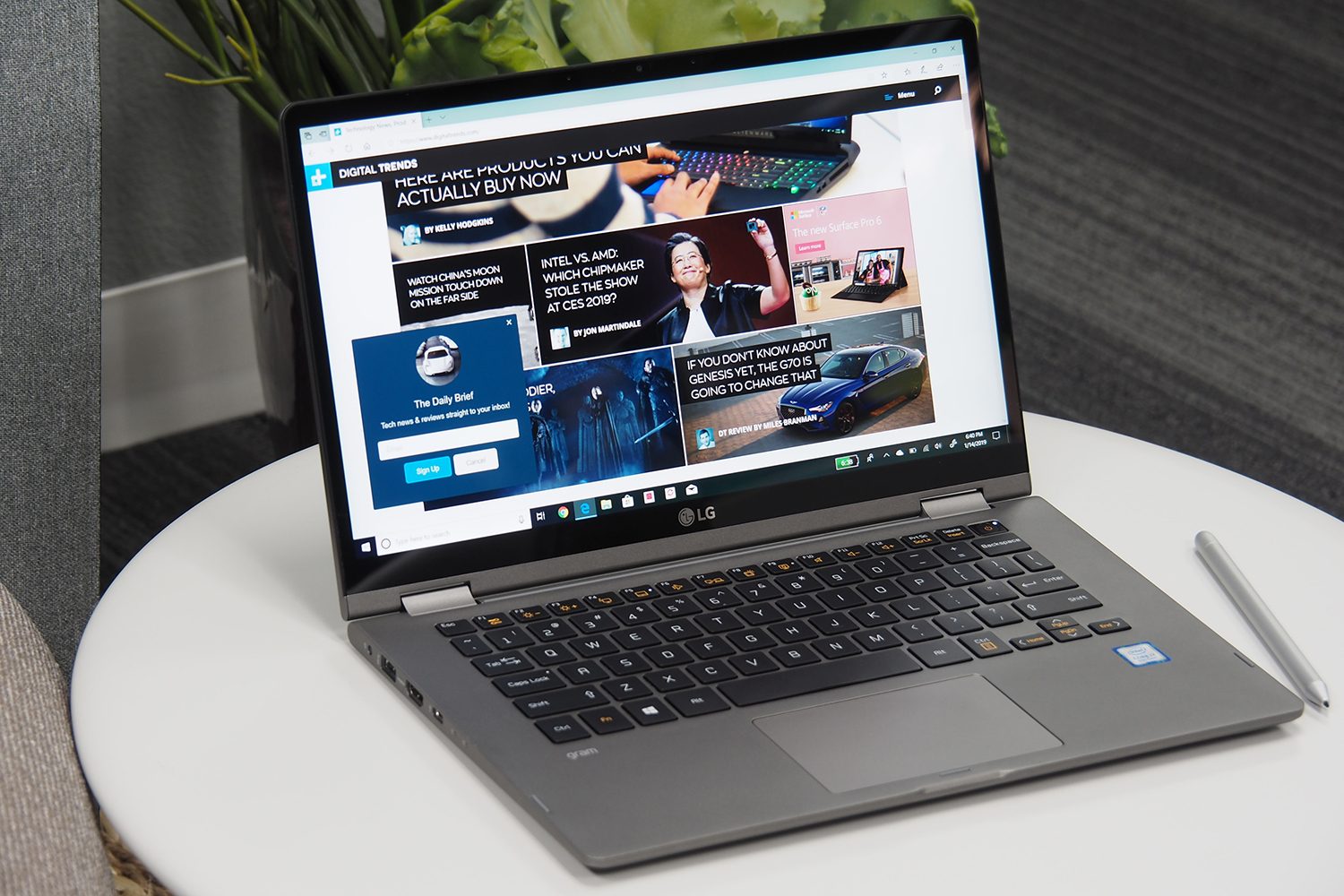
The modern 360-degree convertible 2-in-1 has improved to the point where its best examples are viable alternatives to the traditional clamshell laptop. Although they don’t have the tiny bezels of laptops like the Dell XPS 13, these 2-in-1s work as well on a lap as their more traditional cousins.
One prime example is the HP Spectre x360 13, our favorite laptop-like 2-in-1 and indeed one of our favorite laptops, period. LG has just released a new competitor, the Gram 14 2-in-1, that aims to make lightweight a competitive advantage. Does it have what it takes to topple the best?
Design
As you can tell by its name, the Gram 14 is all about being lightweight. It uses a magnesium alloy to shave off the ounces, and it succeeds by coming in at a cool 2.5 pounds. Although that chassis does feel a bit like plastic with some flexibility in the top of the lid and the bottom, LG tested it against MIL-STD-810g military standards for robustness. The Spectre x360 is all-aluminum, and it feels sturdier in hand thanks to the more rigid material. It also has the tiniest bit of flex in the lid and chassis if you go looking for it, but overall we think it has a more solid feel.
Aesthetically, the Spectre x360 is one of the best looking 2-in-1s around, with a choice of Dark Ash Silver, Natural Silver, and Pale Rose Gold. Its edges are chiseled, and it’s just a stunner (and the newest “gem-cut” version, which we haven’t yet reviewed, is even better looking). The Gram 14 comes in just one color, a matte gray, and it’s at the other end of the aesthetic spectrum. It’s purely conservative, with only a chrome “Gram” logo on the lid to break things up. We don’t fault the Gram 14 for its serious look, but we prefer the Spectre x360’s more modern appearance that stands out without being garish.
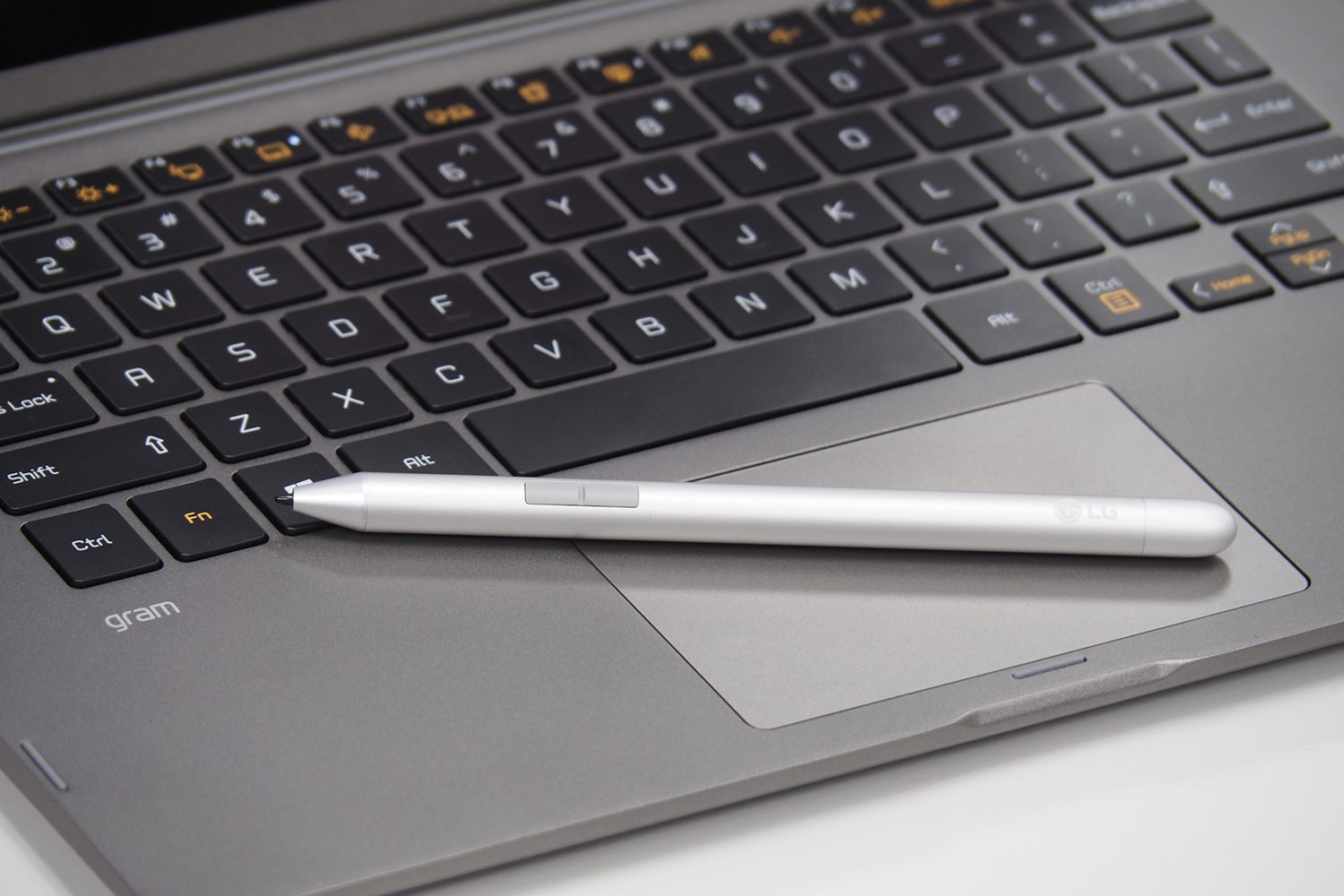
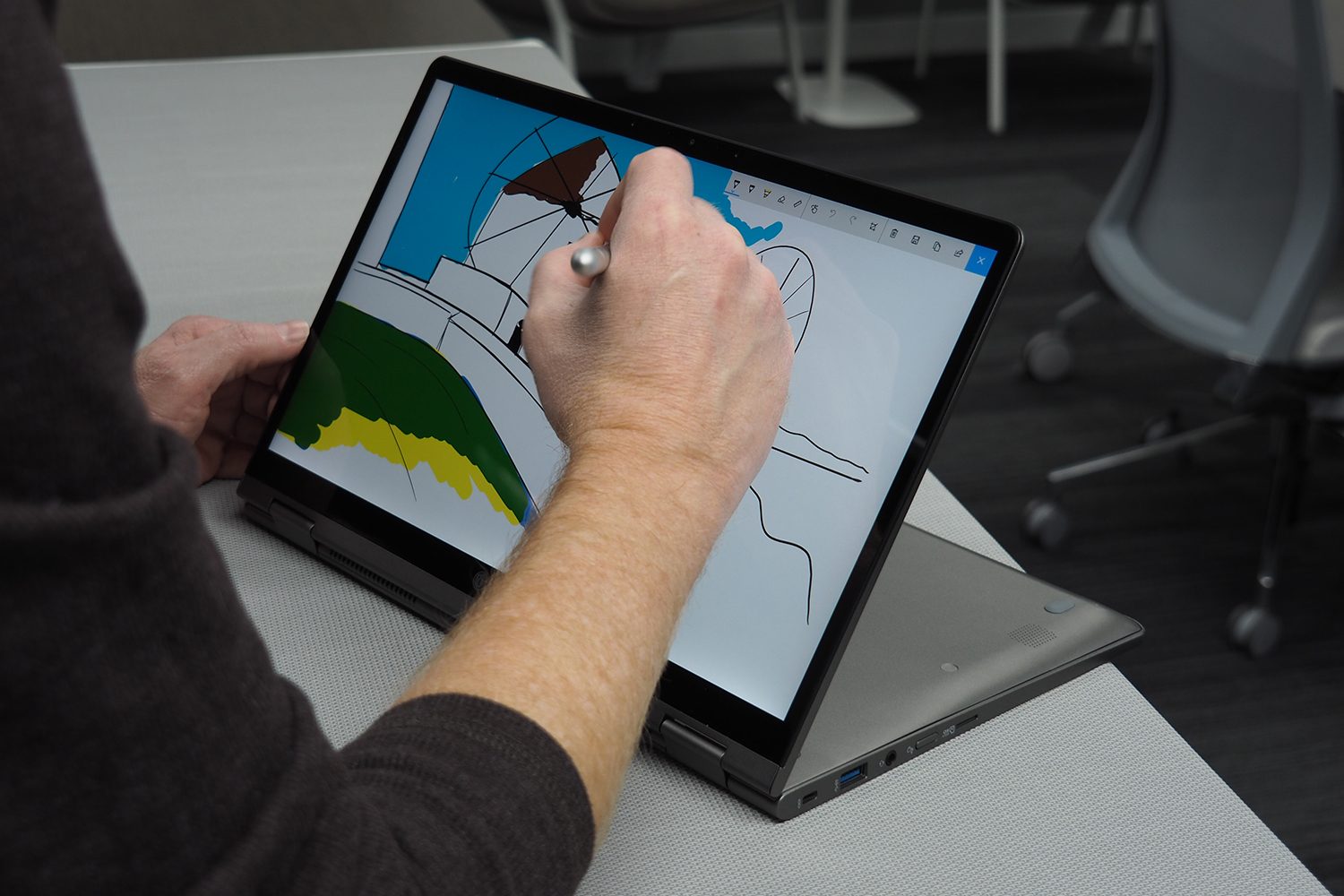
We also like the Spectre x360’s long-travel, snappy, and precise keyboard much better than the Gram 14’s much shorter (yet still click-y) version. The touchpads are equally good, although the discerning user might prefer LG’s use of Microsoft Precision drivers. Both touch displays are great for scrolling web pages and tapping on the occasional pop-up button, but the LG Gram’s active pen offers a native 4,096 level of pressure sensitivity and tilt control to the standard HP pen that’s only interpolated to 4,096 levels and lacks tilt. If you want to draw on the display, then you’ll prefer the Gram 14, but both are good for taking notes.
Connectivity is another differentiator. The Gram 14 gives a nod to legacy support, with two USB-A 3.1 Gen 1 ports, a USB-C 3.1 Gen 1 port, a full-size HDMI port, and a microSD card reader. The Spectre x360 also recognizes the need for one USB-A 3.1 port and a microSD card reader, while it adds in two USB-C ports with Thunderbolt 3 support for greatly enhanced — and far more modern — expandability. We think Thunderbolt 3 is an essential feature on a modern notebook, and that makes the Spectre x360 able to connect more displays and leverage an external GPU enclosure for competitive gaming.
Performance
The Gram 14 sports Intel’s absolute latest Whisky Lake 8th-gen Core i7-8565U that offers up four cores for solid performance while promising good efficiency. That makes it slightly faster than the Spectre x360 with its 8th-gen Core i7-8550U, although both are plenty quick for demanding productivity tasks. The Spectre x360 uses a much faster PCIe solid-state drive (SSD) than the Gram 14’s (unfortunate) SATA SSD, meaning you’ll find it to boot and open apps just a bit more quickly. The latest gem-cut Spectre x360 uses Whiskey Lake, and we’ll update the comparison when we’ve had a chance to test it.
Regarding displays, both HP and LG picked average panels that are a bit behind the field in terms of contrast, color gamut and accuracy, and brightness. In fact, they’re almost identical, making them suitable for productivity work but not so great for creative professionals. The gem cut Spectre x360 has a much better display that’s also a low-power version, and we’re looking forward to adding it to our comparison. But HP has an ace in the hole — a very lovely 4K UHD option that makes for an awesome Netflix binging 2-in-1. That tips things in the Spectre x360’s favor. You can even opt for an HP SureView privacy screen that keeps your information safe from prying eyes.
These are two quick 2-in-1s, and you won’t notice much difference in day-to-day use. But the Gram 14 suffers from the lack of a high-resolution display option and slower storage.
Portability
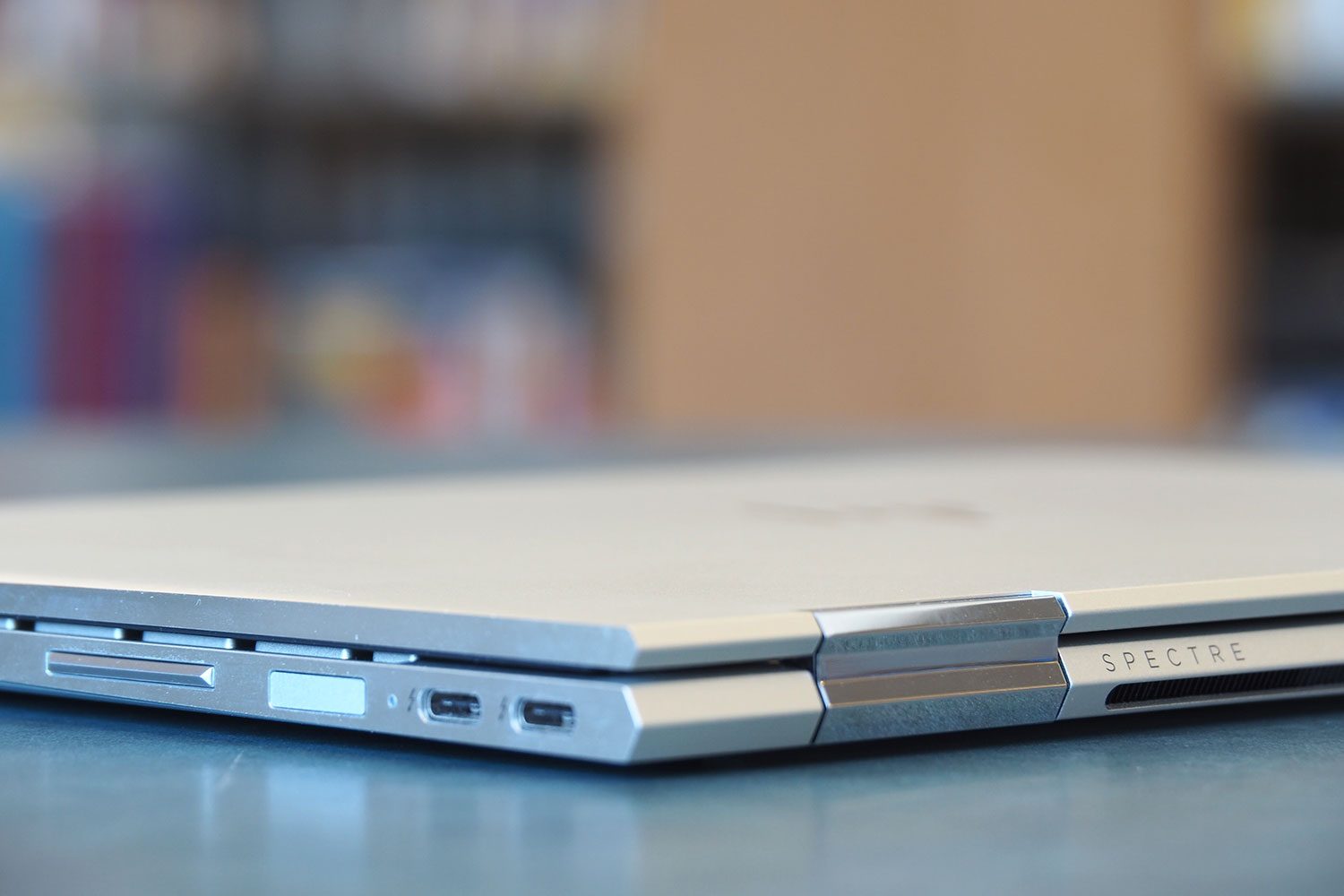
The Gram 14 is slightly lighter than the Spectre x360, but it’s also slightly thicker. But both of these 2-in-1s can be tossed in a backpack and forgotten about.
Both also have good battery life, but the Gram 14 benefits from its 72 watt-hours of battery capacity versus the Spectre x360’s 63 watt-hours. The LG lasted about an hour longer in looping our test video, about two and a half hours longer browsing the web, and a little less than an hour longer in our most demanding Basemark web benchmark test.
Both 2-in-1s are easy to carry around and last a long time on a charge, but the Gram 14 will keep you working longer into the evening.
The Spectre x360 is a more well-rounded 2-in-1
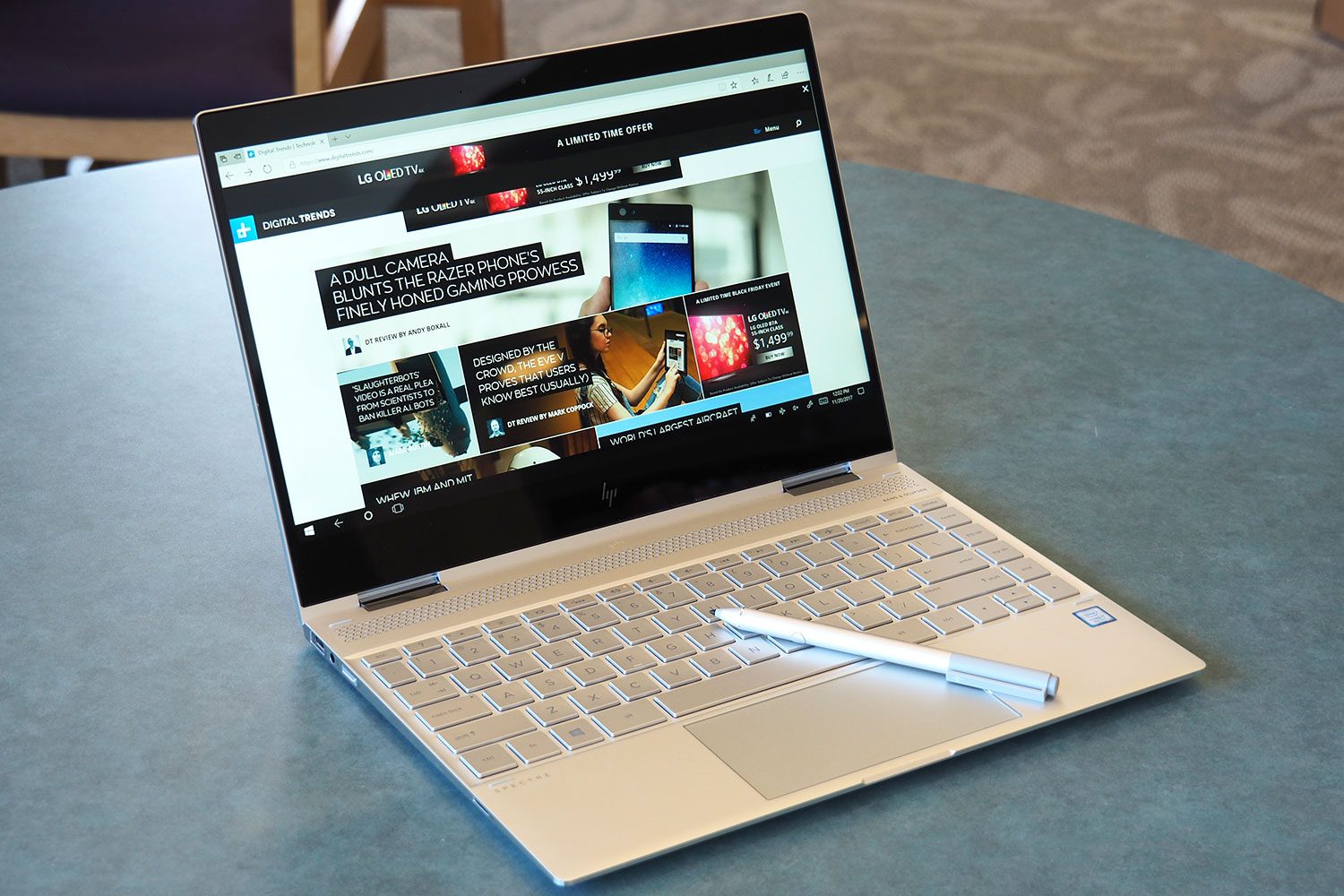
The Gram 14 comes in one configuration, a Core i7-8565U, 16GB of RAM, a 512GB SSD, and a Full HD display for $1,500. That places it squarely in premium pricing territory.
The Spectre x360 is quite a bit less expensive, starting at $1,235 for the same Core i7, 16GB of RAM, a 512GB SSD, and a Full HD display. You can also save some money by opting for a Core i5-8250U, 8GB of RAM, and a 256GB SSD for $930. And then HP offers its privacy screen for $60 extra and a 4K UHD panel for $135.
The Gram 14 puts up a good fight against our favorite 360-degree convertible 2-in-1, but it just can’t quite match the Spectre x360’s value, display, and more attractive design.