1. Home
  2. Computing
  3. Legacy Archives

MacBook Air gains a backlit keyboard and Thunderbolt port

Add as a preferred source on Google
macbook-air-2011-2-small-and-large
Image used with permission by copyright holder

It’s that time of year. Today, Apple has announced a new version of its MacBook Air line of super-thin laptops. The new Air will have a high-speed Thunderbolt I/O port (good for connecting to a Thunderbolt Display), a backlit keyboard (missing on last year’s model), run on Intel’s Core i5 and i7 dual-core processors that are up to twice as fast as last year, and come loaded with Mac OS X Lion. Like last year’s Air, the new version will also feature instant boot-up thanks to a solid state drive (a secondary flash hard drive). The new Air will run you at least $999 and can be ordered today online or you can pick one up at stores tomorrow.

Like last year, the Air also has an extra large trackpad, which lets you use iPhone-like gestures like pinching and swiping to control the OS. It comes in 11-inch and 13-inch sizes and can get 7 hours of battery life, Apple claims. Don’t expect it to do too much more than your standard netbook though: the Air does not have a great graphics card, instead relying on Intel’s integrated HD Graphics 3000. The 4GB of possible RAM is nice, however. The new Air weighs under 3 pounds and is less than .7 inches at its thickest.

macbook-air-2011-closed
Image used with permission by copyright holder

Like most of Apple’s new products as of late, the Air is Energy Star 5.2 compliant and achieves EPEAT Gold status. The shell is made from recyclable aluminum and the unit contains no toxins like mercury or arsenic.

Recommended Videos

“Portable, affordable and powerful, MacBook Air is the ultimate everyday notebook,” said Philip Schiller, Apple’s senior vice president of Worldwide Product Marketing, in a press release. “MacBook Air features our most advanced technology and is an ideal match for Lion, especially with its new Multi-Touch gestures, full-screen apps, Mission Control and Mac App Store.”
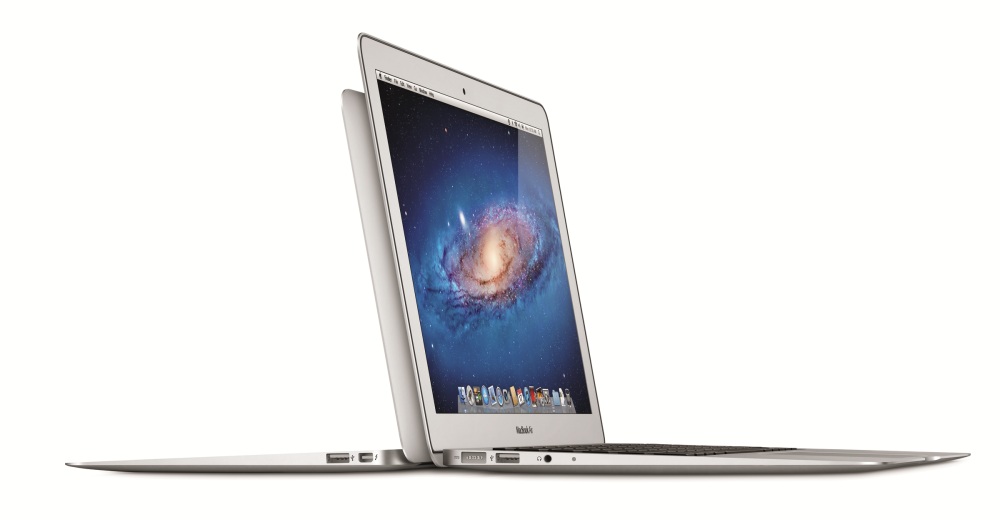
macbook-air-2011-open-side
Image used with permission by copyright holder
Jeffrey Van Camp
As DT's Deputy Editor, Jeff helps oversee editorial operations at Digital Trends. Previously, he ran the site's…
TSMC might set up a price hike that could come straight for your next phone, laptop, or tablet
Here's what TSMC's rumored 10% chip price increase actually means in dollar terms, and why your next phone or laptop could end up costing more.
TSMC Fab

My wallet flinched the second I saw the words "TSMC" and "price increase" in the same headline, and honestly, yours should too.

Turns out the company behind the silicon powering basically every flagship device out there, including Apple’s A-series and Qualcomm’s Snapdragon processors, is reportedly about to make all of it a little pricier.

Read more
Apple fixes Hide My Email bug that exposed users’ real email addresses
Here's how Apple's Hide My Email flaw leaked real addresses for over a year, and why it only got fixed once the story went public.
apple-merging-sign-in-with-apple-hide-my-email-icloud+

Turns out the "Hide" part of Hide My Email wasn't doing its job quite as advertised, something that I covered early in July. Security researcher Tyler Murphy reported the flaw in June 2025, but despite Apple claiming it was resolved in March 2026, independent tests confirmed it remained exploitable, at least until July 3, 2026.

So how did this bug actually work?

Read more
Gemini Notebook’s new Collections arrive just as Google turns it into a bigger workspace
Google is cleaning up notebook organization as the former NotebookLM expands across Gemini and Search
Gemini Notebook branding on a MacBook

Google has barely finished renaming NotebookLM, and it’s already addressing one of the headaches that comes with building a large research library.

Collections are rolling out to all Gemini Notebook users, giving them a way to group related notebooks while keeping everything visible under My Notebooks. The dashboard gets some structure without asking users to rearrange the library they’ve already built.

Read more