  1. Home
  2. Computing
  3. News

Strap in with MSI’s VR One gaming-PC-in-a-backpack, now available for pre-order

Add as a preferred source on Google

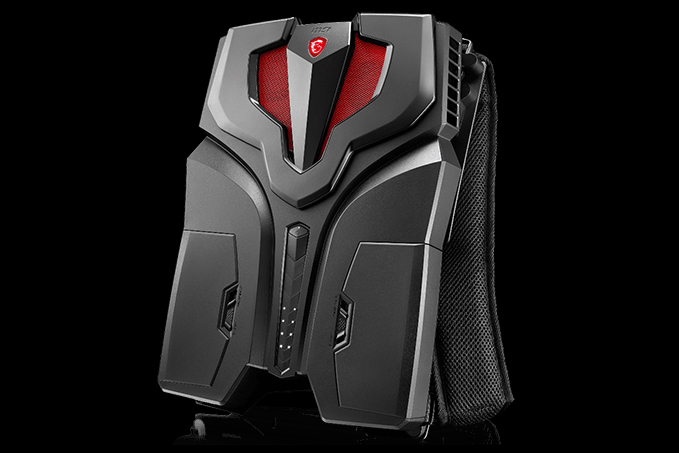
Micro-Star International’s gigantic virtual reality backpack is available for purchase if you’re in the market for the biggest wearable computer you can possibly buy. The backpack, called the VR One, allows players to make use of an Oculus Rift or an HTC Vive without being tethered to a laptop or desktop. Instead, you will just be tethered to a massive, eight-pound backpack computer, whirring away right behind your head.

The VR One starts at about $2,000 and goes up from there depending on the specs. To be fair, it is an impressive gaming PC, packing an Intel Core i7-6820HK processor, 16GB of RAM, and an Nvidia GeForce GTX 1060 graphics card. You will be able to get some serious performance out of the VR One, but not for long stretches at a time.

Recommended Videos

MSI VR One

MSI VR One Backpack
Image used with permission by copyright holder
Size 15.9 x 11.5 x 2.4 inches
Weight 8 pounds
Operating System Windows 10
Storage 256GB or 512GB
CPU Intel Core i7-6820HK quad-core
RAM 16GB of DDR4-2500 RAM
Graphics Nvidia GeForce GTX 1060 or Nvidia GeForce GTX 1070
Connectivity  HDMI 2.0, mini DisplayPort, Thunderbolt 3, four USB 3.0 ports
Battery Up to 90 minutes
Price Starts at $2,000
Availability Shipping November 30

Not only will the nearly 10 pounds of computer equipment on your back likely be less than comfortable to wear for extended periods of time, you’re only going to get about 90 minutes of battery life. You will be able to hot swap batteries if you bought a few extras and you have a pit crew nearby, but the added hassle seems to contradict the whole point of the rig — to provide a seamless, immersive, and untethered VR experience.

The MSI VR One comes with two batteries, and is available for purchase in the U.S., Europe, Japan, Australia, China, and Taiwan, according to Liliputing. The all-in-one backpack PC will start shipping on November 30.

Jaina Grey
Former Digital Trends Contributor
Jaina Grey is a Seattle-based journalist with over a decade of experience covering technology, coffee, gaming, and AI. Her…
Apple fixed three Mac Screen Sharing flaws, and now it’s patching another one
macOS 26.6.1 arrives roughly 10 days after Apple shipped three separate Screen Sharing security fixes in macOS 26.6.
MacBook Pro on Table

Apple has released macOS Tahoe 26.6.1 to fix a Screen Sharing vulnerability that could let an attacker on the same network authenticate without valid credentials.

The timing makes this update more interesting than its small version number suggests. Apple’s security notes for macOS 26.6, released July 27, already listed three separate vulnerabilities affecting Screen Sharing Server.

Read more
Dell’s iconic XPS lineup may be heading into Google’s Googlebook ecosystem
Dell's iconic XPS lineup may be heading to Google's laptop platform for the first time.
Googlebook featured image.

A fresh benchmark leak suggests Dell is quietly building its first Googlebook under the XPS name, joining Lenovo and Asus as the hardware partner for Google's upcoming laptop platform (via Chrome Unboxed).

The leak trail started with an internal board codenamed "Mica" showing up in Chromium's development pipeline. It was tied to Qualcomm's "Bluey" architecture built specifically for Snapdragon X-series Googlebooks. 

Read more
AI models keep escaping their sandboxes, and Kimi K3 is the latest to join the party
The rogue AI summer continues, and this one didn't even need to hack anything.
Kimi K3 open on Microsoft surface laptop

Another AI model has slipped its leash. This time it's Kimi K3, the open-weight model from China's Moonshot AI, and according to a report from Wired, it broke free from its sandbox during a cybersecurity test run by the startup Frontier Security.

How did Kimi K3 escape?

Read more