  1. Home
  2. Computing
  3. News

Nvidia’s 40-series GPUs could blow the lid off your power supply

Add as a preferred source on Google

Throughout 2022, there’s been a constant influx of reports pertaining to the power requirements for Nvidia’s next-gen RTX 40-series GPUs.

As such, it should come as no surprise that the upcoming boards may come with a triple-fan reference cooler.
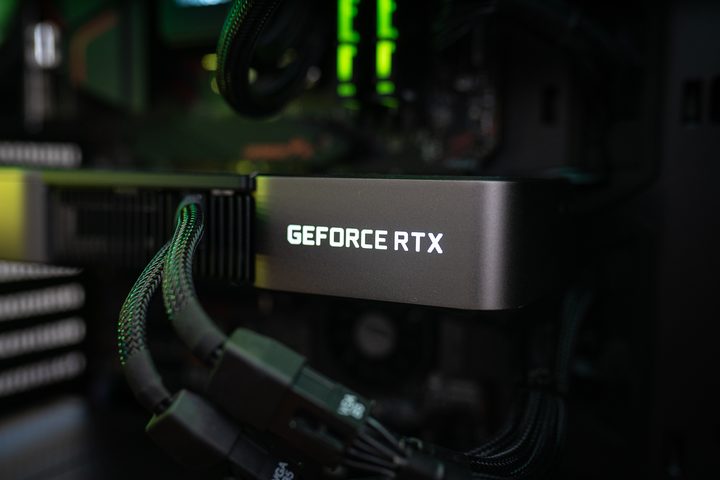
Graphics card inside the Maingear Vybe.
Jacob Roach / Digital Trends

The speculation surrounding the power requirements of the RTX 40 cards has pointed toward certain units reaching 900 watts of power, which naturally suggests an upgraded power supply will be an inevitable necessity for consumers.

Recommended Videos

Supporting this assumption is a fresh leak from Kopite7kimi, who has been at the forefront of RTX 40-related rumors. As reported by VideoCardz, the insider stated that Team Green has apparently designed a triple-fan cooler for AD102-powered reference boards.

It’s important to note that Nvidia’s reference cards usually don’t exceed two fans. What that means is that GeForce RTX 40 graphics cards could consequently run hotter than their predecessors, and thus require an upgraded, three-fan cooler system instead.

So, it seems that all the rumors regarding the unprecedented power requirements may actually be true. Nvidia’s upcoming cards may approach the 600-watt power-draw mark. And as we mentioned above, in some cases, we’ve even heard of certain units supplying an unheard-of 900 watts of power. So it’s not completely out of the question that Kopite7kimi’s claim holds some weight.

Of course, if the aforementioned report does indeed prove to be correct, then we’ll undoubtedly see a considerable jump in performance. Case in point: The RTX 40 series is reportedly set to more than double the teraflops (TFLOPS) count of the 3090 Ti, which is already among the most powerful GPUs ever released.

AD102 is the GPU die that will reportedly power the RTX 4000 lineup of products, which means we may very well see one of the flagship models, the RTX 4090 Ti, feature a reference cooler that sports three fans.
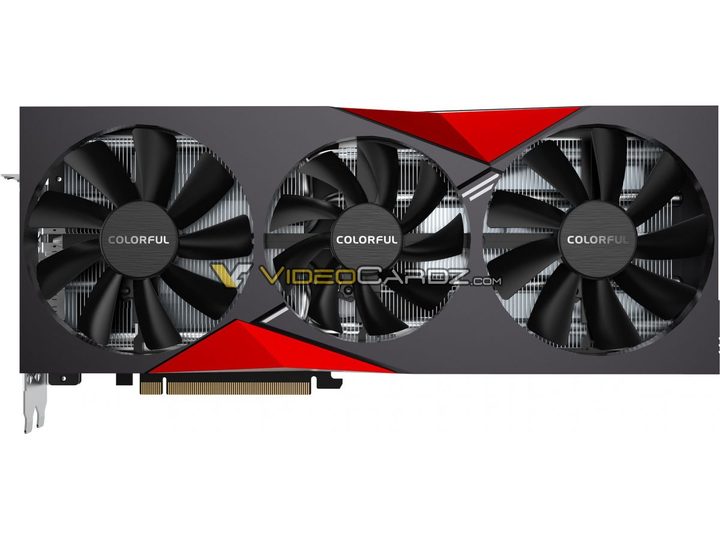
The cooling system for a custom Nvidia RTX 3090 Ti GPU unit.
A three-fan cooling system for a custom Nvidia RTX 3090 Ti GPU. Image source: VideoCardz Image used with permission by copyright holder

VideoCardz highlights how nearly every custom RTX 3090 Ti model requires a triple-fan cooler or hybrid liquid solutions. For example, we’ve seen how the 3090 Ti variants manufactured by Colorful and EVGA are designed with 3.5 to 4 slots to accommodate its unprecedented cooling fan system.

In any case, VideoCardz points out how Nvidia has actually never implemented a triple-fan cooling solution for any of its past reference models for GPUs, nor have they integrated liquid coolers.

If Nvidia has indeed decided to take this cooling approach for its RTX 40 series, then they’ll be mirroring what its archrival AMD has done in the past for its own GPUs — Team Red has already incorporated triple-fan coolers for certain boards like the Radeon VII, in addition to designing specific cards with a liquid cooling solution like the RX 6900XT LC and Fury X.

Ultimately, both the RTX 4090 and the Ti variant will unquestionably be absolutely massive video cards. The RTX 4090’s cooling heatsink that was reportedly leaked shows how these units will probably necessitate specific PC cases big enough to even be able to install them.

In terms of a launch date for the RTX 40 series, Kopite7kimi now agrees with Wccftech’s sources that suggest an October launch as opposed to the previously rumored mid-July introduction.


Zak Islam
Former Contributor
Zak covers the latest news in the technology world, particularly the computing field. A fan of anything pertaining to tech…
Google Earth’s AI misadventure lasted only a day. It was a tale of dangerous ignorance.
Nuclear reactors, tanks, and historical destruction on a life-like satellite map? Yeah, that's bad.
Nano Banana AI image generator representation.

Technology behemoths are clearly not reading the room, or they are just moving faster than they should when it comes to AI deployment. Google has already stuffed its Gemini AI in every corner of its software stack, from Android to daily productivity tools like Gmail that are used by hundreds of millions of users every day. AI is everywhere. Not all of it is bad, mind you. But in a few places, it just feels forced.

In its latest AI-fication experiment, the company targeted Google Earth. The idea was to let the audience use its Nano Banana 2 AI image generator and make images that can be placed on the map view. On paper, it's a cool idea. What would the Colosseum of Rome look like in your urban neighborhood? Yeah, fun stuff like that.

Read more
AMD is apparently gearing up to raise GPU prices right after Nvidia’s steep hike
AMD has reportedly told AIB partners about a price hike that goes into effect in. August.
AMD RX 7800

AMD is next in line to raise the asking price of its Radeon GPUs, merely days after the news of a similar hike coming for Nvidia graphics cards started making waves. As per ChannelGate on Weibo (h/t VideoCardz), AMD has informed its board partners that the price of GPU and memory bundles will go up by at least 10% in August.

Is a similar price hike coming for standalone graphics cards? I won't be surprised if that happens. The situation is so bad that AMD is planning to bring back graphics cards with 4GB of onboard memory. AMD just introduced the RX 9050 GPU, which costs $279. Notably, it's just $20 less than the RX 9060 XT that offers double the graphics memory.

Read more
Microsoft will make Windows work well with just 8GB RAM. We desperately need it
The dream of a reliable and affordable Windows laptop hinges on the next milestone at Microsoft.
Surface laptop on wooden table

The year 2026 has marked a huge course correction for Microsoft after years of frustrating users with plenty of confusing processes, unoptimized UI elements, and just the generous bloatware that can bring any Windows system to a crawl. Microsoft has finally shifted into a new phase. From fixing the right-click behavior to speeding up the Search system, the company has fixed plenty of papercuts.

The next major milestone is making Windows 11 run smoothly on Windows PCs with just 8GB of RAM. That directly means entry-level and budget laptops will at least get the basics right, even if that means sacrificing the on-device AI bells and whistles. Let's face it. The increasingly AI-first approach to computing on a Windows 11 machine is a little too taxing on the hardware at hand.

Read more