  1. Home
  2. Computing
  3. Legacy Archives

Wikipedia founder says app stores are a threat to the Net, site celebrates 10 years

Add as a preferred source on Google

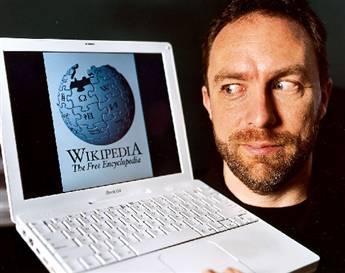
jimmy-wales-founder-of-wikipediaWhile speaking at an event in Bristol, England celebrating Wikipedia’s 10th anniversary, founder Jimmy Wales decided to speak out against the concept of app stores on computers and cell phones, reports Tech.Blorge. Wales claimed that stores like the iTunes App Store can become a “choke point that is very dangerous” and that the app store model may be ” a threat to a diverse and open ecosystem,” adding that “we own [a] device, and we should control it.”

Wales went on to say that the threat of app stores were greater than issues over net neutrality, which still largely remains hypothetical. He added that elements of the net neutrality debate are “highly overblown,” but that it remains a complicated issue.

Recommended Videos

It should be noted that Wikipedia has had its own mobile apps through Bonfire Media for several years now, even preceding the Apple App Store.  Do you think app stores are a threat to the Web?

More diversity

On a less controversial note, Wales hopes to improve the diversity of Wikipedia contributors. He noted that 87 percent of contributors are male, have an average age of 26, and have double the rate of PhDs than the general population. He hopes to make editing and adding content simpler and easier.

Wikipedia currently has 17 million articles (3.5 million in English) and is the largest encyclopedia ever made, yet it remains a nonprofit site with 57 paid employees. About a thousand articles are added to Wikipedia every day (and that’s just in English) and edited by about 100,000 volunteers.

Wales has recently taken up the spotlight more often, even appearing on every page of Wikipedia in a plea for donations. Some have criticized the donation begging, claiming that Wikipedia needs to use its current funds ($16 million this year) more efficiently.

Jeffrey Van Camp
As DT's Deputy Editor, Jeff helps oversee editorial operations at Digital Trends. Previously, he ran the site's…
The Mac Pro nearly received an M3 Extreme chip twice as powerful as M3 Ultra
High production costs likely killed Apple’s M3 Extreme plans
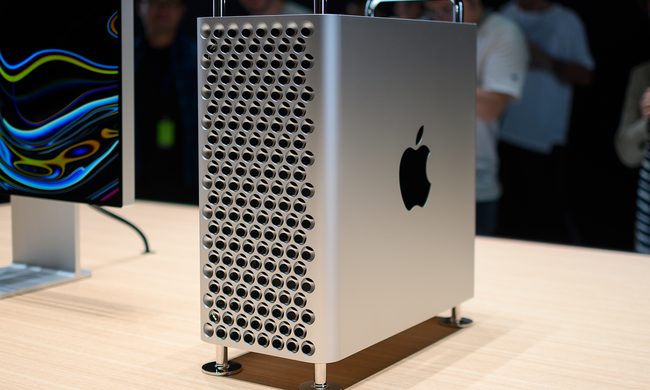
Apple's Mac Pro on a table at a press event.

Apple discontinued the Mac Pro earlier this year, ending a 20-year run for a computer that once represented the very best of the company’s desktop lineup. However, Apple reportedly had much bigger plans for the machine before ultimately replacing it with the Mac Studio.

According to Bloomberg’s Mark Gurman, Apple developed an M3 Extreme chip that could have offered twice as many CPU and GPU cores as the M3 Ultra. The processor was intended to sit above the Ultra tier and could have finally given the Mac Pro the performance advantage it badly needed. Apple eventually abandoned the chip due to concerns over production costs and limited demand for such an expensive machine.

Read more
Hidden prompts can secretly rewrite an AI’s memory, and researchers say that’s a serious problem
Researchers discover AI attack that rewrites an assistant's long-term memory
Chatbot on a smartphone.

Large language models are getting better at remembering us. Whether it's your preferred writing style, recurring tasks, shopping habits or project deadlines, AI assistants are increasingly storing long-term memories to make future conversations feel more personal and useful. But according to new research, that same feature could become one of AI's biggest security vulnerabilities.

Researchers from New Mexico State University have demonstrated a new attack called GhostWriter, capable of secretly planting false memories inside AI agents. Rather than stealing information outright, the attack manipulates what an AI remembers, potentially causing it to make dangerous decisions long after the original attack has taken place.

Read more
This experiment shows how easy it is to poison an open-weight AI model for under $100
This research raises new doubts about trusting open weight AI models.
Computer, Electronics, Laptop

Open-weight AI models have been having a moment lately. Just this month, Moonshot's massive Kimi K3 model landed close behind Claude Fable 5 and GPT 5.6 Sol in several benchmarks, all while remaining fully open-weight and downloadable by anyone.

However, Katie Paxton-Fear, a cybersecurity lecturer at Manchester Metropolitan University and staff security advocate at Semgrep, managed to poison an open-weight model and proved how easily that openness can be turned against you (via The Register).

Read more