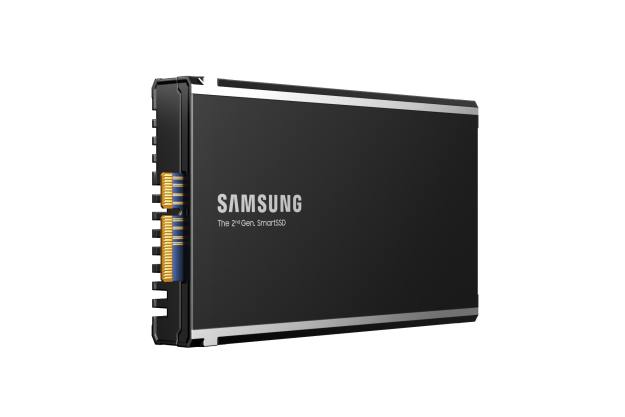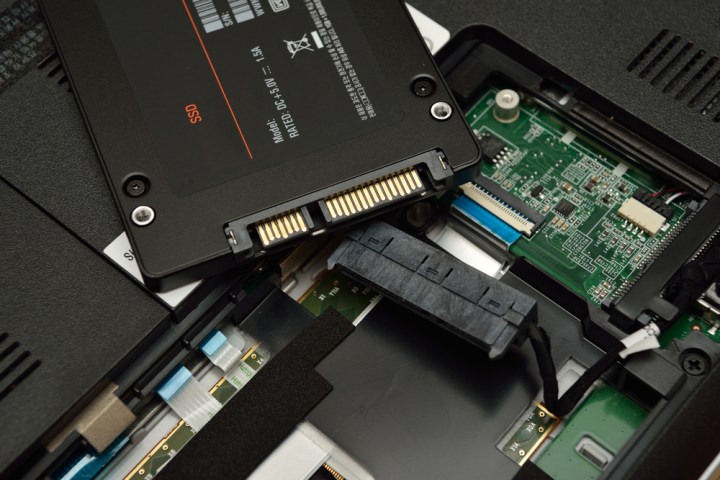
Now we’re nearing the end of 2014. Most (but not all) of the drives, which include Corsair’s 240GB Neutron Series GTX, Intel’s 240GB 335 Series, a pair of Kingston’s 240GB HyperX 3K drives, Samsung’s 250GB 840 Series, and Samsung’s 256GB 840 Pro, have conked out, but the endurance of these six test SSDs has gone well beyond the presumed life expectancy of any high-volume PC storage.
Before looking at the test itself, though, and the results, let’s talk about why solid state drives fail.
Why flash memory fails
SSDs, as you may know, consist of NAND (“Not AND”) flash memory. The constant reading and writing of data to this flash memory causes degradation, resulting in a gradual weakening of the NAND cells. This occurs because the portion which stores data, known as a floating gate, is wedged in an insulating layer. With each zap some electrons end up stuck in the insulating layer, and eventually so many become stuck that the drive’s firmware can no longer reliably read the floating gate.

In short, flash memory stores data as a form of electrical charges that, over time, build up and degrade capacity. Most SSDs compensate for flash memory lost due to this destructive process by blocking out bad sectors, or cells, and finding good sectors to replace them. All drives tested by The Tech Report used this strategy to allow continued use of the drive well beyond the expected life span of the average computer, and also well beyond most manufacturer claims of drive life.
Gigs of gigs
A SSDs’ throughput is rated in gigabytes per day. The data pushed through your SDD could be as little as a few hundred megabytes or as high as several gigabytes, depending on your use. If, for instance, you are an average user, creating and editing spreadsheets and other business documents, as well as, say, the occasional PowerPoint presentation, you’d have to be busier than a three-legged cat to write a full gigabyte of data to your drive each day. But if you edit video, create 3D games, or process high-resolution photographs, it would be possible to write tens of gigabytes to your drive every day.

A typical manufacturer’s SSD lifespan is rated at 20GB of writes per day for three years—or just under 20 terabytes (TB) of total data written. Using Anvil’s aptly named Storage Utilities software, the SSDs are subjected to endurance tests consisting of constant writing, deleting, and then writing again of various-size files. During the tests, Storage Utilities continuously monitors data integrity and write speeds, and in addition, all SSDs in the test have the ability to count host writes and provide overall health estimates.
What happened?
Here we are well into the second year of the test, and as you can imagine, The Tech Report has accumulated a lot of data, much of which has been published in incremental reports on the site. As of December 19, 2014, all but two of the original six SSDs are still functional. Even the failed drives fared well on the test, as all six SSDs far exceeded their ratings by hundreds of terabytes. That said, here are the results of this endurance test so far:
- The first to go was one of the Kingston HyperX drives, at 728TB, after several warnings and reallocating almost 1,000 sectors.
- Next to expire was Intel’s 335 Series, which took its own life after a predetermined number of writes—750TB.
- After that, Samsung’s 840 Series SSD failed. While it continued to write well past 900TB, according to the testers, “its reliability was compromised long before that.”
- Corsair’s Neutron GTX fell next, even though it didn’t report any problems before reaching 1.1PB (petabytes).
Again, all of these drives continued to function well past the total number of terabytes they’re rated for, which, as mentioned earlier, is about 20 to 30 terabytes over a three-year period. The first one to fail, the HyperX, went after a whopping 728TB, or the equivalent to about 1,020 years at the rate of 20GB per day.
The two remaining, the other HyperX and the 840 Pro, have far exceeded 2PB of data, and to date both drives seem relatively healthy. Since, however, it seems that today’s SSDs will easily outlive their PC hosts by hundreds, even thousands of years, at this point, the winner seems irrelevant. If you’ve been around to remember how fragile some of the early HDDs were, and how often they failed, these results will seem a breath of fresh air.
Image Credit: Nrbelex/Wikimedia Commons, Rico Shen/Wikimedia Commons, JIPEN/Shutterstock
Editors' Recommendations
- Best external hard drive deals: Portable SSDs, game drives & more
- SSD not showing up in Windows? Here are some easy fixes
- The best SSDs for 2023
- Amazon shoppers warned of portable SSD drive scam
- How to format an SSD to improve performance and protect your data