  1. Home
  2. Computing
  3. News

The RTX 5060 Ti might fall into a familiar VRAM trap

Add as a preferred source on Google
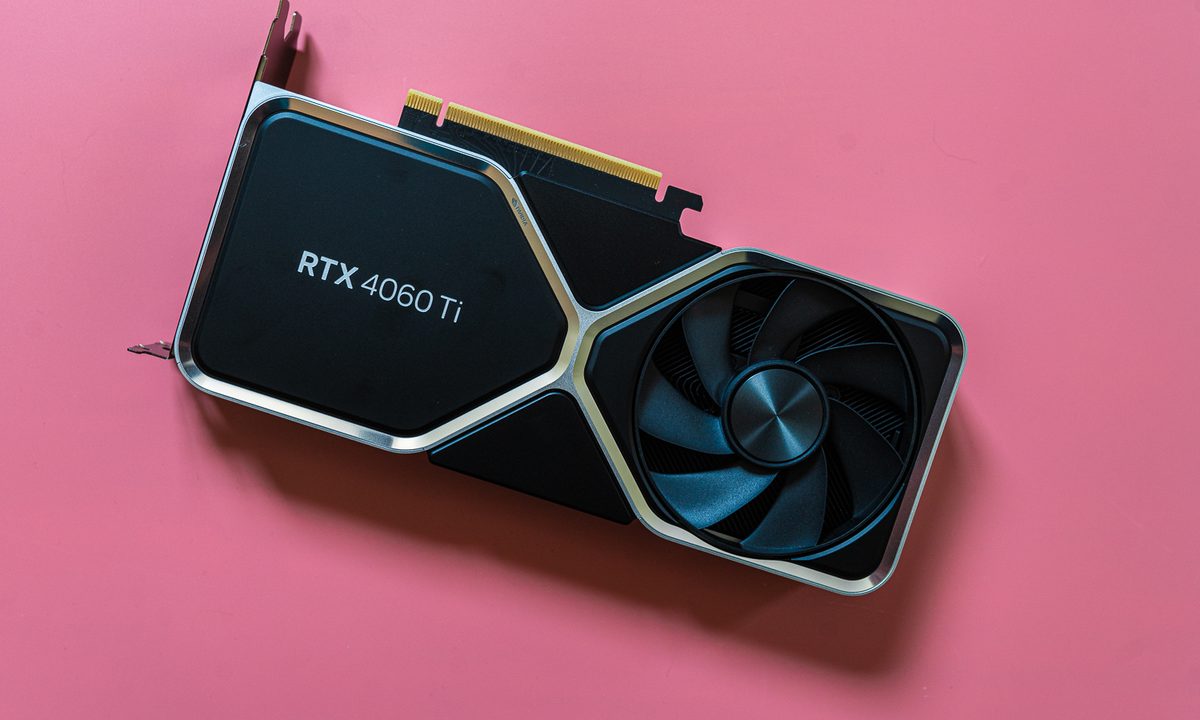
RTX 4060 Ti sitting on a pink background.
Jacob Roach / Digital Trends

It seems that Nvidia is set to follow a similar approach to the RTX 4060 Ti launch by offering the upcoming RTX 5060 Ti in two configurations: 8GB and 16GB models. This information comes from a recent listing on the Eurasian Economic Commission (EEC) website, spotted by @Olrak29_  (X formerly Twitter) which additionally confirms that the standard RTX 5060 will launch in a single configuration featuring 8GB of VRAM.

Nvidia is yet to confirm the existence of the RTX 5060 and 5060 Ti, but it is expected that there are plans to unveil the GPUs in March. This information also falls in line with a report from last month which pointed out similar memory configurations and the inclusion of the PG152 printed circuit board (PCB) with the GB206 GPU die.

Recommended Videos

🤡 pic.twitter.com/4rySh6rw1k

— Everest (@Olrak29_) January 27, 2025

If you remember, both 16GB and 8GB versions of the RTX 4060 Ti received terrible feedback as they offered minor improvements over the previous generation. The RTX 5060 Ti could face a similar reception although we are sceptical that the move to GDDR7 memory may provide much-needed improvement. With both variants expected to offer 448 GB/s of bandwidth—a 55% increase over the RTX 4060 Ti—the new cards could have a significant performance boost.

It is also concerning that Nvidia will once again limit the lower end of its GPU lineup to just 8GB of RAM. As pointed out by my colleague Jacob in his overview of the RTX 4060 Ti, modern gaming titles are pushing their limits. Having just 8GB of VRAM, especially on a 128-bit memory bus, may not deliver the best results in games like Indiana Jones and the Great Circle, Resident Evil 4, The Last of Us Part One, and Halo Infinite.

How much of an improvement will the upcoming RTX 5060 and 5060 Ti offer over their previous-gen counterparts? There’s still some time before we find that out. However, if we consider the performance improvements gained by the RTX 5090 over the 4090, the new RTX 5060 and 5060 Ti should offer similar performance uplifts.

Kunal Khullar
Kunal Khullar is a computing writer at Digital Trends who contributes to various topics, including CPUs, GPUs, monitors, and…
Google finally lets you turn any website into an app on Googlebook
Google heard your complaints, and now every website can be an app on your Googlebook.
Using the HP Googlebook

Googlebook users, rejoice. Google is rolling out a Chrome update that turns any website into a web app, and you have the community to thank for it.

When Googlebook first arrived, Chrome was picky about which sites you could install. Only websites that developers had set up as web apps got the Install option. Everything else ended up as a shortcut that simply launched a browser tab.

Read more
DigUp lets users find Mac files by describing them, not remembering their names
Can't remember where that screenshot, PDF or recording went? Just describe it and let AI do the digging.
DigUp App in Use screenshot

There's a particular kind of frustration that comes with knowing a file exists somewhere on a computer but having absolutely no idea what it's called. Was that screenshot saved as IMG_4837? Which PDF contained that clause? And where did that podcast recording mention the thing worth remembering? DigUp wants to end the filename guessing game, letting Mac users search for files by describing what they remember instead. The free, open-source app uses Google's EmbeddingGemma 2 to search across photos, documents, PDFs, audio recordings and videos, all without sending personal files to the cloud.

DigUp turns everyday descriptions into file searches

Read more
A new AI detector looks beyond words to check whether the ideas came from AI
This could help journals distinguish AI-written research from human work polished with AI.
ai-writing-book

Most AI detectors look for telltale signs of AI-generated text by examining word and sentence patterns. A new tool called IdeaLens takes a different route to solving this problem. It spots AI-generated research by looking at the ideas behind it instead of the wording itself (via TechXplore).

Researchers from the University of Maryland, Google DeepMind, and Simon Fraser University built IdeaLens to check whether a document's core arguments came from a human or a machine, regardless of who wrote the final draft.

Read more