1. Home
  2. Computing
  3. Web
  4. News

Yahoo CEO Marissa Mayer apologizes for email fail

Add as a preferred source on Google

After days of massive outages, service interruptions, and subsequent assurances that Yahoo was working on its Mail problem, CEO Marissa Meyer posted an apology on a Tumblr blog dated December 13.

In the post, Mayer blamed the Mail problems on a “rare” hardware problem. Here’s what she had to say:

Recommended Videos

“On Monday, December 9th at 10:27 p.m. PT, our network operating center alerted the Mail engineering team to a specific hardware outage in one of our storage systems serving 1% of our users. The Mail team immediately started working with the storage engineers to restore access and move to our back-up systems, estimating that full recovery would be complete by 1:30 p.m. PT on Tuesday.

However, the problem was a particularly rare one, and the resolution for the affected accounts was nuanced since different users were impacted in different ways. Some of the affected users were unable to access their accounts, instead seeing an outdated ‘scheduled maintenance’ page which was a confusing and incorrect message (this has since been corrected and updated). Further, messages sent to those accounts during this time were not delivered, but held in a queue.

Over the remainder of the week, we worked around the clock to restore access and all messages to inboxes. This has included restoring IMAP access for people using other email programs like Outlook or Apple Mail to access their Yahoo Mail.”

According to Yahoo’s official Mail status page, the latest update, which was posted on December 15 at 7:45 PST, indicates that the web giant’s engineering team is “making steady progress on restoring access to messages for affected users.” This includes folders as well as inbox state, which tells you whether you’ve read a message or marked it with a star.

The latest Mail status update also indicates that timestamps may be incorrect, and reveals that a new update will be posted sometime today. If and when that update does arrive, we’ll edit this story to include the new information.

In the meantime, did you or are you still experiencing problems with Yahoo Mail? If so, please share your experiences in the comments below.

Image credit: http://tctechcrunch2011.files.wordpress.com

Konrad Krawczyk
Former Computing Editor
Konrad covers desktops, laptops, tablets, sports tech and subjects in between for Digital Trends. Prior to joining DT, he…
The Mac Pro nearly received an M3 Extreme chip twice as powerful as M3 Ultra
High production costs likely killed Apple’s M3 Extreme plans
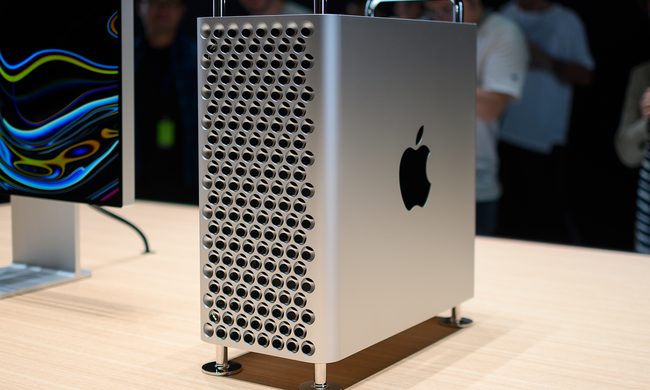
Apple's Mac Pro on a table at a press event.

Apple discontinued the Mac Pro earlier this year, ending a 20-year run for a computer that once represented the very best of the company’s desktop lineup. However, Apple reportedly had much bigger plans for the machine before ultimately replacing it with the Mac Studio.

According to Bloomberg’s Mark Gurman, Apple developed an M3 Extreme chip that could have offered twice as many CPU and GPU cores as the M3 Ultra. The processor was intended to sit above the Ultra tier and could have finally given the Mac Pro the performance advantage it badly needed. Apple eventually abandoned the chip due to concerns over production costs and limited demand for such an expensive machine.

Read more
Hidden prompts can secretly rewrite an AI’s memory, and researchers say that’s a serious problem
Researchers discover AI attack that rewrites an assistant's long-term memory
Chatbot on a smartphone.

Large language models are getting better at remembering us. Whether it's your preferred writing style, recurring tasks, shopping habits or project deadlines, AI assistants are increasingly storing long-term memories to make future conversations feel more personal and useful. But according to new research, that same feature could become one of AI's biggest security vulnerabilities.

Researchers from New Mexico State University have demonstrated a new attack called GhostWriter, capable of secretly planting false memories inside AI agents. Rather than stealing information outright, the attack manipulates what an AI remembers, potentially causing it to make dangerous decisions long after the original attack has taken place.

Read more
This experiment shows how easy it is to poison an open-weight AI model for under $100
This research raises new doubts about trusting open weight AI models.
Computer, Electronics, Laptop

Open-weight AI models have been having a moment lately. Just this month, Moonshot's massive Kimi K3 model landed close behind Claude Fable 5 and GPT 5.6 Sol in several benchmarks, all while remaining fully open-weight and downloadable by anyone.

However, Katie Paxton-Fear, a cybersecurity lecturer at Manchester Metropolitan University and staff security advocate at Semgrep, managed to poison an open-weight model and proved how easily that openness can be turned against you (via The Register).

Read more