
What do you get when you mix underwater shipwrecks and 3D printing?
Answer: an impressive project by researchers at Wessex Archaeology, who used cutting-edge additive manufacturing processes to recreate two long-sunk shipwrecks off the coast of the United Kingdom. The shipwrecks in question included a vessel thought to date back to the late 17th or early 18th century, found in Drumbeg, Scotland, and a World War War hospital ship, HMHS Anglia, which sank in 1915.
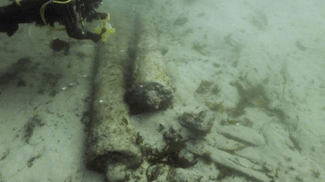 Several technologies were used to build the 3D models. These included photogrammetry, the science of making accurate measurements from photographs, a magnetometer for measuring magnetization, and high-resolution 3D sonar surveys. Combining data from all of these sources, archeologists were able to create accurate models of the two shipwrecks — allowing for them to be examined up close and personal on the surface, without the need for extensive dives.
Archaeologist John McCarthy, who carried out the 3D modeling process, said that, “It’s been a fascinating process to transform the light captured in the photographs and the sound captured by the sonar sensors back into solid objects through the 3D printing process. We are very excited about the potential for this technology to help us to show the wider community what it’s like to visit the site without having to learn to dive or even get your feet wet! We hope that future surveys by our team can result in more models which can be used in local and national museum displays and at talks and open days.”
This isn’t the first we’ve heard of 3D printing being used to great effect by archaeologists. “3D printing is another tool in the archaeologist’s toolbox to bring the past alive,” archaeologist Thomas Greiner tells Digital Trends. “With several exciting digital projects happening right now in the humanities, ranging from interactive archaeological tours right in Google Earth to wholly reconstructed Egyptian temples, 3D printing will enable us to showcase the history of the world in exciting, new, and engaging ways, while ensuring the preservation of the original pieces.”
“3DP is a great tool for archaeology to understand topography and also in replicating artefacts which can then be used in the classroom to aid or encourage learning,” agrees Michael Petch, co-author of 3D Printing: Rise of the Third Industrial Revolution. “The most interesting areas of 3DP often span multiple disciplines or open up participation in an activity to a wider group. This can result in useful insights or discoveries from novel approaches.”
Like exploring shipwrecks on land, you mean?


