1. Home
  2. Emerging Tech
  3. News

Injectable electrodes may help treat everything from chronic pain to depression

Biomedical Engineering Professor Kip Ludwig explains neuromodulation

A novel drug-free treatment for health conditions ranging from chronic pain to epileptic seizures or depression could be on the horizon — and it involves injectable electrodes.

Recommended Videos
From 3D-printed prostheses to burgers grown in science labs to smarter mobility for the elderly or infirm, tech improves our lives every day in a million ways beyond simply making things more convenient. Tech can have a meaningful impact — that’s why we call it Tech for Change. Here are the companies and people fighting to make a difference.
Tech for Change

The concept builds on the technique of electrically stimulating nerves. This kind of neuromodulation treatment is already in service in today’s hospitals. It works by altering nerve activity through targeted electrical stimulation. While this has been shown to be effective, however, the treatment also poses problems. Specifically, surgically implanted devices can be expensive, require complex procedures to install, and are prone to failing due to the challenge of getting rigid devices to interact with the body’s soft biological tissues.

The new approach — referred to as “injectrodes” by its creators — involves electrodes injected into the body as a liquid. The injectrodes are made from a silicone base, similar to a surgical sealant, infused with small metal particles to make the liquid conductive. Once injected, the material then cures inside the body, establishing a new kind of neural interface system.

Neuronoff, Inc.

“The envisioned patient experience is an outpatient procedure that begins with a local numbing of the intended injection location with an anesthetic agent such as lidocaine,” Manfred Franke, co-founder and CEO of Neuronoff, the company set up to commercialize the technology, told Digital Trends. “Using ultrasound or fluoroscopy to visualize the local anatomy, the physician places the injectrode via needle injection onto, into, or around the anatomical area of interest. This may be a nerve or it may be other tissues that the physician wants to apply energy to, such as electrical stimulation of nerves or currents to ablate certain tissues within the body. Once the injectrode material is placed into the body, it undergoes a transformation from its initial liquid, or moldable, form to a solid form within the body, essentially curing in-vivo. Around a week later, the patient would then return to receive the treatment, using an external signal generator unit to deliver the desired electrical signal to the intended target.”

The approach has already been put through chronic preclinical tests. “Our team is working diligently to get this technology out to patients as quickly as possible,” said Andrew Shoffstall. “The team recently received a $2.2m grant from the HEAL program at the National Institutes of Health. This work will greatly increase our ability to validate the safety and efficacy of the technology before we move into clinical trials.”

A paper describing the work was recently published in the journal Advanced Healthcare Materials.

Luke Dormehl
I'm a UK-based tech writer covering Cool Tech at Digital Trends. I've also written for Fast Company, Wired, the Guardian…
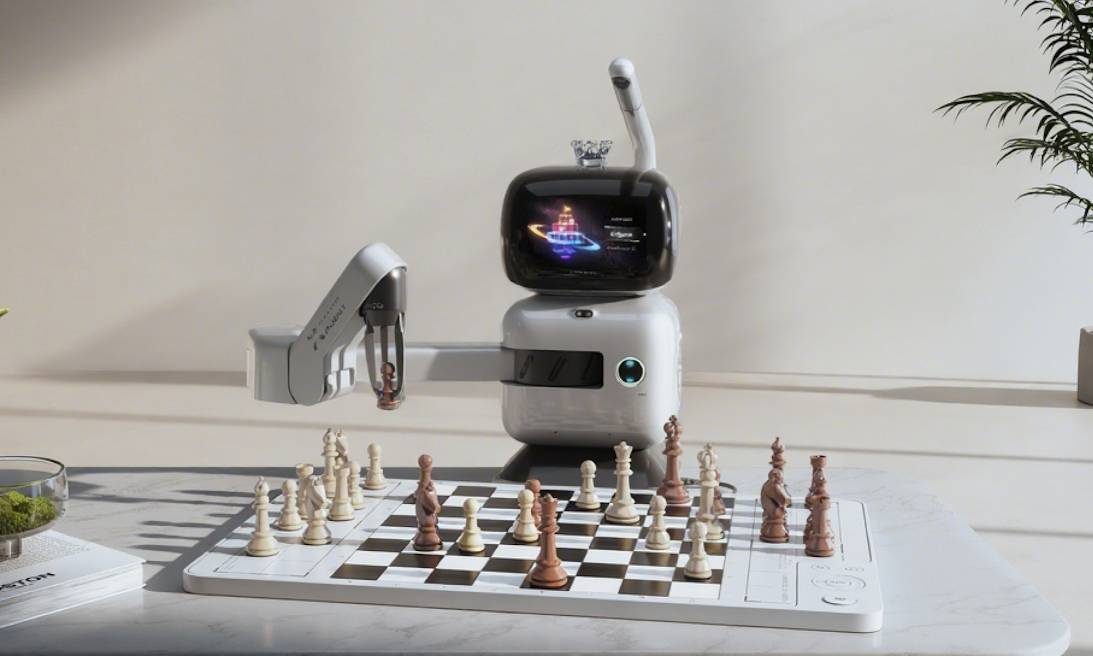
Save on the SenseRobot Chess — the AI chess master everyone wants
SenseRobot Chess

This post is brought to you in paid partnership with SenseRobot

The holidays are almost upon us, and one deal is standing out for tech enthusiasts, chess lovers, and shoppers. The SenseRobot Chess, the world’s first mass-produced AI chess robot arm designed for home use, is now available at its Christmas holiday special price of $699.98, with an additional $35 off at Amazon when using the code CHESS2025. This limited-time 26% off offer brings intelligent robotics and interactive learning within reach.

Read more
Google’s virtual try-on app now helps you discover and shop outfits tailored to you
Doppl just made it easier to discover, try, and buy your next favorite look.
Illustration showcasing Doppl's new shoppable discovery feed.

Google introduced a virtual try-on app called Doppl earlier this year that uses AI to help users visualize how different outfits look on them. The company has now added a shoppable discovery feed to the app that offers outfit recommendations with direct links to merchants.

In a recent blog post, Google said that the idea behind this new feed is to help users "discover new favorites," try them on a virtual avatar of themselves, and purchase them right within Doppl. This discovery feed works like a personalized style stream, surfacing outfit recommendations based on user-specified preferences and past interactions.

Read more
Google’s AI mood board can now turn your idea dump into a slick presentation
Mixboard just got a massive Nano Banana Pro upgrade.
Google Mixboard homescreen.

Google's recently released AI mood board app, Mixboard, just got a massive upgrade, and it now lets users turn their chaotic idea dumps into polished presentations. Powered by Google's Nano Banana Pro model, the new feature automatically transforms the content on the main board into a structured, visually appealing presentation.

According to Google, the new capability "combines the context from your board and your input— including format, presentation focus and your preferred visual style — to build beautifully designed presentations." Users get to pick between two formats, specify what they want to convey with the presentation, and select from a couple of different visual styles to customize the final output. The feature then takes a few minutes to generate the presentation, which users can either download, share, or present right within Mixboard.

Read more