
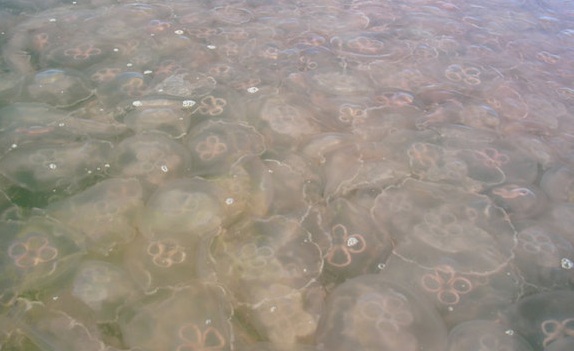
 Seems like jellyfish are the latest critics against nuclear power use. Earlier this week a nuclear power plant on the coast of Israel was forced to shut down due to a jellyfish clog in their cooling system. Two weeks before this incident, two seperate countries had coastal reactors which were clogged similarly. These events are sparking speculation on whether this is a growing trend driven by climate change.
The string of jellyfish surges began with a reactor in Shimane, Japan and in a week’s time two nuclear reactors on the Scottish coast were also crippled by jellyfish in the cooling system. The Scottish Torness nuclear power plants, as well as the Japan and Israel plants pull cold sea water to creating cooling pools for the reactors within. The plants logically have filters (called flumes) to keep marine life out since they rest on the coast, but a possibly global jellyfish bloom is proving too much for these filters to handle.
Monty Graham, a jellyfish biologist from the Dauphin Island Sea Lab, told Life’s Little Mysteries, “Jellyfish populations spike and wane with climate variability, so it’s not hard to make the logical leap that if climate is changing long-term, we’ll likely see a population change.”
Graham pointed out dozens of cases where jellyfish blooms caused problems for coastal power plants over the past few decades. A researcher at the Monterrey Bay Aquarium Research Institute also pointed out that that an Australian power plants was forced to shut down completely in 1937. Graham cautions that since researchers have only been tracking jellyfish populations for a short period of the time, they don’t have the data to support whether this is a global trend and the recent incidents could be coincidental. He says that these incidents could even be attributed to the increase on coastal power plants.
To combat the overwhelming numbers of jellyfish, plants are investing in countermeasures including more filters and a jet bubble system which floats jellyfish to the surface away from the cooling system.


