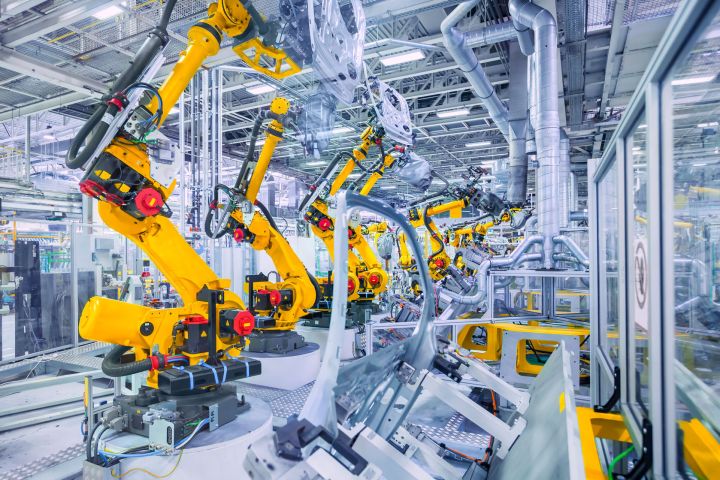
We know this because last year a team from the country bagged top prize in DARPA’s highly valued Robotics Challenge event. And because it’s top of the global charts in terms of robot density. And because it came up with Drinky, the remarkable imbibing robot that can comfortably drink any human under the table.
Determined not to rest on its high-tech laurels, the Asian nation is set to pump 500 billion won (about $445 million) into its robotics industry over the next five years, the South Korean trade ministry revealed on Tuesday.
A big chunk of the funding will help to finance corporate R&D centers for nurturing new talent and to help develop next-generation robotic technology by 2020, Yonhap News reported.
Research from the International Data Corporation (IDC) published earlier this year suggested the global robotics industry would be worth around $135 billion in 2019 – almost double that of the $71 billion generated last year – and so South Korea clearly wants a piece of the pie.
“The robot industry has emerged as a new technology frontier that will give a fresh boost to the manufacturing sector,” trade minister Joo Hyung-hwan said this week. “The government will fully support the businesses’ investment into research and development in a bid to help the industry grow as a new export leader.”
The IDC’s report noted that at the present time, the biggest spending on robot technology comes from the manufacturing industry, while the healthcare sector is forecast to double its investment over the next three years.
While the most lucrative markets for South Korea’s robotics companies include those mentioned above, the country’s creatives have also, over the years, been entertaining the masses with an array of autonomous technology of varying sophistication.
Take the Hanwah Eagles baseball team, for example, which installed rows of robots to replace absent fans at games, and the autonomous prison guards used by a jail in the east of the country.
And how can we forget this “cutting edge” jellyfish-shredding bot deployed to keep its coastline clear of the formidable gelatinous sea creature. The country also makes the humble robot vacuum, though one of them hit the headlines last year for all the wrong reasons.
Editors' Recommendations
- The iRobot Genius 4.0 update makes Roombas even smarter
- Evolving, self-replicating robots are here — but don’t worry about an uprising
- To build a lifelike robotic hand, we first have to build a better robotic brain
- White Castle invests in burger-flipping robots to make fast food even faster
- Smoothie-making bot at Walmart signals the rise of the robot fast-food worker