  1. Home
  2. Emerging Tech
  3. News

Impending collision of Milky Way with other galaxy is already creating new stars

Add as a preferred source on Google

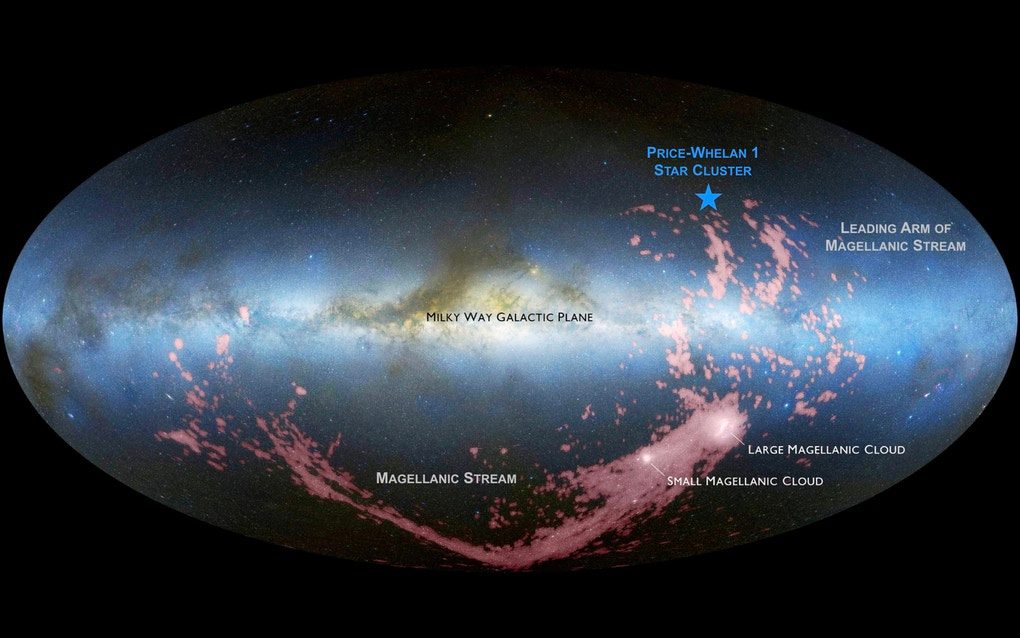
A map of the Milky Way.
A newfound cluster of young stars (blue star) sits on the periphery of the Milky Way. These stars probably formed from material originating from neighboring dwarf galaxies called the Magellanic Clouds. D. Nidever; NASA

We know that in around 2 billion years’ time, our galaxy will collide with a nearby satellite galaxy, the Large Magellanic Cloud (LMC). This collision will be so dramatic that it will awaken the black hole at the heart of our galaxy, causing it to gorge on nearby matter and balloon to ten times its current size. The LMC is a fairly small galaxy, but it is rich in dark matter so it has a large mass, causing the collision between the two galaxies to be catastrophic.

Recommended Videos

For now, though, the interaction of the two galaxies isn’t destructive — it is actually creating new stars. Using data from the Gaia spacecraft, researchers looked for rare blue stars and the clusters of stars that move along with them in our galaxy. Once they had identified and removed known star clusters, they found one remaining cluster on the far edges of the Milky Way.

“It’s really, really far away,” primary discoverer Adrian Price-Whelan, a research fellow at the Flatiron Institute’s Center for Computational Astrophysics in New York City, said in a statement. “It’s further than any known young stars in the Milky Way, which are typically in the disk. So right away, I was like, ‘Holy smokes, what is this?’”

By analyzing the elements found in the stars in the cluster, the researchers realized that they were likely formed from particles from outside of our galaxy. As the mystery cluster is located near to a river of gas called the Magellanic Stream which flows from the Large and Small Magellanic Clouds and reaches toward the Milky Way, they believe these other galaxies are the source of the materials which formed the stars.

“This is a puny cluster of stars — less than a few thousand in total — but it has big implications beyond its local area of the Milky Way,” Price-Whelan said. One implication is that the LMC might be closer to the Milky Way than previously believed.

“If the Magellanic Stream is closer, especially the leading arm closest to our galaxy, then it’s likely to be incorporated into the Milky Way sooner than the current model predicts,” David Nidever, assistant professor of physics at Montana State University in Bozeman, said in the statement. “Eventually, that gas will turn into new stars in the Milky Way’s disk. Right now, our galaxy is using up gas faster than its being replenished. This extra gas coming in will help us replenish that reservoir and make sure that our galaxy continues to thrive and form new stars.”


Georgina Torbet
Georgina has been the space writer at Digital Trends space writer for six years, covering human space exploration, planetary…
Yet another study says AI is bad for elections, and the rabbit hole gets worse
AI may be an election bomb waiting for someone to light the fuse
Voters cast their ballots on Election Day

Another election, another study has concluded that asking an AI chatbot for political guidance is a spectacularly bad idea. Research conducted during Hungary’s 2026 parliamentary election found that ChatGPT and Google Gemini offered not just inaccurate but also inconsistent and unreliable voting advice. The chatbots misclassified voter profiles, overlooked relevant parties, recommended parties absent from the ballot, and sometimes produced materially different answers when given the same information repeatedly.

AI keeps failing the voter test

Read more
Samsung’s humanoid robot ambitions are real, but factories come first
Samsung’s new robotics division has humanoids in its sights, although its immediate business is far more practical factory automation
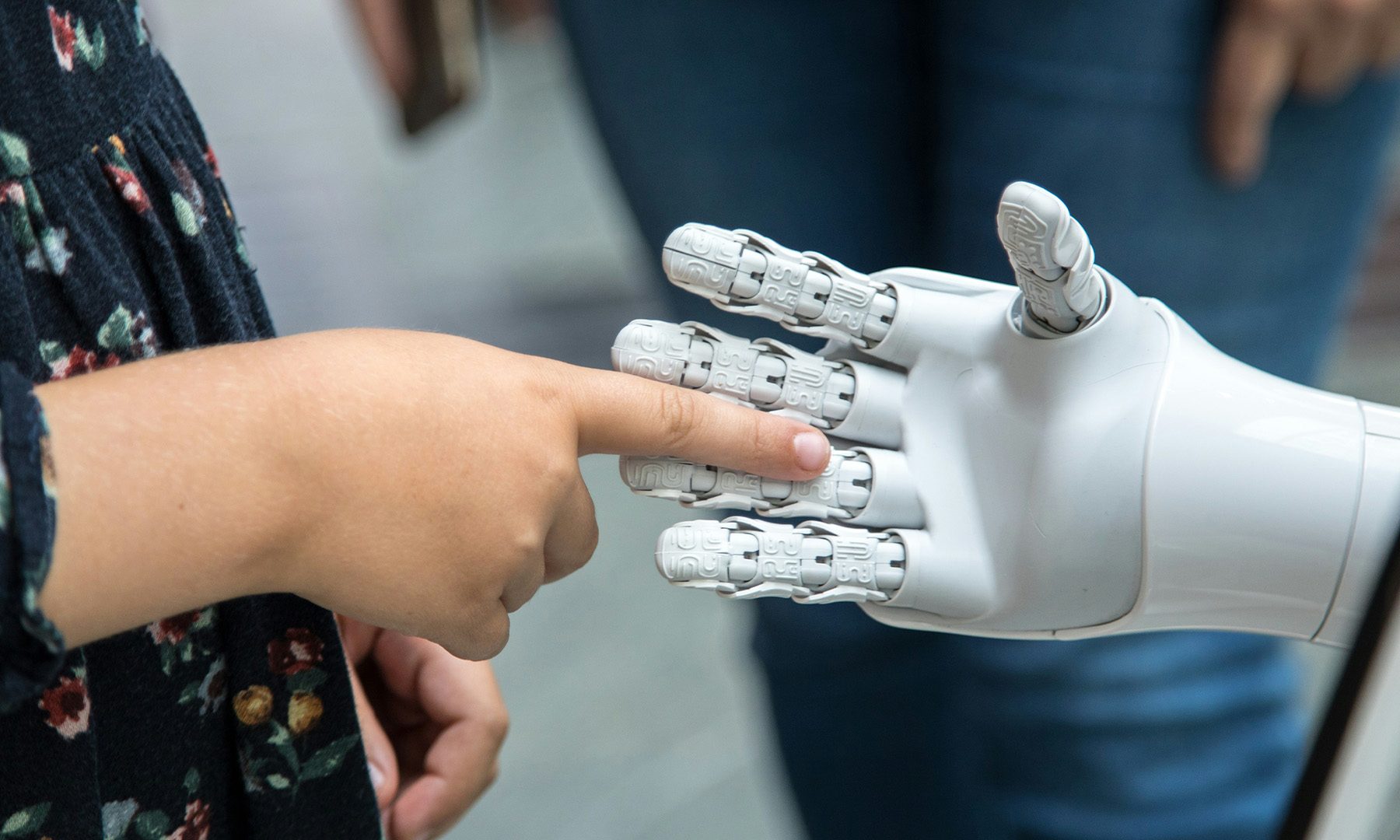
Robot Touch Human Finger

Samsung wants a place in the humanoid race, but its new robotics push begins with machines built for factories rather than homes.

The CEO-led RX robotics division will initially focus on manufacturing robots. Samsung has separately identified humanoids as a priority, although it hasn’t announced a commercial model or explained where one fits into the division’s immediate plans.

Read more
The future of AI may depend on this one behind-the-scenes change
Running Claude on Android.

Whenever a new AI model arrives, it's easy to get caught up in the bells and whistles. We talk about how much smarter it is, how quickly it answers questions, or how realistic its images have become. But here's the thing: none of that matters much if the AI can't reliably work with the apps and services people use every day.

That's why an upcoming update to the Model Context Protocol (MCP) caught my attention. It isn't a new chatbot or a fancy AI model. In fact, most people will never even know it's happening. But it could quietly make the AI ecosystem a lot healthier. If you've never heard of MCP before, don't worry. Think of it as a shared language that lets AI assistants safely talk to apps like Gmail, Slack, calendars, databases, and countless other services. Instead of every company inventing its own way to make those connections, MCP gives everyone a common rulebook.

Read more