  1. Home
  2. Emerging Tech
  3. Mobile
  4. Legacy Archives

Dead battery? NYC introduces solar-powered phone charging stations around the city

Add as a preferred source on Google
street_charge
Image used with permission by copyright holder

Every moment, innumerable phones die around the country. But today, a few of them in New York City will be saved. A renewable energy company named Goal Zero is collaborating with AT&T and Brooklyn-based design studio Pensa on a new, eco-friendly solution for such a dilemma: public, solar-powered charging stations. 

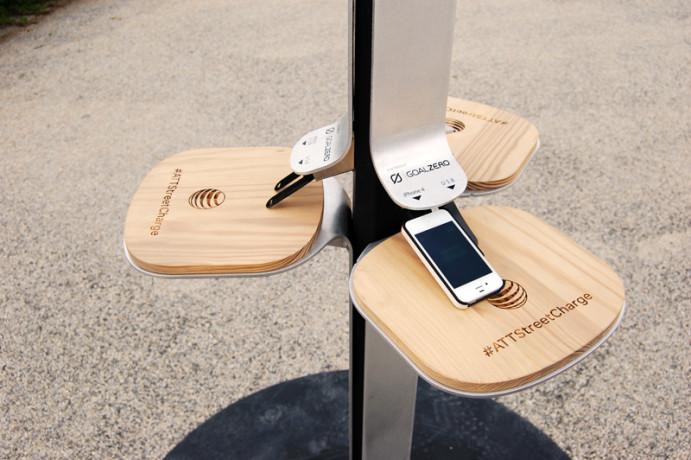
The stations, called Street Charge, have a sleek modern design, courtesy of Pensa. Goal Zero’s top-of-the-line solar panels, which sit atop a tall poll, branching out much like helicopter propellers, power these chargers. Each station has three small tables to rest your phone on while it charges and, best of all, you won’t even have to worry about having a charging cable with you. There will be both built-in USB ports as well as charging tips to plug your device into. 

Recommended Videos

“We’re excited to team up with AT&T and Pensa to help make New York a little greener and solar power a little more accessible,” said Goal Zero’s president and CEO, Joe Atkin. “All too often we hear the dreaded low-battery beep and it happens at the most inconvenient times. Street Charge will fix that.” 

If this all sounds familiar to you, it’s possible you saw an earlier prototype, which was tested out last summer in Dumbo, one of Brooklyn’s riverside neighborhoods. But this year, they’ll be spreading much farther. The stations debuted today in Brooklyn’s Fort Greene Park and, as summer progresses, more stations will be added all around the city, specifically in pedestrian-heavy areas. You can expect to see them at Brooklyn Bridge Park, Coney Island, Central Park (at the Summerstage), Governor’s Island, Hudson River Park, Randall’s Island, Riverside Park, Rockaways, and Union Square. 

Joshua Pramis
Spending a childhood engrossed in such technologically inspiring television shows like Voltron, Small Wonder, and Power…
A new AI model wants self-driving cars to think before they swerve
Forget guessing games, this self-driving AI actually shows its work.
Self driving car

Self-driving cars have gotten pretty good at driving. The harder problem is teaching them to drive safely in situations nobody planned for. We have heard horror stories of self-driving cars, behaving erratically in emergency situations, often times delaying first responders from reaching the scene.

A team at Seoul National University, led by professor Jun Won Choi from the Department of Electrical and Computer Engineering, thinks they have cracked part of that puzzle with a new AI model called SafeDrive. The research was recently selected as a highlight paper at CVPR 2026, a distinction that goes only to roughly 3% of all submissions.

Read more
An AirPods-sized mini lab could help catch disease markers in minutes
Meet VPodDuo, an AirPods-sized molecular testing gadget
VPodDuo Mini Medical Device

Home testing could eventually become a lot more convenient. Researchs at the at the University of Illinois Urbana-Champaign has developed the VPodDuo, a pocket-sized fluorescence reader designed to measure sensitive molecular tests outside a conventional laboratory.

Its housing is roughly comparable in size and shape to an AirPods charging case, while Bluetooth connectivity sends results directly to a smartphone. Meaning, you might not have to wait in line anymore.

Read more
Your future AR glasses might finally stop making the real world look weird
Researchers have developed a new display technique that keeps virtual objects realistic without dimming the real world.
Samsung AR Glasses

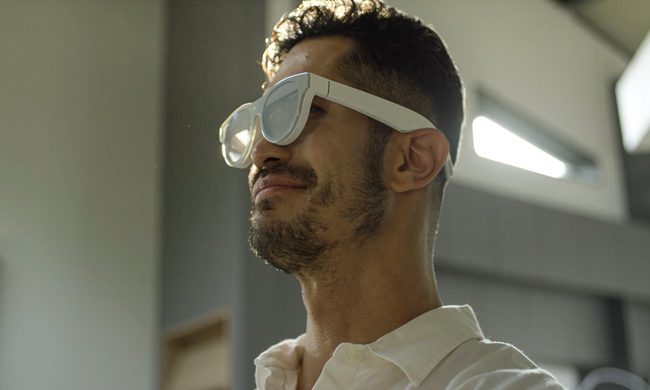
One of the biggest promises of augmented reality is blending digital objects seamlessly into the real world. Ironically, today's AR glasses often make the real world harder to see. Researchers at the Shibaura Institute of Technology (SIT) in Japan, led by Assistant Professor Xiaodan Hu in collaboration with Dr. Yan Zhang and Professor Xubo Yang from Shanghai Jiao Tong University in China, and Professor Kiyoshi Kiyokawa from Japan's Nara Institute of Science and Technology, have developed a new AR display technique that aims to make virtual objects look realistic without reducing visibility of the real world. The study was published in IEEE Transactions on Visualization and Computer Graphics.

The biggest AR problem isn't virtual objects; it's everything around them

Read more