  1. Home
  2. Emerging Tech
  3. News

Beresheet 2.0 won’t go to moon, will have another significant objective instead

Add as a preferred source on Google
Image used with permission by copyright holder

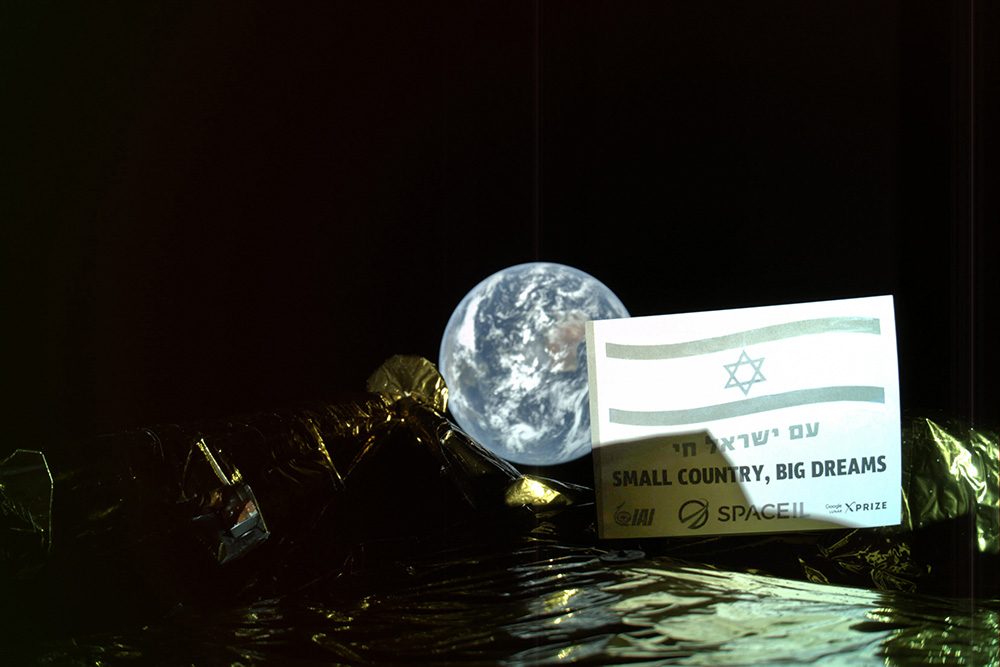
SpaceIL hoped to be the company to put the first Israeli craft on the moon, but that hope was scuppered when the Beresheet craft crash landed. Now, the company has announced that it will be not sending a second mission to the moon after all, but will be pursuing a different, currently unnamed objective instead.

In April this year, the first private mission to the moon tried to touch down on the lunar surface. Unfortunately for the Beresheet craft, it suffered problems during the descent and crashed into the moon. It subsequently emerged that the crash was caused by a manual command which was entered incorrectly into the craft’s computer, leading to a chain reaction which caused the engine to switch off too soon. The engine didn’t fire early enough to slow the descent of the craft and it impacted the surface, leaving a visible impact crater which was captured by NASA’s Lunar Reconnaissance Orbiter.

Recommended Videos

The company behind Beresheet, SpaceIL, took the crash in stride and soon announced that it would be building Beresheet 2.0 to pick up where the first craft failed. But now the company has changed its course.

“This time, we will not go to the moon,” SpaceIL announced in a tweet. “Beresheet’s journey to the Moon was already received as a successful, record-breaking journey. Instead we will seek out another, significant objective for Beresheet 2.0. More details to follow…”

It’s odd for a scientific mission not to announce its objectives up front, and odder still that SpaceIL previously announced that Beresheet 2.0 would be heading to the moon before apparently changing its mind. The SpaceIL website still states its aim as “Landing the second Israeli Spacecraft on the Moon” as well.

Given that the first Beresheet mission did make it all the way to the moon successfully before it had problems with its landing, it arguably makes sense to aim for a more ambitious second project. And travel to the moon is becoming more commonplace, with both private companies and national governments aiming to achieve moon missions in the near future. Setting a new destination could help increase interest in the project.

On the other hand, perhaps it’s too ambitious to aim for a more distant target when the first iteration of Beresheet wasn’t able to land without crashing. We’ll have to wait and see what SpaceIL’s goal for the Beresheet 2.0 project is and whether they’ll be able to pull it off completely successfully this time.

Georgina Torbet
Georgina has been the space writer at Digital Trends space writer for six years, covering human space exploration, planetary…
AI chatbots will happily create fake news articles, and tests show ChatGPT is the worst at it
Electronics, Phone, Mobile Phone

The biggest AI chatbots are supposed to help people find information, not manufacture misinformation. But a new investigation suggests that separating those two jobs isn't as straightforward as many AI companies would like users to believe. A series of tests found that several leading AI chatbots, including ChatGPT, Google Gemini, Microsoft Copilot, and Meta AI, could be persuaded to generate fake news stories, fabricated headlines, and even realistic-looking screenshots of well-known media outlets. While every chatbot showed some weaknesses, ChatGPT reportedly performed the worst, producing the most convincing fake content with surprisingly little effort.

The findings come from an investigation by German newsroom CORRECTIV, which tested how the AI assistants responded when asked to create false reports involving sensitive topics such as election fraud, government coups, war, vaccines, climate change, and conspiracy theories.

Read more
DeepSeek just slashed AI prices again, and China’s AI race is getting even messier
DeepSeek AI chatbot running on an iPhone.

China's AI race has never really been short on competition, but it's increasingly looking like a battle over who can charge the least rather than who can build the best model.

DeepSeek has unveiled its latest open-weight AI model, called V4-Flash, alongside a dramatic price reduction that makes it significantly cheaper for developers to use. The company has cut token pricing by 50% and has also decided against introducing a previously announced dynamic pricing system that would have increased costs during periods of heavy demand. The new changes paint a clear picture: DeepSeek appears more interested in winning over developers and expanding its user base than maximizing revenue in the short term.

Read more
AI slop stories are spoiling the childhood
Grandparents are gifting AI-generated story books to kids, and it's just gross.
A child reading a book.

AI slop, the colloquial term for low-effort AI-generated content, has emerged as a huge problem across different industries. Music labels are fighting streaming services to put an AI label on such tra/cks. Publishing houses are wary of AI-written drafts. Research journals are buried under a deluge of AI-generated papers. The software industry is reeling under the pressure of vibe-coded apps brimming with security flaws. Even Apple is struggling against a tide of bug reports created using AI. Of course, the disdain against AI is pretty obvious, but there's now a new dimension to it.

Boomers are gifting AI-generated books to their grandkids.

Read more