What if Apple announced the Mac’s retirement? A huge swath of the company’s devotees would be furious … but is it truly an impossible scenario?
To many, the MacBook has long been the gold standard for luxury laptop computers. But as Apple’s business interests continue to change over time, the importance of the device’s established user base has become less and less relevant to the company.
Apple has enjoyed incredible success thanks to the iPhone and several other wildly popular products — and as a result, the company is poised to do whatever is deemed best for its long-term future. Few of its rivals would kill off such a cash cow, but Apple has no fear of making bold moves forward, even when it means leaving some of its fans behind.
Competition heats up
There was a time when the MacBook was an easy choice for anyone looking to dodge the complexity of the Windows laptop market. It was a luxurious yet reliable choice for anyone from students to professionals. Many purchased it not out of fandom, but because they wanted an extremely capable yet intuitive computer.
In recent years, however, the Mac line has struggled to remain ahead of the curve. Microsoft’s Surface Pro is the perfect example. While it debuted to a muted response several years ago, it has quickly established itself as a robust multi-purpose laptop. The fact that it’s fitted with a touchscreen — something Apple seems reticent to explore with its MacBook line — gives it an undeniable advantage over its biggest competitor. Today, the Surface Pro serves as a competent, reliable Mac alternative with features that Apple doesn’t offer for Mac.

It’s not all doom and gloom for Mac. MacBook sales aren’t in decline, they’re simply holding steady, according to figures posted in February 2017. For a company of Apple’s size, though, holding steady doesn’t count for much. Macs were once Apple’s bread and butter, but now they provide a small slice of the company’s earnings. Macs and MacBooks alike seem to remain in production only as fan-service for longtime followers.
The MacBook keeps only a small group of users happy and brings in a relatively small amount of money. Neither of these benefits are particularly important to a company that serves 700 million iPhone users worldwide, and has $250 billion in the bank. Especially given that the MacBook line puts something of a strain on Apple elsewhere.
Pick your battles
At present, Apple serves two distinct groups of people with its hardware. Devices running iOS make up 31 percent of the global mobile user base, according to data from NetMarketShare — not bad going, considering that all those smartphones and tablets come from one manufacturer, whereas the 65 percent of devices that run Android come from various sources. However, MacOS only commands 6 percent of the desktop and laptop market. Worse yet, there’s evidence that the Mac’s market share is shrinking.
Given that iOS devices are very popular among users, and MacOS seems to be serving an increasingly specialist audience, Apple might be prompted to take a good look at what the future holds for its two operating systems. As with any ongoing skirmish, success in the device wars demands that resources are placed where they can have the greatest effect.
MacOS and iOS share a common design language, because Apple likes to make its hardware ecosystem as cohesive as possible. However, in terms of the practicalities of their development, they’re separate products.
If Apple were to discontinue its Mac hardware, it could phase out its support for MacOS.
Apple can’t just design software for its larger group of iOS users and then amend it for MacOS. It uses a completely different input method, the software won’t be presented in anywhere near the same aspect ratio, and the type of applications that a desktop or laptop user wants differ dramatically from the most popular on smartphones and tablets.
No matter the enormous financial resources that Apple has access to, there is a finite amount of top-tier UX designers available to the company, especially with competition from the likes of Microsoft, Google, and Samsung. If Apple were to discontinue its Mac hardware, it could phase out its support for MacOS. That would free up personnel to focus exclusively on iOS support.
Of course, there’s another possibility. MacOS could instead be phased out in favor of a version of iOS that’s tailored to desktops and laptops. However, the type of user that’s loyal to the MacBook would likely see this as tantamount to the death of the device in its current form, so Apple would still effectively be discontinuing the MacBook in the eyes of its most ardent admirers.
It might seem a little extreme to get rid of a product that sold more than five million units in the first quarter of 2017, but the company has a history of making these kinds of difficult decisions.
Apple has pulled the plug before
In the early 2000s, the iPod was something of a phenomenon. Looking back, it’s been eclipsed somewhat by the subsequent success of the iPhone — but it was a critical product for Apple at the time.
The first generation iPod launched in November 2001, and by 2007 the line had exploded in popularity, selling more than 50 million units worldwide over the course of the year. 2007 also marked the release of the first generation iPhone, the first generation iPod Touch, and the iPod Classic, which would turn out to be the final product in its lineage.
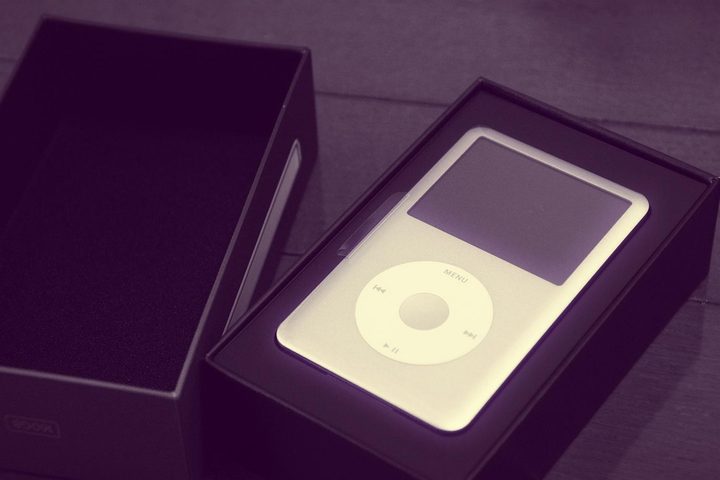
The iPod and iPhone lines managed to coexist well between 2007 and 2010, with the music player maintaining sales of more than 50 million units worldwide. However, Apple continued to put the focus on touch-based models rather than the Classic edition, and from 2010 onwards sales began to decline.
In 2014, Apple officially discontinued the iPod Classic, citing a lack of consumer interest. However, in the wake of its demise, the device was selling for well above its retail price on sites like eBay. It’s clear that there was still an audience for the music player. It just wasn’t an audience Apple was interested in serving.
This isn’t the only instance of Apple employing such a strategy. In recent years, we’ve seen the company exit the standalone display business, and cease its production of wireless routers. Both product lines were popular enough among users, but not popular enough by Apple’s metrics.
It would certainly be an extreme move for Apple to drop the MacBook. However, it would only be a bit more extreme than retiring the iPod Classic, a truly iconic product that would likely have sold steadily for years if the company wasn’t in the midst of pushing touch interfaces.
At your service
Speaking on an earnings call in January 2017, Apple CEO Tim Cook revealed that the company’s services division had become the fastest-growing element of its portfolio, according to a report from CNBC. Cook went on to state that he expected revenue from services to double by 2020.
The company’s services division had become the fastest-growing element of its portfolio
Since then, we’ve seen plenty of evidence that Apple is keen to beef up its services. The company is set to debut more video content as part of Apple Music before the end of the year, and rumors continue to circulate that it might use some of its considerable war chest to purchase Netflix outright.
Many the services that Apple offers straddle both its iOS and MacOS devices, but the heavy hitters like iCloud, Apple Pay, and the App Store are far more popular on mobile devices. Apple has tried to adapt them to the Mac, but it often seems more trouble than its worth. Even the Mac App Store still seems an awkward fit, and it’s several years old.
Going out in a blaze of glory
For those that love the MacBook, it’s more than just a laptop. It’s a symbol of creative types that hang out in coffee shops to edit photographs and work on their novel, and students who moonlight as DJs and bedroom producers. It’s a system that defined itself against the business laptops that shepherded portable computing into the public conscious in the 1990s.
If Apple does decide to sunset the MacBook line, expect to see a final version along the lines of the iPod Classic. Something to appease the most ardent users, who would rather lose a limb than switch over to the Surface Pro.
Yet it takes more than rabid fans to keep a product alive at Apple, and the Mac is struggling to find its identify in a post-iPhone, post-iPad world. The MacBook’s purpose is not entirely clear — and because of that, its number may soon be up.