As I rip a chunk of rock out of the ground and use it to obliterate towers of golden roots or use an explosive rock to shatter an entire cliff face, spawning a cacophony of gold to collect raining down around me in Donkey Kong Bananza, it is impossible to ignore the hit the frame rate takes. In that moment, it almost feels good — like in the days of the SNES when the game would chug when too many particles were on screen — and yet in the back of my mind, I knew it would be used as a talking point for the power of the Switch 2.
The original Switch was underpowered from the start, and certainly pushed well beyond its limits in the eight long years it was on the market before the Switch 2. The early years weren’t too bad, with Nintendo first party games typically running perfectly fine, but near the end even Tears of the Kingdom started to make the poor Switch buckle. And we don’t even need to talk about Pokémon Scarlet and Violet. The last thing players want to see is the second major release for the system already pushing the console to the limits.
Yes, Donkey Kong Bananza will drop frames when things get crazy — and even a couple times when I don’t think it should — but don’t let that convince you the Switch 2 is already maxed out.
Learning the ropes
Whenever I discuss topics related to hardware and development, the first place I start is with any official statement from the development team itself. Because a few Donkey Kong Bananza previews had raised concerns about the frame rate prior to the game’s launch, director Kazuya Takahashi commented on the game’s performance and frame rate with Lavenguardia (translated by NintendoEverything). “There are several factors to consider. First, we intentionally used effects like hit-stop and slow motion to emphasize impacts. Second, because we use voxel technology, there are times when there are major changes and destruction in the environment. We’re aware that performance may drop slightly at these times. However, as you say, overall the game is smooth, and at points where large-scale changes occur, we prioritized fun and playability.”
There are a few key points to pick out of this statement. First is that Donkey Kong Bananza uses voxel technology to support the level of deformation and destruction in the game, which is certainly not typical for most titles. Because Bananza is such a special case, it wouldn’t be fair to use it as a barometer for how future games would perform. An apt comparison would be something like Hyrule Warriors, which seriously chugged on the Switch due to populating the screen with hundreds of characters at once, but wouldn’t be fair to hold up as a typical experience.
The other point that struck me was the acknowledgment of the performance dips and deliberate choice to accept that concession in exchange for a more fun experience. To me, this sounds like Nintendo saw a way in which it could smooth over moments of slowdown, but it would come at the cost of the game’s core goal — letting the player smash through the world like a force of nature. The team wanted to preserve its artistic vision at a small technical cost.
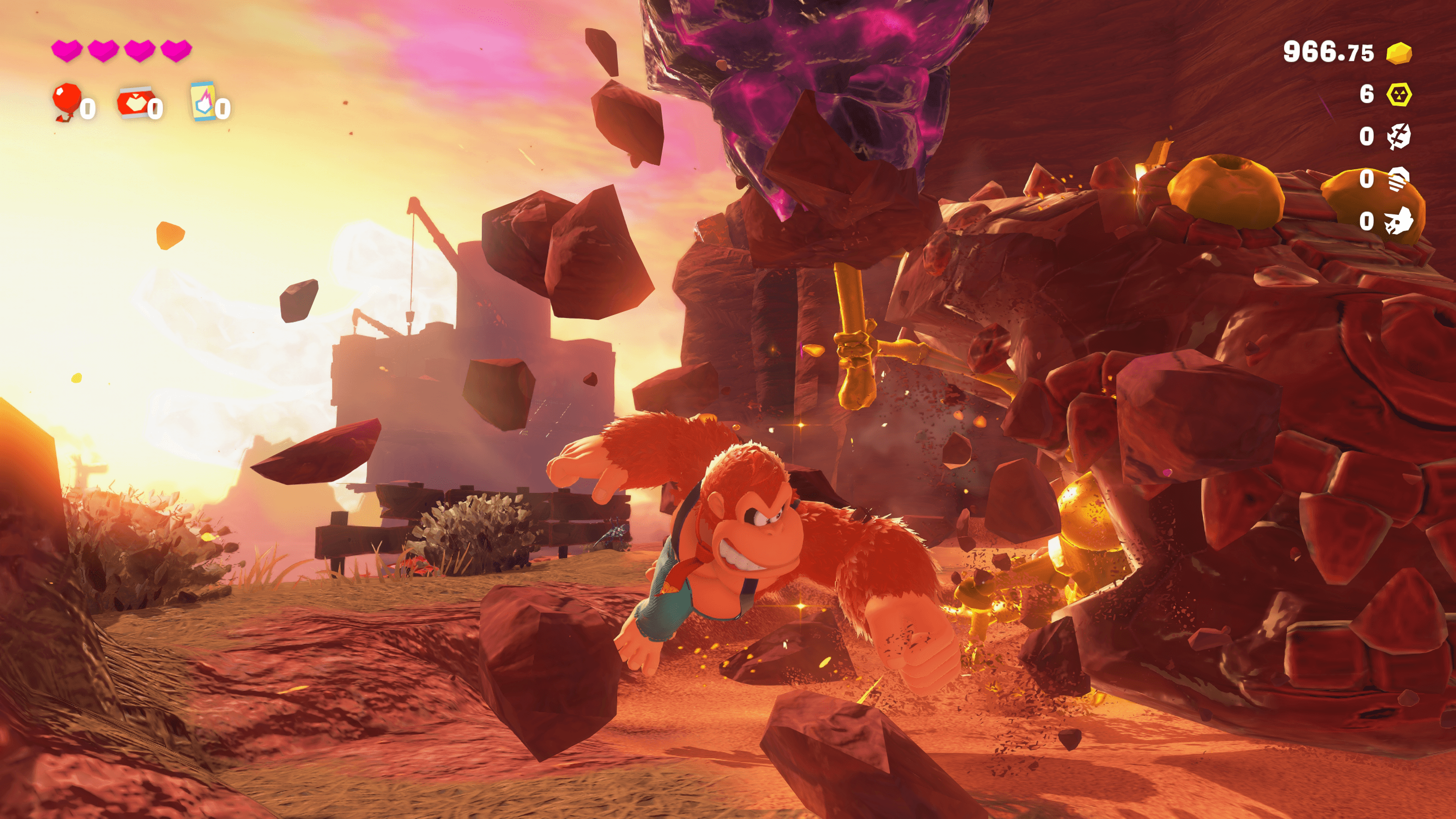
Based on my playthrough with Bananza, I think that was the right call. This is Nintendo pulling out all the stops on a game in a way we haven’t seen in years. I don’t want to hand-wave away framerate dips as being unimportant or claim they add to the experience when any other company would be raked over the coals for the same thing. However, I will draw the line at suggesting that it should be taken as a sign that the Switch 2 is already showing its age.
Cherrypicking one example to hold up as the smoking gun is never solid grounding for an argument. I don’t believe anyone who is worried about what Bananza‘s frame rate means for the Switch 2 is doing so maliciously, but more out of genuine concern. And I get it; we just spent $450 on this new piece of hardware, and even Nintendo itself is hitting technical issues. If any developer should be able to squeeze the most power out of the Switch 2, it would be Nintendo, right? Well, yes and no. Nintendo certainly knows the hardware better than any team, but that doesn’t make them experts on day one. Every console has a learning curve, and the longer a team has to learn how to best take advantage of the hardware, the more power it can squeeze out of it. We see it every generation, and there’s no reason to think it won’t happen here.
We also need to consider the fact that Bananza was originally a Switch game before moving to the new hardware. It is easy to say that this is a point against the game running poorly, but we have to be honest about how big of an assumption that is on our part. I’m not a developer, and odds are you aren’t either. We might think that starting a game on weaker hardware only to move to a vastly more powerful system would mean that there’s less excuse for performance woes, but that’s just an assumption. We will never know how tricky it is to completely rework a game for new hardware mid-development.
Conversations about a game’s performance are valuable. If performance has an impact on your enjoyment, positively or negatively, then that is completely valid, but we should aim to keep those conversations contained to each individual experience. The Switch 2 is just getting started, so let’s not jump the gun just because Bananza drops frames here and there.