We’ve now covered most of the basics in our series of guides to digital and DSLR cameras, some new and some not so new, in the world of digital photography. But there is another player out there in the camera marketplace worth noting as well. It’s a relatively new concept that’s already seen its fair share of success and in many ways has become the bridge camera that all the purported “bridge” cameras before it were not.
It’s called the Micro Four-Thirds System, and besides a needlessly complex/mysterious name, it has a lot to offer. Developed by Olympus and Panasonic to be an original, purely digital standard, it in essence delivers an SLR-like experience in a smaller, more compact format.
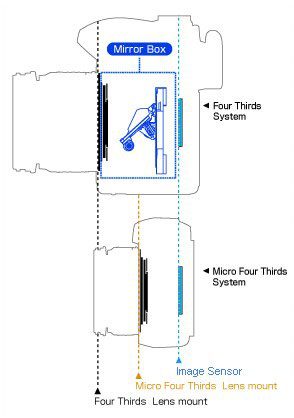 For starters, Micro Four-Thirds cameras have interchangeable lenses – a big deal in the world of advanced photography. They also have a plethora of SLR-like manual controls. But, because of the differences in the inner workings, they deliver pictures with a 4:3 aspect ratio as opposed to the 3:2 aspect ratio of true SLRs. Hence the Four-Thirds name.
There are other distinctions to be sure, but most notable to many of us is their size. Micro Four-Third camera bodies are substantially smaller than that of SLRs, and, once again because of their design, so too are their lenses. They are therefore far easier to carry, though they certainly aren’t nearly as “pocketable” as a true compact camera. Indeed, they aren’t pocketable at all.
There are some real pluses to this brave new format, and early models have achieved some rather favorable reviews. But (you knew there had to be a ‘but,’ didn’t you…), Micro Four-Thirds cameras aren’t perfect. Being smaller cameras, they also house smaller sensors. These aren’t as tiny as the sensors found in compact cameras, but nonetheless are small enough that photos, particularly in low light situations, are marginally noisier than photos taken by their SLR brethren.
Ultimately, with the Micro Four-Thirds format being so darned new, the jury, as they say, is still out. Some are claiming a camera revolution. Others say that because Micro Four-Thirds cameras aren’t pocketable or particularly inexpensive, and because they don’t offer all the advantages of an SLR, they’ll be nothing but a flash in the proverbial pan. Yet the system has big names and big bucks behind it, and already we’re seeing the appearance of a number of models and lenses. In the end, unless you’re absolutely one hundred percent sold on the idea, we suggest you take a hands-off approach for now and see how this plays out.