“While those who demand rich sound and powerful bass won’t find what they’re looking for in the BluEZ, we think music lovers with active lifestyles will find them indispensable.”
- Clear, accurate tone
- Wide stereo effect
- Relatively comfortable
- Full awareness of surrounding environment
- Solid Bluetooth connectivity
- Lack of detail in timbre of instruments
- Poor bass reproduction
“Why you can trust Digital Trends – We have a 20-year history of testing, reviewing, and rating products, services and apps to help you make a sound buying decision. Find out more about how we test and score products.“
Last January at CES 2013, Aftershokz took home an Innovation Award for its latest contribution to the strange science of bone conduction headphones: the BluEZ Bluetooth headset (available for $100). For those not familiar, bone conduction, is the process by which sound is transferred to the inner ear by sending vibrations through the bone in front of the ear canal, bypassing the outer ear entirely. While bone conduction has been used in hearing aids and other devices for decades, its utilization in headphones is a relatively new phenomenon.
It took a while for us to find the …ahem… “bone sweet spot”, as it were.
The truth is, we’ve all heard bone conduction before. The majority of what we hear of our own voice is perceived through bone conduction, which explains why listening to ourselves on a recording often sounds odd. Still, we figured there would be a pretty big difference between our shower version of, say, “Bohemian Rhapsody”, and the full production rendered by the BluEZ. So naturally, when we got a pair in our hands, we couldn’t wait to sit down – or, step out – to see what these babies could do. After some extensive testing, here’s what happened.
Out of the box
The BluEZ packagin is about as simple as it gets, which makes sense considering there’s not much call for accessories. Opening the small cardboard box reveals another box just inside its boundaries, this one a zippered, hard shell carrying case in all black. Inside the case, we found the glossy headset along with a small USB to mini USB cable, a flexible rubber strap, and some instructional material.
Features and design
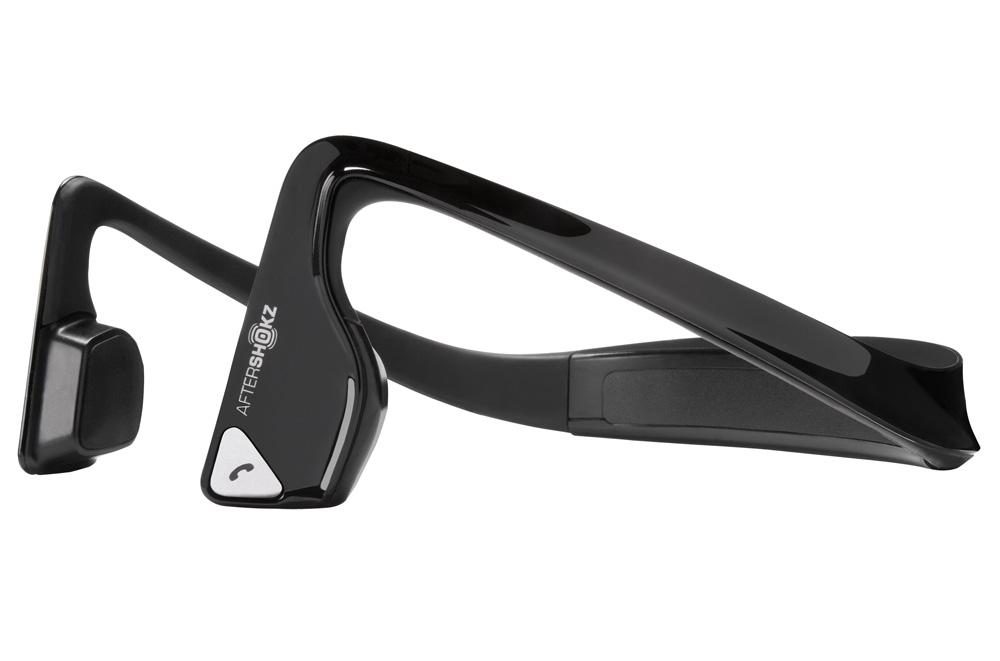
The BluEZ is a minimalistic half-halo, with two small arms that curve over the top of the ear to rest just in front of it. At the interior of each arm is a smooth rubberized pad through which sound is transferred to the skull via vibration. On the exterior of each arm is a small silver button: a play/pause button on the right side, and one for answering and terminating phone calls on the left. Also on the left side is the headset’s small microphone, resting just beneath the call button.
At the back of the device is a small collection of controls including a power switch, a dual button volume/search control, and the mini-USB port for charging the built-in battery. An included rubber flex-band attaches to the inside of the frame with two plastic braces, helping to keep the headset firmly in place.
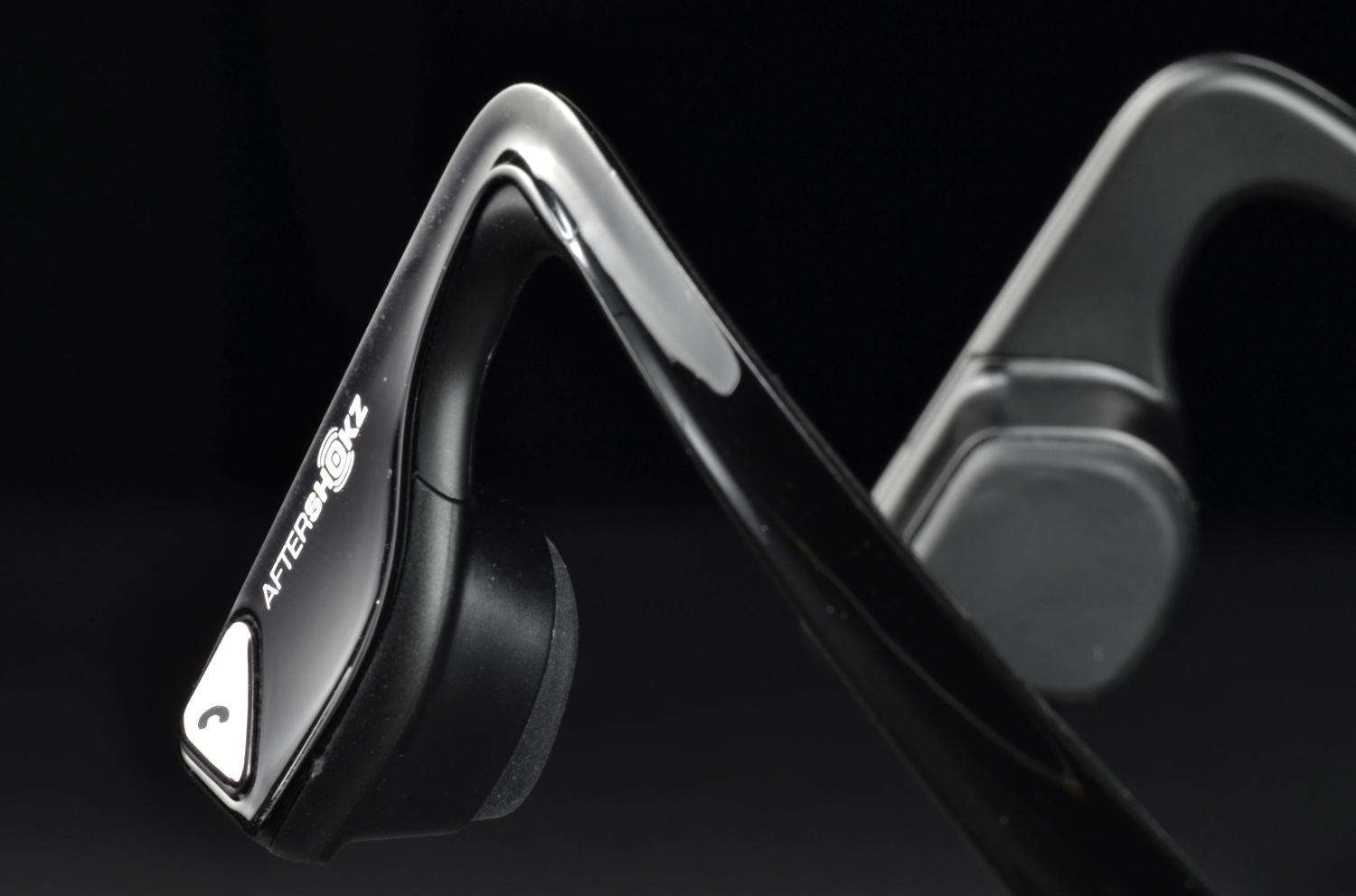


The BluEZ begins pairing automatically upon power up, indicated by the red and blue flashing LED next to the power switch. After pairing it to your device, the headset is ready to go. We learned right away to let the headset connect and pair to our device before putting it on, as a loud selection of beeps is sent through the conduction pads when the headset makes its initial connection.
Comfort
We found the BluEZ easy to wear for two to three hours, but eventually the headset’s vibrations caused some fatigue. The fit itself was comfortable, however, and fatigue issues are likely to vary for each user.
Performance
Initial impressions
As we cued up out first track, the BluEZ’s pads began vibrating against our skull, creating a strange tingling sensation for the first few minutes. Though we eventually got used to it, whenever powerful grooves came along, the buzzing resurged and created a sort of itching sensation.
It took a while for us to find the …ahem… “bone sweet spot”, as it were. We had to adjust the fit until we got the center image of the music directly where it should be. Once dialed in, it felt like the sound was nestled in the middle of our brain, a wide stereo creating a unique inner-skull soundscape.
Audio
After a healthy amount of listening, it was clear the BluEZ were capable of delivering an accurate and clear sound signature, heavily focused on the midrange. This headset is dedicated to the register in which humans hear things best: the 1-4 kHz frequency range. As such, it was most adept at rendering acoustic instruments, vocals, and piano. On top of that, the headset was surprisingly clear in the upper register, rendering a soft, yet accurate reproduction of brilliant treble tones.
As we cued up out first track, the BluEZ’s pads began vibrating against our skull, creating a strange tingling sensation for the first few minutes.
Listening on, our ears (or bones) continued to settle into the sound, and we even found more complex productions like Coldplay’s “Clocks”, or rock tunes from bands like Led Zeppelin and Pearl Jam to be pleasant, though not as rich and vibrant as we expect from conventional headphones. To be sure, the BluEZ render a unique sound, but one that is easy to warm up to.
The headset’s most obvious weak point is its treatment of bass. Low frequencies were sharply cut off at around 200Hz, making most hip-hop tunes sound weak. If you’re looking for a big, thick sound from the BlueEZ, you’re barking up the wrong tree.
Bluetooth
The Bluetooth connection is where the BluEZ shone brightest, maintaining a perfect connection to our iPhone 5, even at the extremes of its claimed 33-foot operating range. Throughout our testing, we had virtually no signal interruption. Indeed, other headphone makers could learn a thing or two from Aftershokz in this department.
Street test
It’s a scientific fact that, unlike computers, the human brain can only focus on one thing at a time. When we think we’re multitasking or engaging with two mediums at once, our brain is actually jumping from one task to another at an extremely rapid pace. Never was that fact so well demonstrated than while wearing the BlueEZ in the supermarket.


As we crossed the threshold, jamming to the sounds of “Amoreena” by Elton John, our senses were immediately assaulted by the mixture of the music and the chaotic ambience of the crowded market. Slowly adjusting to the onslaught of stimuli, we decided to hit up the deli and place an order while listening to music, a virtually impossible feat to pull off while wearing regular headphones. We found placing our order taxing with music continuously seeping through our brain. And we had even more trouble at checkout. Since the headset was fairly inconspicuous under our hair, we wondered what the people around us must have thought of our trouble with these otherwise rudimentary tasks.
With that said, it was amazing to have our aural senses so present while using the BluEZ for its intended purposes, like running and biking. In fact, unlike in-ear headphones, the sound was almost completely unaffected by wind, allowing us to enjoy unimpeded music while still fully aware of our environment. The effect was a bit of a revelation, solidifying the utility the BluEZ provide.
Conclusion
Though they could never replace a standard headphone, the Aftershokz BluEZ do a great job of delivering on their promise to treat listeners to audio without necessarily removing them from the outside world. It’s hard to overestimate the importance of aural awareness during activities like skiing, running, and biking. And once we adjusted to the headset’s sound characteristics, it provided an enjoyable personal soundtrack to accompany outdoor activities – like having a stereo in our head. While those who demand rich sound and powerful bass won’t find what they’re looking for in the BluEZ, we think music lovers with active lifestyles will find them indispensable.
Highs
- Clear, accurate tone
- Wide stereo effect
- Relatively comfortable
- Full awareness of surrounding environment
- Solid Bluetooth connectivity
Lows
- Lack of detail in timbre of instruments
- Poor bass reproduction