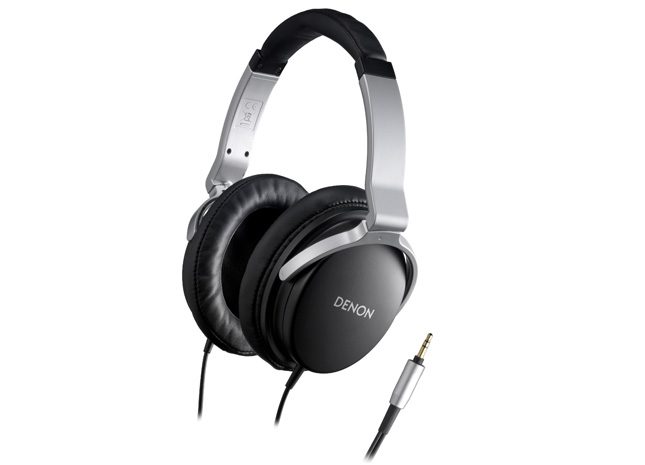

“Denon’s AH-D1100 over-the-ear headphones shun style and celebrity shenanigans for old-school audiophile sound quality.”
- Warm, relaxed sound
- Super comfortable
- High sensitivity
- Solid construction
- Bass may be a little heavy for some listeners
“Why you can trust Digital Trends – We have a 20-year history of testing, reviewing, and rating products, services and apps to help you make a sound buying decision. Find out more about how we test and score products.“
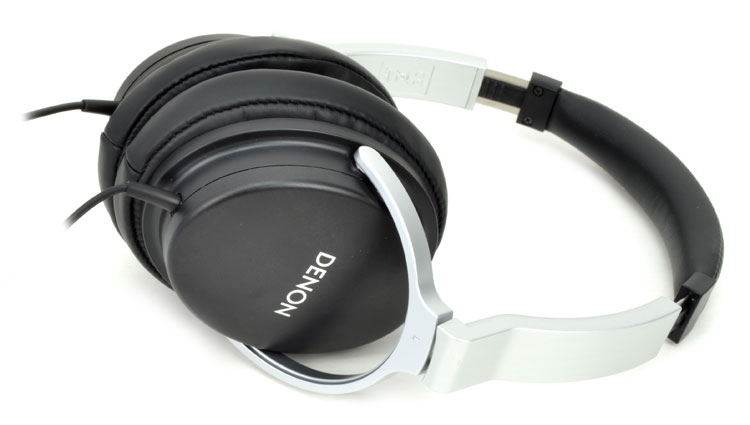 Today’s headphone market is saturated with flashy, urban inspired, street-style offerings typified by exotic materials, outrageous colors and celebrity endorsements. It’s easy to understand then how one might end up overlooking Denon’s latest submission, the AH-D1100. This unassuming set circum-aural headphone may look plain at first glance, but closer inspection reveals that there is nothing “vanilla” about them at all. Designed to perform, built to last and priced to sell, the AH-D1100 offer a remarkably comfortable listening experience that does Denon’s legacy of excellence justice.
 Out of the Box
The AH-D1100’s are attractively packaged in a simple, high-gauge plastic box that allows the onlooker to see just enough of the headphones to know what they are getting into. Inside the box, we found a soft storage pouch, an extension cable and a 1/8” to ¼” adapter to allow the headphones to be connected to home stereo or studio equipment. The AH-D1100’s feel light for their size and a quick check of the box confirms that they weigh in at just 6.7 oz. without their cable.
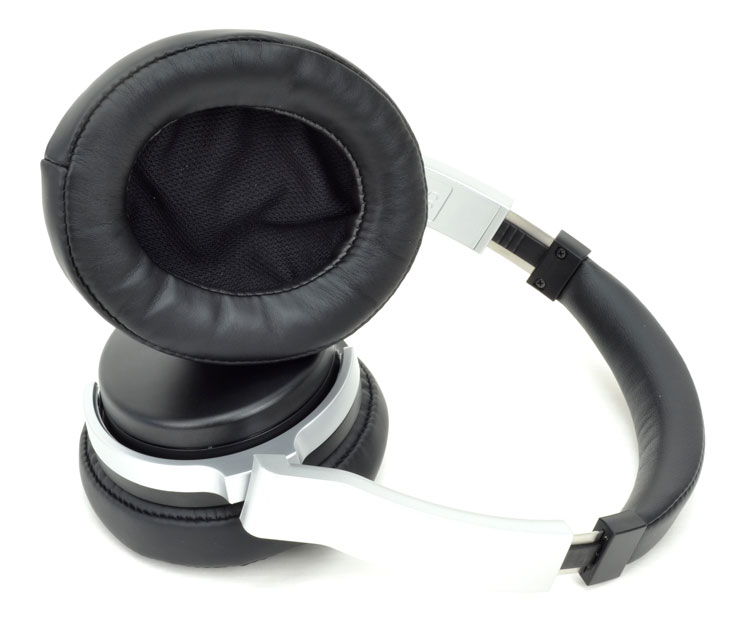
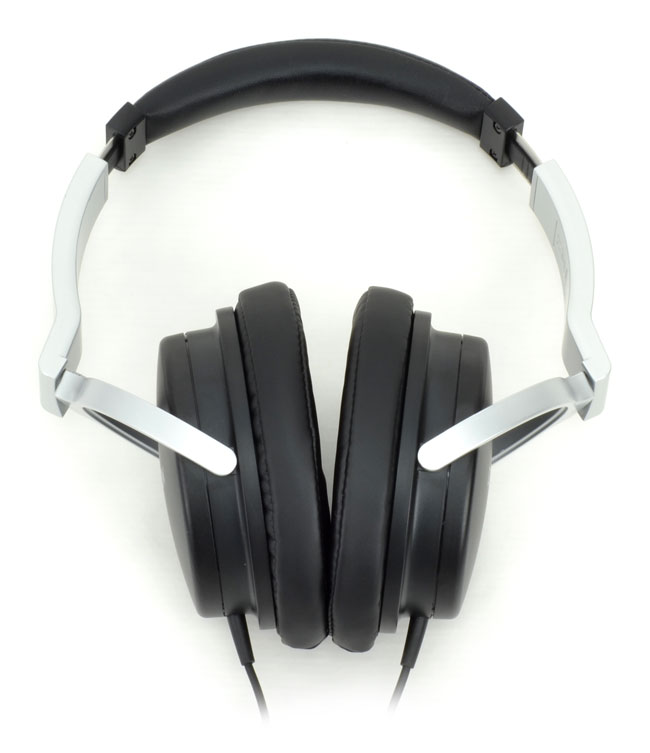
With the D1100’s, Denon has opted to employ a “less is more” approach to aesthetic design. Only Denon’s name appears printed on the outside of the otherwise flat black ear-cup. The headband and ear-cup suspension are comprised of a silver, semi-gloss, super lightweight plastic that serves to accent the flat-black ear-cups.
Features and Design
The AH-D1100’s utilize a fairly large, 50mm driver that is angled back, just slightly, toward the ear from within the ear-cup. The inside of the ear-cup is moderately padded and lined with an ultra soft leather-like material. The outside of the ear-cup is comprised of a machined aluminum alloy bonded to a resin compound that assists in acoustical dampening and sound isolation. To facilitate a comfortable fit, the ear-cups are suspended to allow some generous vertical pivot. Adding to the D1100’s comfort-quotient is the amply padded headband that echoes the use of compliant foam and faux leather found on the ear-cups.
 The D1100’s cord stretches a modest 3 feet from both the left and right headphone and is terminated with a standard 1/8” jack. For use at home or in the recording studio, Denon has included an extension cable and ¼” adapter, making the D1100’s versatile right out of the box.
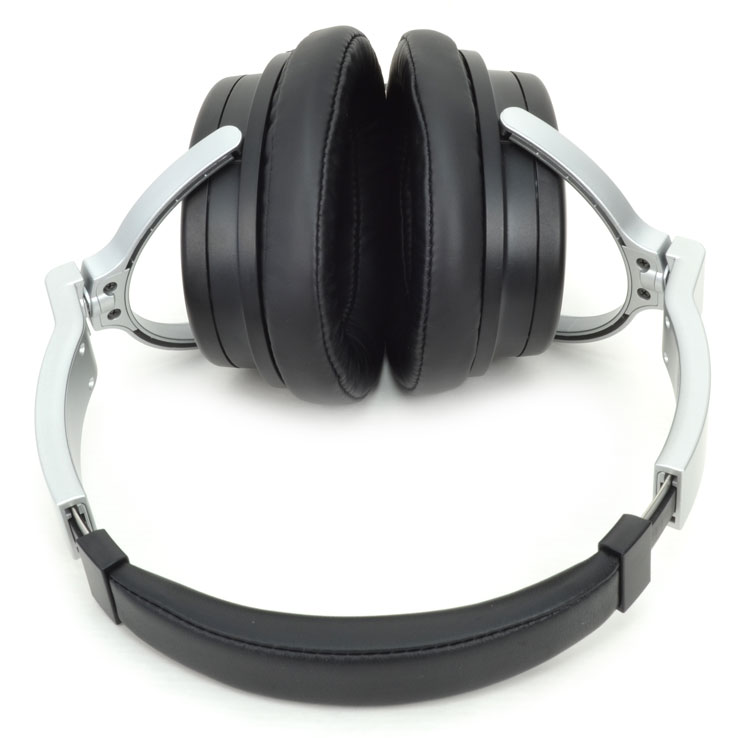
The D1100’s ear-cups will pivot and rotate enough to fold down flat and fit in the provided soft, pleather pouch. However, they don’t really fold down to a more compact form so travelers will want to leave enough space in their bag to tuck the D1100’s away.
Performance

To audition the AH-D1100’s, we employed the use of an iPhone 3G, iPod Touch, Marantz SR6005 A/V receiver, Pioneer turntable with Ortofon OM5E cartridge, Bellari phono pre-amp, HeadRoom micro DAC and HeadRoom micro amp.
The D1100’s are a remarkably comfortable pair of headphones. For all of the hours we spent with them, we never felt the need to take them off and rest our ears. The soft, leather-like material that Denon has used allows an excellent seal around the ear, but breathes well enough to avoid moisture build-up. The headphones are extremely light and grip the head with just enough force to secure them on the head and create a tight seal around the ear. While the D1100’s don’t seem like the ideal candidate for a work-out headphone, they do fit securely enough to survive plenty of jostling about which is more than we can say for most of the full-sized headphone competition.
Although not designed for noise cancellation, the D1100’s do a great job of naturally blocking outside noise. The excellent seal that is created by the gentle pressure exerted on the well sized ear-pads reduced background noise considerably. Once music was being played, they eclipsed even the loudest coffee shop din easily.
A good seal from a closed-back headphone can also facilitate enhanced bass production and that is certainly the case here. The 50mm drivers combined with an excellent seal, generous enclosure and Denon’s voicing efforts culminates in some seriously robust bass response. Those that demand a more balanced bass response may be put off by the D1100’s affinity for the low tones but we found it to be enjoyable – particularly when listening to vinyl records or recordings with naturally lean bass tracks. When listening to tracks with plenty of bass, the response we got was a little heavy handed, but never without accurate tone and integrity. Kick drums were punchy and resonant, bass guitars very percussive and even the lowest octave had generous support. For grins, we ran through a few action packed movie tracks and found that the D1100’s provided us plenty of visceral low end that helped to enhance the listening experience.
 We felt that the D1100’s midrange was pleasantly uncongested and open. Vocal tracks were reproduced with a truth and intimacy that we normally experience with only very high-end headphones. We also enjoyed how the D1100’s resolved low brass, string instruments and percussion without undue coloration. We dug the D1100’s accurate midrange enough that we spent some time simply enjoying the headphones for music enjoyment’s sake.
Having tested some mighty bright headphones over the last few weeks, our initial impression of the D1100’s treble response was that it was very laid back – perhaps too laid back. Once our ears relaxed into them, however, our opinion changed significantly. After the treble desensitization caused by extensive listening over the last few weeks had worn down, we heard very clearly that the D1100’s high frequencies had incredible extension and were not so laid back as we had initially thought. We would characterize the high frequency sound of the D1100’s as warm, airy and revealing with extension well above 25 khz. On our brightest tracks, the D1100’s did begin to get a little “shouty” but most headphones in this class do.
We found that using a quality DAC and headphone amp did a lot to tame the highs and added some richness to the midrange, but those considering the D1100’s should not consider these premium components necessary for thoroughly enjoyable music listening sessions. In fact, the D1100 are one of the most portable media player-friendly headphones we’ve ever tested. Their high sensitivity and excellent efficiency allowed them to play at healthy volumes with a modicum of power. They also managed to hold together very well at those higher volumes, even when the power supply was mediocre. This makes the D1100’s an excellent out-of-the-box option for hi-fi enthusiasts that don’t have a lot of premium headphone accessories.
Conclusion
The Denon AH-D1100’s are an engaging, flat out fun set of headphones that are versatile enough to move from a portable media player to a recording studio with ease. They offer outstanding comfort, solid construction, and robust sound in a classy, understated package. With a street price of about $150.00 these cans are a terrific value and handily earn our Editor’s Choice.
Highs:
- Warm, relaxed sound
- Super comfortable
- High sensitivity
- Solid construction
Lows:
- Bass may be a little heavy for some listeners