1. Home
  2. Phones
  3. Android
  4. Apple
  5. Business
  6. Mobile
  7. News

Stop phone scammers in their tracks with FONES, an anti-robocalling solution

Add as a preferred source on Google
MWC 2026
Read our complete coverage of Mobile World Congress

There’s nothing more annoying than unsolicited phone calls from companies, nonprofits, and folks you’ve never heard of. But thanks to the ubiquity of robocalling, or tech that dials numbers automatically, they’re an increasingly common occurrence. The U.S. Federal Trade Commission received 5.2 million complaints about robocalls in 2016, a 30 percent increase from the same period a year earlier. But Little Rock, Arkansas-based First Orion, an enterprise company that provides data and phone call solutions to mobile carriers, has a fix for this growing problem: First Orion Network Enterprise Solutions (FONES).

That’s a mouthful, but FONES, at its core, makes it easier for carriers to protect subscribers from malicious callers. On the consumer side of the equation, it lets the subscribers of those carriers block any number from any device.

Recommended Videos

FONES filters numbers intelligently by tapping technologies like anonymous aggregation and network traffic analysis. And it analyzes billions of events in real time.

“This year, consumers will unnecessarily receive over 9 billion calls from known scammers and another 50 billion nuisance calls,” Jeff Stalnaker, president of First Orion, said. “Carriers can now prevent these unwanted calls from ever reaching their customers. FONES provides the foundation for a comprehensive solution for the protection that consumers deserve, with flexibility to meet carrier requirements and the ability to engage with First Orion in an efficient and easy way.”

The debut of FONES come at a time when fraudulent calls are on the rise. According to the FTC, robocalls cost phone customers $350 million annually. In response, the federal government has imposed more than $1.2 billion in fines on telemarketers. The Federal Communications Commission authorized telecommunications companies to block fraud and spam calls last year, and in 2013 hosted a contest to encourage private industry to come up with ways to stop robocalls.

Telecoms have started to do their part, too. Time Warner Cable makes it easy for its customers to sign up for Nomorobo, a service that works on internet-based phone lines to block robocalls. In September, Sprint expanded a partnership with Cequint to develop “enhanced caller ID solutions” that would be used to prevent spam calls from reaching customers. And in August, the four major carriers in the United States joined forces with Apple, Comcast, Ericsson, Google, Microsoft, Nokia, Qualcomm, Samsung, and others to establish a “robocall strike force.”

Kyle Wiggers
Kyle Wiggers is a writer, Web designer, and podcaster with an acute interest in all things tech. When not reviewing gadgets…
Latest Pixel 11 series leak offers the clearest look yet at Google’s next flagship
Google's next Pixel has leaked again, but this time almost nothing is left to imagine
Pixel 11

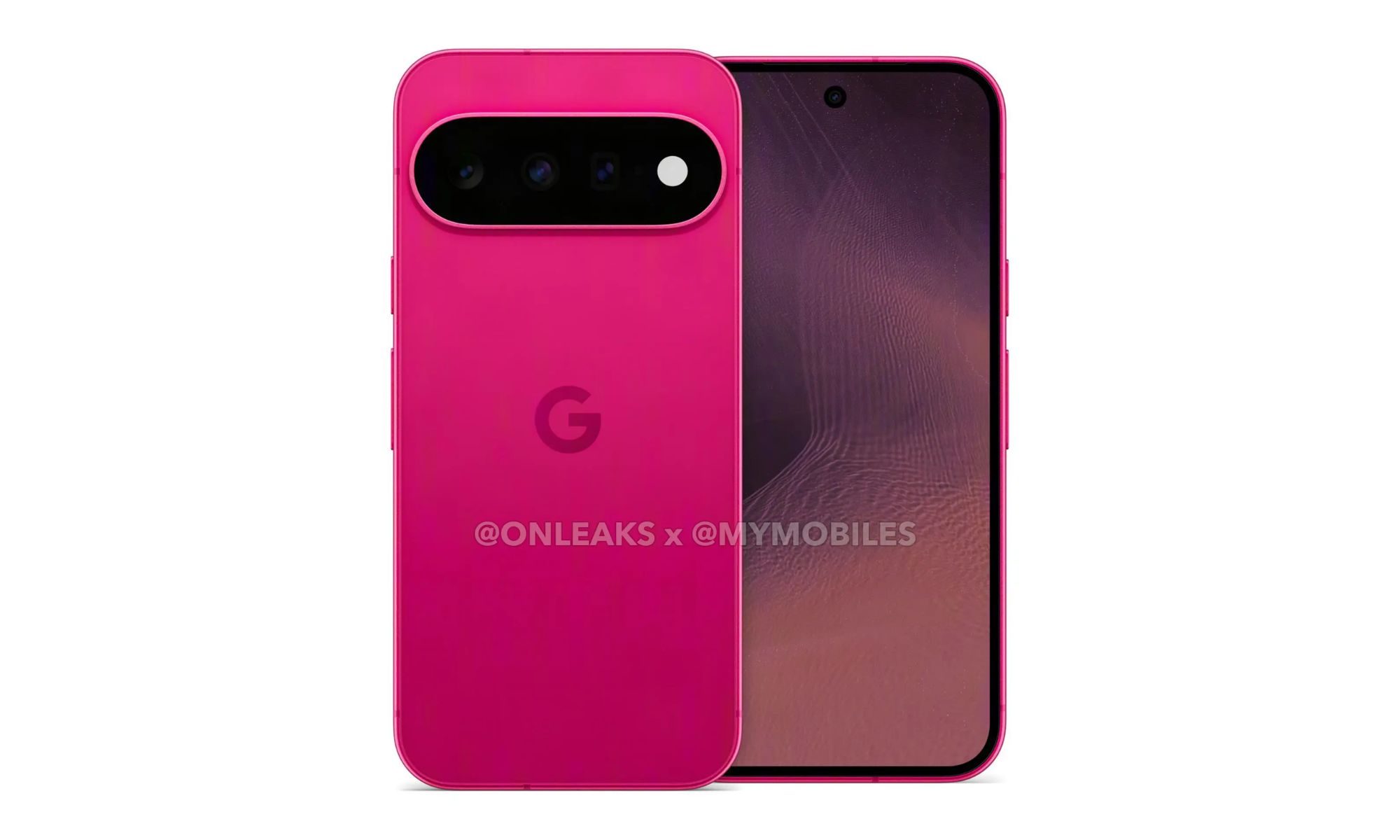
Google's Pixel launches have become increasingly difficult to keep under wraps, and the Pixel 11 series appears to be no exception. Weeks before Google's scheduled August 12 launch event, a fresh leak has revealed what is claimed to be the complete set of official press renders for the Pixel 11, Pixel 11 Pro and Pixel 11 Pro XL, showcasing every colour option across the lineup.

The renders, published by MyMobiles in collaboration with tipster OnLeaks, offer what is arguably the most comprehensive look yet at Google's next flagship family. If authentic, they not only confirm earlier design leaks but also reveal Google's colour strategy for 2026, including a vibrant Fuchsia finish for the standard model and a new copper-inspired "Dune" variant for the Pro series.

Read more
Galaxy Z Flip 8 vs. Motorola Razr Ultra (2026): Samsung’s flip phone is cheaper, but is it better?
One flip phone wins on value. The other wins on hardware.
Electronics, Phone, Mobile Phone

Flip phones have quietly become one of the most competitive corners of the smartphone market. It provides buyers with a satisfying folding snap, reducing the footprint to half the original size, and that’s the entire point. Motorola never really left the format after reviving the Razr name, while Samsung has spent generations treating the Flip line as its scrappy, budget-friendlier sibling to the Fold. 

This year, though, the gap between the two camps has narrowed to the point where picking a winner requires genuinely reading the spec sheet and learning about the phones before putting your money into one. One phone leans hard into raw display firepower, while the other leans into a deeper software ecosystem and a friendlier price tag. 

Read more
Samsung finally switched to silicon-carbon battery on Galaxy Z Fold 8. What’s so special about it?
One of Galaxy Z Fold 8’s biggest upgrade is hiding inside
Galaxy Z Fold 8 Ultra with Fold 8

Samsung has finally joined the silicon-carbon battery race with its latest batch of premium foldables packing the new battery tech. But details for this change were rather hard to spot on the spec sheets. The company has confirmed during media briefings that the Galaxy Z Fold 8 Ultra, Galaxy Z Fold 8, and Galaxy Z Flip 8 all use silicon-carbon batteries.

Even then, the resulting capacities are hardly record-breaking. The Fold 8 Ultra carries a 5,000mAh battery, the regular Fold 8 gets 4,800mAh, and the Flip 8 has 4,300mAh. Rivals from Honor and Motorola have already crossed the 6,000mAh mark. But the figures only tell part of the story.

Read more