  1. Home
  2. Phones
  3. Business
  4. Computing
  5. Mobile
  6. News

AR/VR headset creator Magic Leap partners with AT&T on upcoming release

Add as a preferred source on Google
Magic Leap
Image used with permission by copyright holder

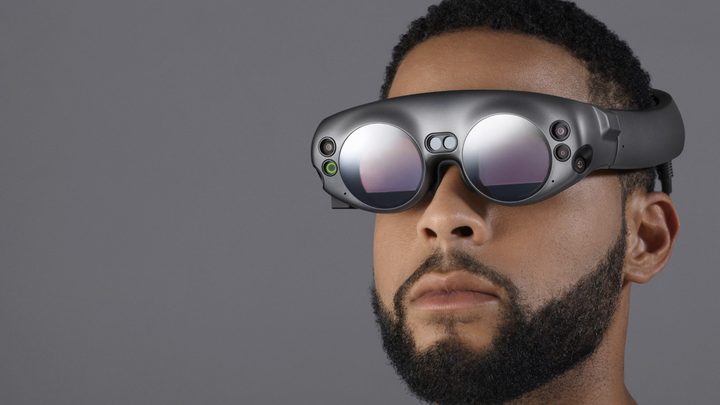
AR/VR headset creator Magic Leap is partnering with major telecommunications company AT&T to enter the mobile market.

A previous interview with CEO Rony Abovitz in February 2018 had revealed that Magic Leap had been looking for a major partner in order to introduce its revolutionary AR/VR tech to the public, and that partnership has now come to life. AT&T confirmed the news on July 11, and clarified that it would be the exclusive wireless retailer of Magic Leap’s Creator headset. It also confirmed that the headset would be available for customers to try out in cities like Atlanta, Boston, Chicago, Los Angeles, and San Francisco. More markets will follow at a later date.

Recommended Videos

The company’s Magic Leap One headset (ML1) has been on the horizon for some time, and it is touted as a huge leap forward in VR/AR headset quality. As you might expect, the inner workings of the headset are highly complex, as it uses light to digitally paint objects directly onto your sight. While that might sound uncomfortable, Magic Leap has claimed that the process does not exhaust users, and is far more convincing than competing products.

The issues? While the ML1 can go portable thanks to the small Lightpack base station, it’s primarily designed for indoor use and is not the most attractive-looking product. It’s also rather large and bulky — despite being a lot slimmer than the competition. So while the ML1 may be the first product to bring us truly convincing virtual alternate realities, it’s unlikely to be the product that takes the experience outdoors.

But Magic Leap appears to be planning ahead. According to the interview, the company has plans beyond its first headset, and is already looking at a range of devices, including one aimed at the mass market that will be priced around the current cost of a flagship phone (probably somewhere between $600-$900). While that mass-market device isn’t the device Magic Leap is initially partnering with AT&T to create, it’s not hard to imagine that a smaller headset would be on the cards if the ML1 was to succeed. A partnership with AT&T will also help with the marketing of the device, getting the technology into the hands of as many people as possible.

Updated July 11: We added the news that Magic Leap’s secret benefactor has finally been revealed.

Mark Jansen
Former Mobile Evergreen Editor
Mark Jansen is an avid follower of everything that beeps, bloops, or makes pretty lights. He has a degree in Ancient &…
AppleCare+ prices are going up for new Mac and iPad customers
Existing AppleCare+ subscribers avoid Apple’s latest price hike
MacBook Pro on Table

Apple has raised the price of AppleCare+ subscriptions for new Mac and iPad customers, adding another expense to hardware that already became considerably more expensive last month. AppleCare+ provides technical support and repair coverage for accidental damage and other eligible issues.

Monthly AppleCare+ plans for Macs and iPads now cost $0.50 more, while annual plans have increased by $5. Existing subscribers will continue paying their current rates, as the change only applies to new sign-ups.

Read more
Hate editing videos? This new AI app turns your camera roll into ready-to-post reels
Reelful uses AI to plan, script, and edit your reels, so you never have to touch an editing app.
Electronics, Phone, Mobile Phone

Your camera roll is probably packed with vacation photos, birthday videos, and random clips that never make it to Instagram or TikTok. If video editing has kept you from posting more on social media, a new app wants to take that job off your plate entirely.

Reelful is an iOS app that uses AI to automatically turn your existing photos and videos into polished, ready-to-post reels for TikTok and Instagram.

Read more
Galaxy Z Fold 8: Everything we know about Samsung’s wider and shorter foldable
Samsung's widest Fold yet could finally make book-style foldables feel natural.
Rear camera for selfie on Samsung Galaxy Z Fold 7.

For most of its existence, the Samsung Galaxy Z Fold has solved one problem while creating another. The book-style foldable has let buyers carry a tablet-sized screen in their pocket without actually carrying a tablet. But, through no fault of its own, that came at the cost of a cover screen so tall and narrow that using it one-handed felt unnatural and uncomfortable. 

Further, viewing content on the inner screen came with giant black bars at the top and the bottom. Samsung is addressing that with the Galaxy Z Fold 8, which could feature an entirely new form factor. Think shorter, wider, passport-shaped, and a cover screen you can actually type on without contorting your fingers. 

Read more