1. Home
  2. Phones
  3. Android
  4. Apple
  5. Mobile
  6. News

Goodbye QWERTY! Wrio thinks it has the traditional mobile keyboard killer

Add as a preferred source on Google

The smartphone keyboard has remained largely unchanged over the past decade, ever since the original iPhone was launched. Sure, there have been a few updates, the the general layout takes after the computer keyboard we’re all used to. One app, however, aims to change that.

The app is called Wrio, and it launched on both Android and iOS this week. It does away with the QWERTY keyboard we’re used to in favor of hexagon-shaped keys.

Recommended Videos

The app was actually successfully crowdfunded last year after being beta tested with 800 users — research that revealed an increase in typing speed of between 20 and 70 percent compared to standard QWERTY keyboards. It’s important to note that while the Wrio keyboard doesn’t offer a traditional QWERTY layout, the keys are still roughly in the same place — you’ll be slowed down at the start, but it shouldn’t be too hard to get used to it.

The keys aren’t just reshaped for the sake of it — the point is that the shape change allows for the keys to be bigger, in the end reducing the number of typos. Not only that, but the backspace key isn’t even there — to delete something you just swipe from right to left. A sustained swipe will delete words, a quick flick will delete a letter. Most punctuation keys have been moved from the primary keyboard to a secondary one, although a few important ones remain, such as the period, comma, question mark, and exclamation point.

You’ll also be able to access emojis with a gesture — simply swipe up on the key that switches between the primary and secondary keyboard and you’ll get access to the emoji keyboard.

Wrio is also looking towards predictive typing — over time and as you continue using the keyboard, a user dictionary will be built up which can be used to offer personalized predictive suggestions.

The app costs $2.99, and is available on both Android and iOS.

Christian de Looper
Christian de Looper is a long-time freelance writer who has covered every facet of the consumer tech and electric vehicle…
Google has to play fair with AI rivals on Android, and that could be good news for your wallet
A new ruling strips Gemini of its exclusive access to deep Android integration, opening the door for cheaper AI models to offer similar functionality for less.
A person using Google Gemini on the Google Pixel 9a.

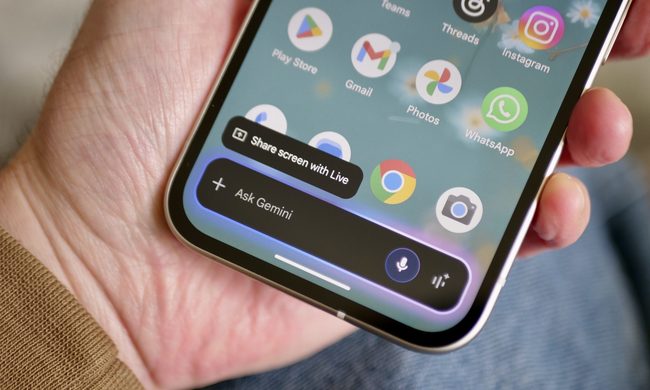
After forcing Google to open up Android to third-party app stores, the EU is back with a new target, and this time it's Gemini's home-field advantage. The European Commission ordered Google on July 16 to give rival AI apps the same deep access to Android that's currently exclusive to Gemini. The order falls under the EU's Digital Markets Act (DMA), and it directs Google to stop treating its own assistant as a first-class citizen on a platform it controls.

What Google now has to hand over

Read more
Top phone brands should learn how to deck out a flagship without nuking our wallets
Red Magic 11S Pro Full Rear Design

I've always had a soft spot for devices that lean heavily into one aspect as their main identity. From phones that aim to replace a dedicated camera to devices with batteries larger than some power banks, these products know exactly what they were made for. They do not chase the same all-rounder brief as a typical flagship.

The Red Magic 11S Pro is a great example of this. I've always had a soft spot for devices that lean heavily into one aspect as their main identity. From phones that aim to replace a dedicated camera to devices with batteries larger than some power banks, these products know exactly what they were made for. They do not chase the same all-rounder brief as a typical flagship.

Read more
Apple is finally removing AI apps that can digitally undress anyone
Apple and Google told by court by court to remove undressing apps
Apple App Store

Apple has removed several AI-powered "nudify" apps from the App Store after coming under legal pressure from San Francisco's city attorney, but the episode raises a much bigger question than whether a handful of apps violated App Store rules.

The real issue is why these apps made it onto one of the world's most tightly controlled app marketplaces in the first place.

Read more