Ian Anderson is a man with an audio mission. The once and future mastermind of the legendary Jethro Tull is now staking his claim as a solo artist, having just released his second album under his own name in two years and hitting the road for another world tour. How does he do it all?
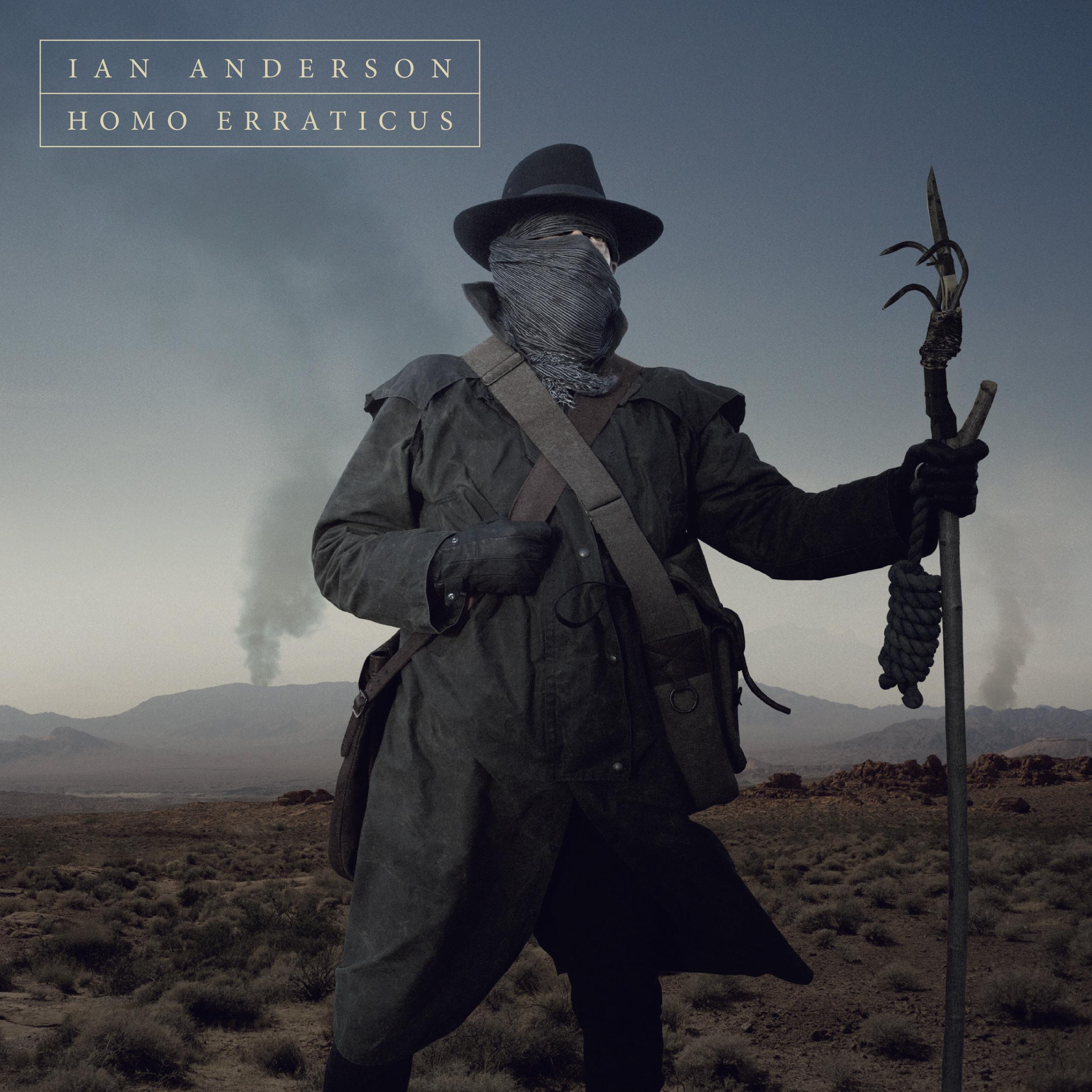
“Well, I’ve not successfully been able to clone myself yet, much to my wife’s disappointment,” he told Digital Trends. (Maybe someday.) His new album Homo Erraticus (Calliandra/kScope) is another critically acclaimed collaboration with Gerald Bostock, Anderson’s notorious compatriot on a pair of Thick as a Brick albums, and it features scores of progressive rock jamming and of course, masterful flute soloing.
I spoke recently with the hard-charging Anderson, 66, about the amazing surround-sound mix of Homo Erraticus and the critical importance of high-definition, 24-bit recording. Clearly, Anderson is a man who will never be too old to rock and roll.
Digital Trends: Do you feel strongly about having your music made available to listeners as high-resolution, 96-kHz/24-bit files?
Ian Anderson: Well, I’m very keen on the 24, which is absolutely necessary to get the best out of digital recording. 16-bit recording is alright — or it was, back in the ’80s. But 24-bit is not just 8 bits better — it’s a huge amount better.
“Anybody who pretends they can hear more than 48k audio is just bullshitting. Even if it’s my dog.”
But 24 bits is crucial. 96k, to me, is just double the file size. I’m personally a believer in 48k/24-bit recording, because with 48k, you’ve got ample headroom to more than exceed the limits of human hearing. 48k is going to give more than 20k of bandwidth, and anybody who pretends they can hear more than that is just bullshitting. Even if it’s my dog.
DT: I was recently in New York with Steven Wilson, your usual go-to surround mixer, and even he said he can’t hear the difference between 96 and 192.
Anderson: I don’t think there’s any point to it whatsoever. 48k, for all intents and purposes, is just fine and dandy. If I’m doing something for somebody else’s album and they want to work in 96, then I’ll just dial in at 96k. But as far as I’m concerned, it’ll take twice as long to send them the file — and there will be no perceptible difference.
 So many other elements in the signal chain can degrade the quality of sound that I don’t think we need to be worrying whether it’s 48k or 96k. What we should be worrying about is the clarity of our signal, the quality of our microphones, and the quality of the music we’re producing in the first place — whether it’s the sound of human vocal chords, a Hammond organ, or an electric guitar. There are far more crucial things to worry about than the sample rate. The bit rate is crucial. Anything other than a 24-bit recording would be a folly.
I do know some people who are still working at 16-bit. In fact, I recorded something for somebody a couple of weeks ago who said, “No, no, I’m doing it in 16-bit because it’s only going to be for CD release. There’s no point in doing it in 24-bit.” I thought, “Well, to me, there would be a valid reason to do it in 24-bit from a commercial standpoint, because it can be released that way for high-resolution outlets — DVD, Blu-ray, or 24-bit downloads. And there are people who want to have 24-bit audio rather than a compressed MP3 file. For someone who only sees the outlet as being a physical tangible product, I can see their point of view. But it’s not the way I would record.
DT: Tell me a little bit about how you arrived at the surround sound mix for Homo Erraticus. On what I’m going to call the mostly spoken-word track — Track 14, “Per Errationes Ad Astra,” where your vocal is being panned to each surround channel for dramatic effect — did you direct your surround mixer, Jakko Jakszyk, as to which part of the lyric went in the center channel, which part should go to the rear left, and which part should go to the right?
 Anderson: Yes. I drew a little map on a piece of notepaper, and I took a photo of it with my iPhone and just banged it off to Jakko as a JPEG so he could see what I was getting at. Basically, I outlined the positions usually maintained by the general instrumentation, but once in a while you like to move things around to create something that’s on the move. When I went to his studio to do the 5.1 with him, he had everything readily in balance, and I set out the way I wanted it to be. We tweaked and changed a few things together, and then I let him get on with it and finalized it.
The 5.1 is usually an addendum to the main stereo mix, because by the time you’ve got your balances, your EQs, and your effects sorted out, going back to the 5.1 is just mainly about re-allocating positions and creating a 360-degree field. I’d say 70 percent of the original work is in creating the stereo mix.
DT: One thing I’m personally happy about is that, more and more, listeners have the option to get high-resolution audio files.
Anderson: Yes, it’s good that people have a choice if they want to hear a compressed digital MP3 file or they want to listen to uncompressed high-quality digital audio. The important thing is that people do have that choice to make. The second important thing is that they know how to make that choice.
It’s up to all of us to try and put it in layman language. There’s no point in going to extremes unless you’re going to take your listening very, very seriously indeed.
And it’s my job to be serious about it.